
The warning at Catterick
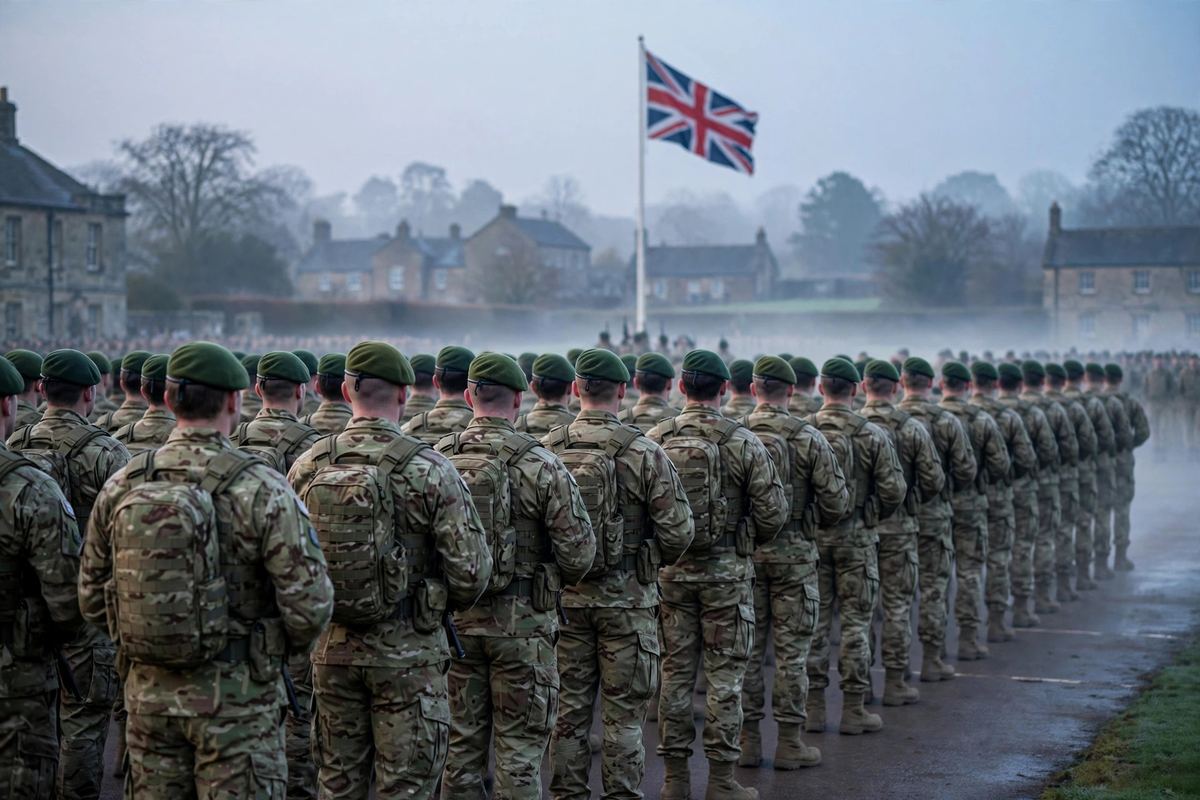
Britain's most senior soldier has delivered one of the bluntest public warnings in recent years about the state of the country's defences. General Sir Roly Walker, the Chief of the General Staff, told around 700 soldiers at Catterick Garrison in North Yorkshire that the nation is going to need them, and that political leaders will soon begin a frank conversation with the public about the sacrifices required to prioritise defence and security. His remarks, recorded by the British Forces Broadcasting Service, were striking both for their tone and for their directness. He said the world faced extreme jeopardy, that the business of soldiering was coming back into the nation's psyche, and that citizens would be asked to consent to sacrifices so that the armed forces could do their job.
The setting mattered. Walker was addressing troops from 1 (UK) Division, the Army's light, high-readiness global response force, including paratroopers and other units that would be among the first deployed in a crisis. He told them that there had been a time when the nation did not want to think about needing its soldiers to fight a war, but that such a time had passed. He said political leaders would soon explain to citizens what was going on, where the risk lay, and what the nation must be prepared to do. They would try to explain that citizens had to consent to sacrifices to prioritise defence and security, and that citizens would be asked to back the soldiers who would do the fighting. The burden of fighting, he said, falls squarely on the shoulders of the most inexperienced and junior soldiers in the land forces, and it was on them that the defence of the nation would rest if they were ultimately called to fight.
Why now: the wider security picture
To understand why the head of the Army chose this moment for such a warning, it helps to look at the wider security picture. The war in Ukraine continues, Russia remains the most immediate military threat to Europe, and tensions in the Middle East and the Indo-Pacific have added to a sense of instability. The United Kingdom, like most NATO allies, has been increasing defence spending after decades in which the peace dividend allowed governments to shrink the armed forces and spend the savings elsewhere. The British government has committed to spending 3.5 per cent of national income on defence by 2035, up from about 2.6 per cent now. That is a large increase in cash terms, but delivering it requires difficult choices, because every extra pound for defence must come from somewhere, whether from higher taxes, slower growth in other public services, or more borrowing.
The political context
Walker's speech also landed in a specific political context. The government inherited a promise, first made by former prime minister Sir Keir Starmer, to start a national conversation on defence. That pledge was made more than 18 months before Walker's remarks, and it had not yet produced the full public discussion that was promised. Meanwhile, the Prime Minister, Andy Burnham, has been pressed in Parliament on when defence spending will reach 3 per cent of national income, and has told MPs to wait for the Budget on 28 October for the details. The Chancellor, John Healey, is preparing that Budget against a difficult fiscal backdrop, with pressure to support households facing rising living costs while also finding room for defence. Walker's intervention can be read as an attempt to create the political space for those choices by telling the public, in plain language, that the threats are real and that preparing for them will cost money.
What Walker did not say
One of the most discussed elements of the speech was what Walker did not say. He did not announce conscription, and he did not suggest that civilians would be mobilised. Britain has not had conscription since the end of National Service in 1960, and there is no proposal on the table to bring it back. What Walker described instead was a broader idea of national resilience: that preparing for war is not only about soldiers and weapons, but about whether the country's infrastructure, industry, supply chains and public services could withstand a serious attack or a prolonged crisis. A parliamentary inquiry launched in July has been examining exactly that question, looking at whether essential infrastructure and public services could cope. The concept, sometimes called whole-of-society resilience, is familiar in countries such as Sweden and Finland, where governments regularly publish guidance on how citizens should prepare for emergencies.
Public opinion
Public opinion adds another layer to the story. An Ipsos survey reported in the same week as Walker's speech found that 48 per cent of British adults said there were no circumstances in which they would personally be willing to take up arms for Britain, while 36 per cent said there were circumstances in which they would. Those figures illustrate the gap between the military's expectations and the public's instincts after decades of peace. At the same time, reporting in The Times noted that most young Britons would be willing to do a year of national service, suggesting that attitudes are more nuanced than a single question can capture. The challenge for political leaders is to explain why defence matters to people who have never experienced war, and to do so without exaggerating threats or minimising the costs.
The financial arithmetic
The financial arithmetic is daunting. Moving from 2.6 per cent to 3.5 per cent of national income on defence implies tens of billions of pounds in additional annual spending by 2035. The government has already signalled that tens of billions will need to be diverted from other departments to pay for the increase. Ministers are expected to deliver a series of statements over the coming months explaining why that reallocation is necessary and what it means for services that voters use every day. The Army itself has felt the squeeze: reporting has noted that the British Army was ordered to suspend major war games to save money, a detail that underscores how tight the current budget is even as the strategic demands grow. Walker's speech, in that light, was also a plea for the resources to train properly.
A warning with a history
Walker's warning has a history. He has previously warned that 2027 was a year of peak risk for Britain, with just enough time to prepare. That assessment reflects a widely held view among Western military planners that the window for deterring a wider conflict is narrowing, and that the decisions taken in the next few years will determine whether deterrence holds. Deterrence, in this sense, is not about wanting war; it is about making the cost of aggression so high that no adversary attempts it. That requires credible, well-equipped forces, stockpiles of ammunition, resilient logistics, and a public that understands why those things matter. Walker's argument is that Britain cannot deter effectively if its citizens do not understand the risks or are unwilling to pay for the insurance.
Reaction and what happens next
The reaction to the speech has been mixed, as with any intervention by a senior military officer in a public debate. Some commentators welcomed the candour, arguing that the public deserves an honest discussion about security rather than vague reassurances. Others questioned whether a serving general should be setting the terms of a political debate about spending priorities, which is ultimately a matter for elected ministers and Parliament. Walker himself was careful to frame his remarks as a preview of a conversation that political leaders would lead, not as a military demand. The distinction matters in a democracy: the armed forces advise, but civilians decide.
What happens next will unfold in stages. The Budget on 28 October is expected to set out the near-term path for defence spending and the trade-offs involved. Over the following months, ministers are expected to publish statements on resilience, explaining what citizens and businesses can do to prepare for disruptions, from cyber attacks to supply chain shocks. The armed forces will continue to press for the equipment, training and personnel they need. And the public conversation that Walker called for will test whether Britain is willing to pay for the security it has long taken for granted. His speech did not settle any of those questions, but it made it harder to pretend they do not exist.
For readers outside the United Kingdom, the episode is a useful case study in how democracies talk about defence in an era of renewed great-power competition. Every Western country faces a version of the same dilemma: threats have grown faster than defence budgets, and closing the gap requires persuading voters to accept costs they would rather avoid. Walker's approach was to speak plainly to soldiers first, and through them to the public, about what the job involves and what it requires. Whether that candour translates into sustained political support for higher defence spending will be one of the defining questions of British politics in the years ahead.
Related reading: UK shares near one-month high
Related reading: EU leaders meet on energy and Ukraine
Preparation is becoming practice: the UK and France have flown their first joint nuclear drill, Exercise Rummy, escorting bombers in a rehearsed strike mission.