
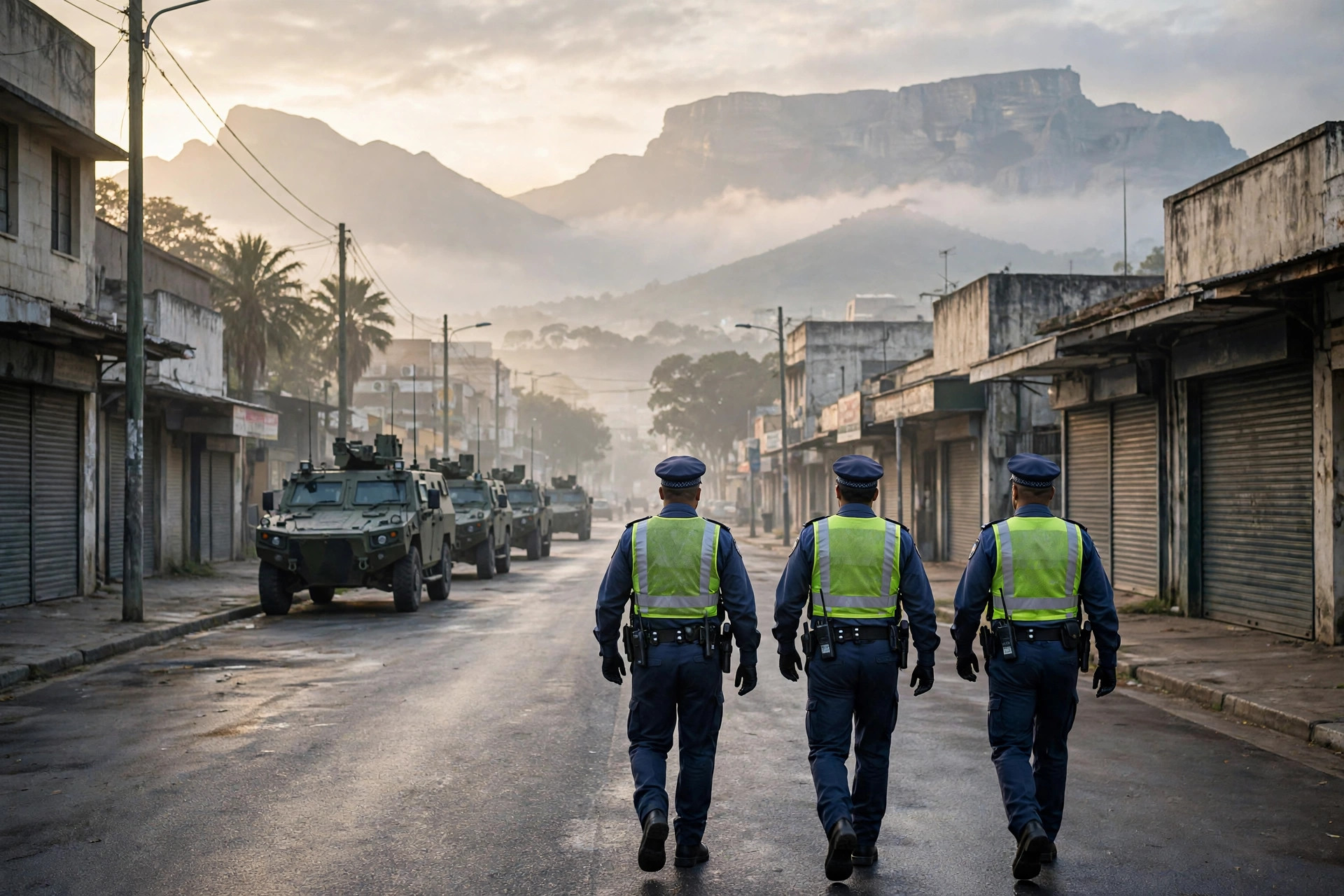
South African President Cyril Ramaphosa has ordered the deployment of 510 soldiers to the coastal province of KwaZulu-Natal to support police efforts to control anti-migrant protests, his office said on Tuesday. The deployment, which runs from 9 October until 30 November and is expected to cost 34.1 million rand, about 2.05 million US dollars, comes before local government elections on 4 November and after calls by anti-migrant groups for nationwide protests.
South Africa has seen months of anti-migrant marches this year that have drawn international criticism. Some marches have descended into violence, and thousands of African foreign nationals have fled the country. The presidency said the deployment followed recent violence linked to misinformation about a Constitutional Court ruling on asylum seekers, and that soldiers would stand by to support the police rather than replace them.
Why South Africa Sent 510 Soldiers to KwaZulu-Natal in 2026
The immediate trigger was violence in October in Durban, KwaZulu-Natal's biggest city, and in Johannesburg's Soweto township. Protests in both places turned violent, with vehicles torched and shops looted. In Durban, a foreign national was allegedly beaten to death by a crowd during a march in the city centre last week, police said. Riot police were deployed to the city centre as shops owned by foreign nationals were looted, according to state broadcaster SABC.
The unrest followed disinformation about a July Constitutional Court ruling. The court ruled that asylum seekers cannot be denied access to South Africa's asylum system solely for procedural reasons. The presidency said a campaign of misinformation about that ruling had fuelled recent violent actions. Protests on 8 October in KwaZulu-Natal and Gauteng opposed the court's decision, following months of anti-immigrant tensions in which demonstrators have demanded the deportation of foreigners living in South Africa illegally.
The deployment is part of a joint police-military operation known as Operation Prosper, which expands an existing intervention to combat gang violence and illegal mining. The presidency said the military deployment began the day after the clashes in Durban and Soweto, and that it would continue through the election period and into the end of November.
What the KwaZulu-Natal Deployment Will and Will Not Do
Soldiers deployed under Operation Prosper are there to support the police, not to take over policing. In South Africa, military deployments to support police are not new: soldiers were previously sent to tackle gang violence in 2019 and illegal mining in 2023, and earlier this year soldiers were deployed in March to help police combat gang violence and illegal mining, with major operations beginning on 11 March in Johannesburg's Riverlea and Westbury neighbourhoods.
The distinction matters for accountability. Police retain primary responsibility for public order, arrests and investigations, while soldiers provide visible presence, cordons and support. Critics of military deployments argue that soldiers are not trained for crowd control in the same way as police, and that their presence can escalate tensions. Supporters argue that the scale of violence in some areas exceeds what police alone can manage, and that a visible military presence deters further attacks on shops and foreign nationals.
How the Anti-Migrant Protests Developed in South Africa
The protests did not emerge in a vacuum. South Africa has high unemployment, strained public services, and a long history of xenophobic violence, most notably in 2008 and 2015, when dozens of people were killed. This year, anti-migrant marches have been organised by groups that blame foreign nationals for crime, unemployment and pressure on housing and healthcare. Foreign nationals and human-rights groups reject those claims, and point to the economic contribution of migrants and to the fact that many of those targeted are legally in the country, including asylum seekers whose claims are being processed.
The Constitutional Court ruling became a focal point because it was misrepresented online and in some protest messaging as opening the borders or granting automatic status to all arrivals. In fact, the ruling concerned procedural access to the asylum system: it removed a procedural barrier that had prevented some people from having their claims considered at all. The presidency's statement explicitly linked the violence to that misinformation, a rare direct acknowledgement that false claims about a court decision had contributed to unrest.
What Happens Next Before the 4 November Elections
The deployment runs through the local government elections on 4 November, a period when political tensions are often heightened and when protests can be used to mobilise voters. Anti-migrant groups have called for nationwide protests, and the government will be watching whether demonstrations remain peaceful or turn violent again, particularly in Durban and Soweto.
Longer term, the deployment does not resolve the underlying issues: the asylum system's backlog, the spread of misinformation, unemployment, and the competition for scarce resources in poor communities. Those require administrative reform, accurate public communication about court rulings, and economic policies that create jobs. The soldiers in KwaZulu-Natal can buy time and protect lives and property in the short term. Whether that time is used to address the causes will determine whether similar deployments are needed again.
Why Local Elections Raise the Stakes in South Africa
Local government elections in South Africa matter in ways that go beyond council seats. Municipalities deliver the services residents encounter every day: water, electricity, refuse collection, roads and local policing support. When those services fail, frustration is immediate and visible, and it can be directed at whoever is seen as responsible, including foreign nationals who are wrongly blamed for shortages they did not cause. Elections also sharpen competition for votes, and anti-migrant rhetoric can be used by candidates and movements seeking to mobilise support by promising to prioritise citizens over newcomers. The 4 November vote therefore arrives in a charged atmosphere, in which a protest, a court ruling or a viral false claim can escalate quickly. The deployment through the election period is designed to prevent that escalation, but the underlying competition for services and jobs will remain after the votes are counted. Whoever wins control of municipalities in KwaZulu-Natal and Gauteng will inherit the same pressures: backlogs in housing and infrastructure, strained budgets, and communities in which misinformation about court decisions and asylum policy can travel faster than official corrections.
Related reading: Slovakia local elections, France protests in October, Serbia student election.