
What is on the table
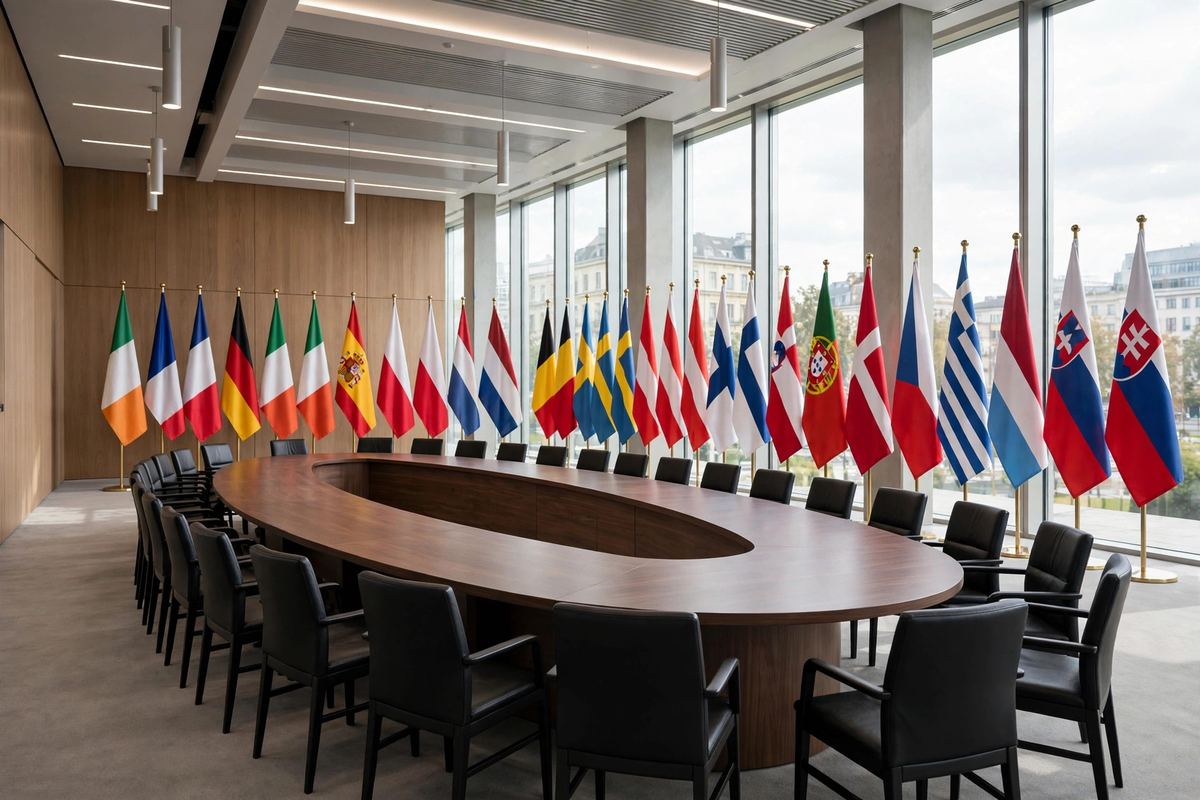
European Union leaders met in Brussels on 15–16 October 2026 to confront three problems that have become inseparable: rising energy prices, how to sustain support for Ukraine through 2027, and how to respond to competition from Chinese exports. The summit ended without a budget deal and without an answer to Ukraine's funding gap — Kyiv says it needs more than $70 billion for 2027 alone — and leaders agreed to revisit the budget at a special summit on 26 November. On energy, European Commission President Ursula von der Leyen told the European Parliament on 6 October that imported fossil fuels had cost Europe €100 billion extra since the end of February, with gas prices up 140% and diesel prices doubled. On trade, leaders discussed the agreement with Beijing to limit imports of hybrid cars from China, a first step towards cutting a goods trade deficit that reached €360 billion in 2025. On frozen Russian assets, Chancellor Friedrich Merz rebuffed a US proposal to unfreeze some of the roughly €210 billion immobilised in Europe, saying the assets should remain frozen in Europe, while Belgium held its veto against deploying the roughly €185 billion held at Euroclear — and the assets were not mentioned in the summit conclusions.
The energy question is the most immediate for ordinary Europeans. Eurozone energy inflation reached 18.8% in September, pushing headline inflation in the currency bloc to 3.8%. Europe imports most of its oil and gas, so when global crude prices jump, the cost passes through to petrol, heating, electricity and factory inputs within weeks. The Middle East war has sent crude above $100 a barrel, and refined products such as diesel have climbed to record highs. For governments, that creates a double squeeze: voters want relief from bills, but subsidies cost money at a moment when several member states are already under fiscal strain. France, for example, has seen the spread between its ten-year bonds and Germany's widen toward 130 basis points, a sign that investors are charging Paris more to borrow.
The Ukraine question is about duration. Leaders are debating how to support Ukraine through 2027, which means moving from emergency packages to a funding path that Kyiv can plan around. Britain, which is not an EU member, has separately pledged about £17 million toward repairs at the Chernobyl nuclear facility after damage attributed to a Russian drone attack, a reminder that support for Ukraine extends beyond weapons to civilian infrastructure. Inside the EU, the debate is not only about how much money to commit but about how to pay for it: through the common EU budget, through national contributions, or through borrowing. The longer the war continues, the more those choices compete with domestic spending on energy relief, health and pensions.
The China competition debate
The third item, competition from Chinese exports, is where trade policy meets industrial strategy. European leaders want stronger measures to address what they see as unfair competition, particularly in sectors where Chinese firms benefit from state support: electric vehicles, batteries, solar panels and steel. The EU has already taken steps to limit imports of Chinese-built hybrid and battery electric vehicles, and the debate now is how far to go. France has pushed for public procurement and subsidy schemes to favour products made in the European Union, while Germany and others have argued that closely linked partners and free-trade partners should also qualify. That disagreement matters because Germany's car industry is deeply tied to China as both a market and a supply-chain partner, while France's approach is more protective.
The stakes are structural rather than cyclical. China is now the world's largest exporter of electric vehicles, and its manufacturers have moved from competing on price alone to competing on technology, design and range. European carmakers, who employ millions of people directly and indirectly across the continent, argue that they cannot compete on a level field if their rivals receive subsidies they do not. Chinese officials counter that European complaints are protectionism dressed up as fairness, and that Chinese firms win because they invested earlier and at greater scale in batteries and supply chains. Both claims contain truth, which is why the debate is so hard to resolve: Europe wants open markets, but it also wants its own industries to survive the transition to electric mobility. The EU's earlier decision on Chinese-built vehicle imports, covered in the EU-China hybrid car import cap story, shows how this tension is already producing concrete policy.
There is also a Franco-German dimension that shapes everything else. France and Germany have been nearing a deal on car emissions that would soften the EU's 2035 carbon dioxide target for new cars, setting it at a 90% reduction from 2021 levels without requiring automakers to close the remaining gap through low-carbon steel and alternative fuels. The same emerging plan addresses "Made in Europe" rules, potentially treating Britain as a trusted partner for automotive purposes if it aligns with EU conditions. Those negotiations, reported by Reuters, show how climate policy, industrial policy and the post-Brexit relationship have become entangled: a single package now touches emissions, procurement, trade protection and Britain's place in European supply chains.
Why energy, Ukraine and China are one story
It is tempting to treat these as three separate meetings, but they are connected by a single thread: Europe's dependence on the outside world. The continent imports its energy, relies on partners for much of its security, and depends on global supply chains for the technologies of the green transition. Each shock of recent years, from the pandemic to the war in Ukraine to the Middle East conflict, has exposed a different dependence. The EU's response has been a long, uneven effort to build what Brussels calls "strategic autonomy": the ability to keep the lights on, defend itself and make the products it needs without being at the mercy of any single supplier or rival.
That effort costs money, and the budget debate is where the trade-offs become concrete. Supporting Ukraine, subsidising energy, funding green industry and maintaining welfare states all draw on the same public purse. Member states disagree about how much should be spent at the EU level versus nationally, and about whether new common borrowing is justified. The European Commission's growth strategy debates and the Parliament's budget negotiations are the formal venues, but the leaders' meeting is where the political signal is set. When leaders agree that Ukraine support through 2027 is a priority, that shapes the budget; when they agree that Chinese competition needs stronger measures, that shapes trade and industrial policy.
The economic backdrop makes the choices harder. Eurozone growth forecasts stand at about 0.9% for 2026, and the region faces fiscal stress in several large member states. Gross domestic product growth of less than 1% leaves little room for new spending without either raising revenue or cutting elsewhere. At the same time, doing nothing carries its own costs: if Ukraine's defences falter, Europe's security bill rises; if European industry loses the electric-vehicle race, jobs disappear; if energy prices stay high, households and factories pay the price. The leaders' meeting is, in effect, an attempt to rank those risks.
What to watch next
Three things will show whether the meeting produced more than words. The first is a concrete funding path for Ukraine through 2027: an agreed figure, a funding mechanism and a timeline, rather than a general commitment. The second is energy: whether leaders agree on joint purchasing, price relief, or accelerated investment in renewables and grid infrastructure that would reduce import dependence over time. The third is China: whether the EU moves from case-by-case trade measures to a broader framework for procurement and subsidies, and whether Germany and France can agree on its scope. The war in Ukraine itself remains the wild card: Russian strikes on Ukrainian energy infrastructure, and Ukrainian strikes on Russian refineries, continue to shape the security picture, as covered in reporting on the overnight energy strikes between Russia and Ukraine.
For people outside the meeting rooms, the consequences will arrive through bills, jobs and prices: the cost of heating a home this winter, the price of an electric car, the security of a factory job, and the stability of a continent that is trying to fund its own defence while keeping its economy competitive. None of those questions will be settled in a single summit, but the direction leaders set now will shape the answers for years.
In Britain, the squeeze is quantified: the price cap has risen to £1,723 a year, and forecasters warn January could be far worse.