
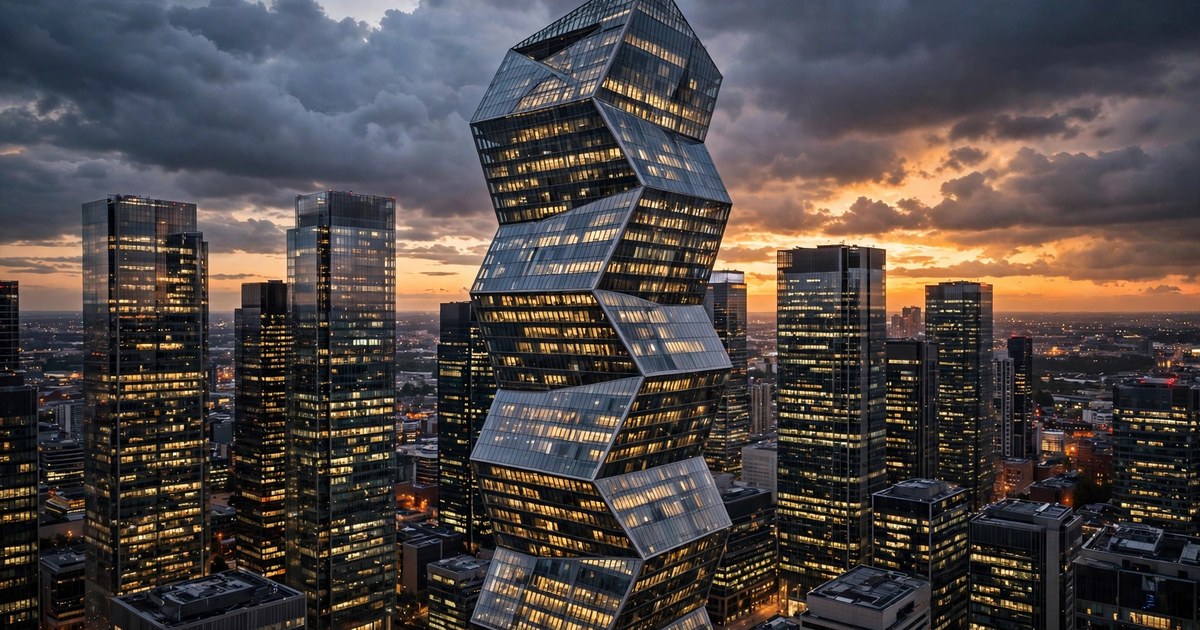
The Houthi attack on the Aramco Tower in Riyadh on Sunday 8 November 2026 put a missile strike into the middle of Saudi Arabia's financial district. Loud explosions sounded across the Saudi capital in the early hours of the morning, and by daylight witnesses could see shattered windows across several floors of the zig-zag glass tower that houses offices of Saudi Aramco, the state oil giant. Saudi Arabia's Energy Ministry said falling shrapnel from an intercepted attack caused minor damage and that no one was killed or injured. The Houthis, who claimed responsibility, described a much bigger operation: four missile and drone strikes aimed at the financial district, the airport, oil storage tanks and the eastern city of Abqaiq. The two accounts do not agree on how much damage was done, but they agree on the core fact: the war between Saudi Arabia and Yemen's Houthis has now reached the tower that symbolises the kingdom's economic ambitions.
What Happened in the Houthi Attack on the Aramco Tower in Riyadh
The attack began in the early hours of Sunday morning. Saudi civil-defence officials issued an early-warning alert shortly before the strike, and loud booms were heard across the capital as air defences engaged incoming missiles. Air raid alerts sounded in Riyadh and Najran, and in the Eastern Province cities of Dammam, Buqayq, also known as Abqaiq, and Al-Ahsa, before being lifted later in the day.
The Saudi-led coalition fighting the Houthis in Yemen said its air defences intercepted and destroyed two ballistic missiles fired towards Riyadh. Coalition spokesman Major General Turki al-Malki said the defences also intercepted two cruise missiles and a drone over Riyadh and the southern regions, and another ballistic missile aimed at the oil-rich Eastern Province. The coalition identified the Iran-aligned Houthis as responsible for the launches.
Despite the interceptions, the Aramco Tower was damaged. Witnesses told the AFP news agency that several floors of the tower appeared damaged, with shattered glass and part of the facade torn away. One witness said they saw a projectile strike the building but could not identify what type it was. Video circulating on social media, verified by BBC Verify and by CNN, showed windows blown out across several floors, with at least one floor appearing badly hit.
Saudi Arabia's Energy Ministry, in a statement carried by the state-run Saudi Press Agency, described an "attempted attack" on an administrative building belonging to Saudi Aramco in Riyadh. "The incident resulted in falling shrapnel that caused minor damage to the building, with no injuries or fatalities reported, thankfully," the ministry said. The Wall Street Journal reported that the building, which also contains residential units, was empty at the time of the strike after the civil-defence warning. Saudi Aramco itself did not respond to requests for comment.
The Houthis gave a different version of events. In a statement carried by the Houthi-controlled Saba news agency, the group said its forces had carried out four military operations using ballistic and cruise missiles and drones. It listed several targets, including the financial district, Riyadh airport, Aramco oil storage tanks and Abqaiq. Houthi military spokesman Brigadier General Yahya Saree said the strikes were retaliation for Saudi attacks on a village and a market in Yemen. The day before the attack, Saree had warned that Saudi Arabia would "pay a heavy price for every crime and act of aggression."
The two accounts diverge sharply, and neither the Associated Press nor Reuters reported independently establishing the full flight paths or the interception sequence. What is independently corroborated is narrow but clear: an Aramco office building in Riyadh sustained damage, and no one was hurt.
What Is the Aramco Tower and Why Does KAFD Matter?
The Aramco Tower, also known as "Villas in the Sky", is a 36-storey glass tower in Riyadh's King Abdullah Financial District, known as KAFD. Its sharp angles jut out of the upper floors, making it one of the most recognisable buildings in the Saudi capital. It houses offices of Saudi Aramco, the state-owned oil giant and the world's largest crude exporter.
KAFD itself is a cluster of office towers in northern Riyadh built as a showcase for the kingdom's economic reform plans. It houses leading Saudi companies and international firms, including Goldman Sachs, along with banks and offices of the Saudi sovereign wealth fund. A strike on a tower there is therefore a strike on the physical symbol of the economic future Saudi Arabia is trying to build.
The timing added to the disruption. The attack came at the start of the workweek, as children were returning to in-person classes after weeks of remote learning because of the war between the Saudi military and the Houthis. The strike disrupted Riyadh's efforts to restore normal activity in the capital after weeks of security restrictions.
How the Houthi Attack on the Aramco Tower Fits the Wider War
The Aramco Tower strike did not come out of nowhere. Fighting between Saudi Arabia and the Iran-aligned Houthis resumed in July 2026, ending a UN-brokered truce that had largely held since 2022. Since then, the Houthis have ramped up strikes on Aramco facilities, including the oil giant's headquarters in Dhahran in the Eastern Province, and have declared a maritime embargo on Saudi Arabia, attacking oil facilities and Red Sea tankers.
The pattern of escalation is visible in the incidents Worldlession has covered in recent weeks. On 10 October, a Houthi attack on King Khalid International Airport in Riyadh killed 13 people and wounded more than 300. Later in October, the Houthis struck Riyadh airport and a Saudi oil pipeline, as reported in our coverage of the Houthi attack on Riyadh airport on 26 October, and the earlier Houthi missile attacks on Saudi Arabia in October show the same targets appearing again and again: airports, Aramco sites and the Eastern Province.
The strikes also run in a retaliation cycle. The Houthi attack on the Aramco Tower followed a Saudi-led coalition air strike near the Yemeni capital, Sanaa, on Saturday, which the Houthi-run Health Ministry said killed at least 33 people and wounded 39 others. The Houthis presented their Riyadh operation as the answer to that strike. Each side's attack becomes the other side's justification for the next one.
Reuters described the Houthi campaign against Saudi Arabia as another front in the wider US-Israeli war with Iran, and the connection is visible elsewhere in the region. In the Strait of Hormuz, tankers hit by mines have kept shipping on edge, and Iran lifting its missile range limit has added to the sense that the region's conflicts are feeding into each other.
What the Attack Means for Oil Markets
For oil markets, the most important fact about the Aramco Tower strike is what it did not hit. There was no immediate official indication that the incident had affected Aramco's oil production or exports. The ministry's statement concerned an administrative building rather than an operating oil installation, and it provided no estimate of repair costs or a timetable for restoring the damaged offices. The tower holds desks, not drilling equipment.
That distinction is why the strike matters less as a supply event and more as a warning. The Houthis also claimed strikes on Aramco oil storage facilities and Abqaiq, the city at the heart of Saudi oil processing. Saudi authorities did not confirm that all the locations the Houthis named had been struck, but the claim alone shows where the group is aiming: at the infrastructure that moves the world's largest crude exporter's oil.
Oil prices fell on Monday 9 November as Donald Trump said new US strikes on Iran were unlikely, according to The Hindu and other outlets, a separate development from the Riyadh attack. But the pattern of repeated strikes on Aramco sites, tankers, refineries, storage areas and the company headquarters is the background against which traders now price Saudi supply risk. A single damaged office tower does not interrupt supply. A campaign that keeps reaching into the capital and the Eastern Province is harder to dismiss.
What Happens Next After the Riyadh Attack
Three things are worth watching in the days after the strike. First, whether the Saudi-led coalition answers with air strikes on Houthi-held Yemen, as it has after previous attacks. The Houthis have already warned of more strikes, and the coalition has shown it will hit back. Second, whether Aramco or the Saudi authorities give a fuller account of the damage. The ministry's careful wording, attributing the damage to falling shrapnel from an intercepted attack, leaves open the question of whether the tower itself was directly hit, something officials did not disclose. Verified video suggests heavier damage to at least one floor than the word "minor" implies, and that gap will be hard to sustain if more footage emerges.
Third, whether the Houthis try again, and where. The group has now struck the financial district, the airport, oil storage and the Eastern Province in a single weekend, and it has shown it can reach the centre of Riyadh. The defences intercepted most of what was fired, but not everything. For residents of the capital, the return to in-person classes and normal office life now depends on a missile shield holding every time.
The wider question is whether the regional war cools or spreads. The United States and Iran are talking, and oil fell on the signal that new strikes on Iran were unlikely. But the Houthi campaign against Saudi Arabia has its own momentum, and the Aramco Tower strike shows it can reach the most prominent building in the kingdom's financial district. Until one side breaks the retaliation cycle, the next strike is a matter of when, not if.
Sources: Reuters; The Wall Street Journal; AFP; BBC Verify; CNN; Saudi Press Agency; the Houthi-run Saba news agency; The New York Times; The Hindu.