
Yemen's Houthi group claimed on Monday, 26 October 2026, that it had carried out a Houthi attack on Riyadh airport and Saudi oil pipeline infrastructure, in the latest escalation of a campaign that has repeatedly put Saudi airports, ports and energy sites in the firing line. The claim, reported by Reuters on Monday, said the group fired a ballistic missile towards King Khalid International Airport in Riyadh and used drones against crude oil pumping stations along Saudi Arabia's East-West Pipeline. It arrived only a day after the airport had partly resumed operations, and it underlines how quickly the fighting in and around Yemen can spill over into global energy and aviation routes.
This article explains what was claimed, what the Saudi-led coalition says it did in response, what has not yet been confirmed, and why the East-West Pipeline matters far beyond Saudi Arabia. The story is still developing, and the distinction between a claim and a confirmed strike matters: as of the reports published on Monday, there was no immediate Saudi confirmation of damage or casualties from the claimed attacks on the airport and the oil facilities.
What the Houthis claimed on 26 October 2026
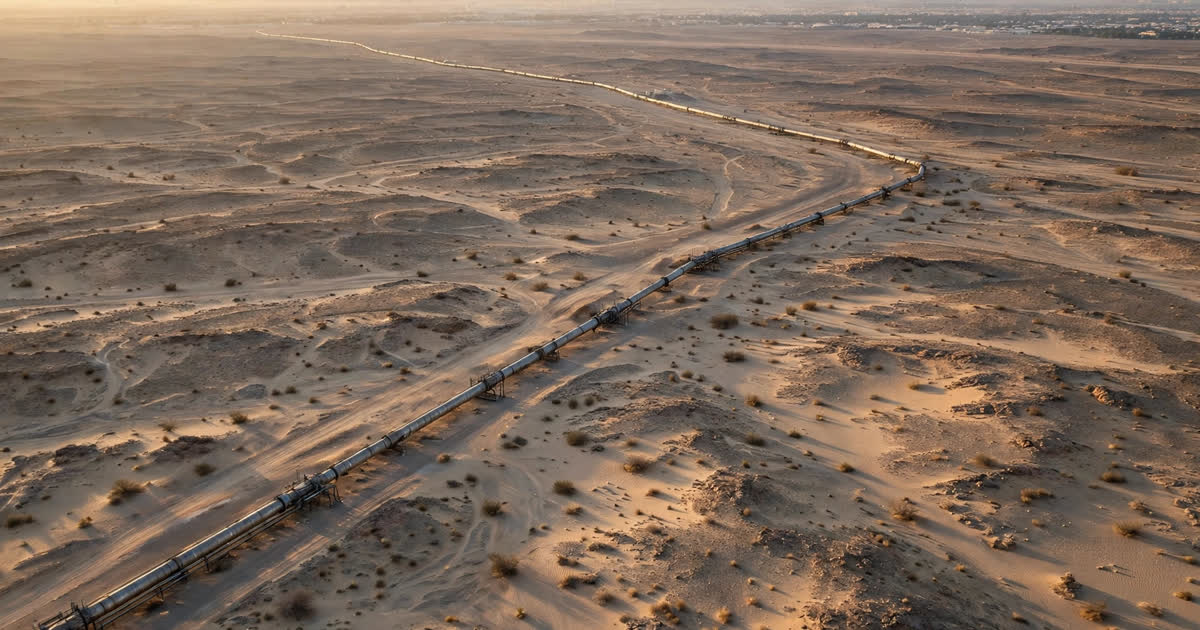
According to reports of the Houthi statement, military spokesperson Yahya Saree said the group launched a ballistic missile towards King Khalid International Airport in Riyadh. The same statement said Houthi forces deployed drones to strike pumping stations along the East-West Pipeline, the 1,200-kilometre route that carries crude oil from Saudi Arabia's eastern fields to the Red Sea port of Yanbu.
The Monday claim followed a similar claim on Saturday, when the Houthis said they had targeted the East-West Pipeline, crude oil pumping stations, an Aramco facility in Yanbu and the Rabigh refinery. Again, there was no Saudi confirmation of those Saturday claims in the reports published on Monday. Readers should therefore treat the details of the pipeline strikes as claims made by the Houthis, not as independently verified damage assessments.
Saudi Arabia's Civil Defense Directorate had earlier reported that its early warning system issued a danger alert for Riyadh following the reported missile threat. That alert is a reminder that even an intercepted missile can disrupt a capital city: warnings sound, flights are watched closely, and residents are told to stay alert while air defences respond.
What the Saudi-led coalition says it intercepted and destroyed
The Saudi-led coalition gave a different, but partly overlapping, account. Coalition spokesperson Major General Turki al-Maliki confirmed that a ballistic missile launched by the Houthis towards Riyadh had been intercepted. The coalition also said it had earlier destroyed two ballistic missile launchers in the capital Sanaa, including one used to fire a missile towards Riyadh that it said it had intercepted.
In a separate military operation against Houthi targets in Yemen on Monday, the coalition said it destroyed five tunnels used to store ballistic missiles, four ballistic missile launchers and a missile storage facility. The operation also targeted Houthi supply lines, fighters and military equipment along front lines inside Yemen, according to al-Maliki, who pledged continued deterrent operational measures to protect civilians.
That response fits a pattern seen in recent weeks: Saudi Arabia has intensified its strikes on the Houthis since the group captured strategic areas along Yemen's Red Sea coast last month, advancing towards the Bab el-Mandeb Strait. That strait, at the southern end of the Red Sea, is a global shipping chokepoint for Gulf oil producers, on the opposite side of the Arabian Peninsula from the Strait of Hormuz.
Why the Saudi oil pipeline matters for world oil
The East-West Pipeline, operated by state-owned Saudi Aramco, stretches approximately 1,200 kilometres from the Abqaiq area in eastern Saudi Arabia to Yanbu on the Red Sea. It transports crude oil from production and processing facilities in the east to refineries and export terminals on the west coast. Its strategic value is simple: it gives Saudi Arabia a way to move oil to world markets without sending every barrel through the Strait of Hormuz.
That alternative route has become more important while the Strait of Hormuz has been largely shut by the wider war, according to Reuters reporting carried on Monday. Saudi Arabia temporarily shut down the 1,200-kilometre East-West Pipeline in September as a precaution after a drone attack that Riyadh and Baghdad said originated in Iraq. A pipeline that can be switched off as a precaution can also become a target, because any prolonged disruption raises questions about export capacity from the world's largest oil exporter.
For oil markets, the key question is not only whether a pumping station was hit, but whether exports, shipping insurance or refinery operations change as a result. Monday's reports did not confirm a shutdown of the pipeline or a halt to exports. That absence of confirmed disruption is itself important information, and it is why this article separates claims from confirmed effects throughout.
Riyadh airport: reopened on Sunday, targeted again on Monday
The airport angle makes Monday's claim particularly sensitive. Riyadh's King Khalid International Airport resumed operations at two terminals on Sunday after an attack claimed by the Houthis earlier in October killed 13 people, described in Monday's reporting as the deadliest attack in the kingdom in more than a decade. The airport had previously suspended operations on 10 October following Houthi attacks.
Reports on Sunday and Monday described a partial, careful reopening rather than a full return to normal. The airport's official website listed several domestic and international services, including flights from Dubai, Paris and Cairo, while flight-tracking data showed only a small number of aircraft taking off and most other flights still cancelled. Terminal 1 was dedicated to domestic flights and Terminal 2 to international flights operated by national carriers from Sunday, according to earlier reporting.
Before Monday's claim, civil defence authorities had already issued emergency alerts on Sunday for Riyadh and the southern cities of Abha, Khamis Mushait, Jazan and Najran, before saying minutes later that the danger had passed. The coalition said two drones and a ballistic missile were launched towards Riyadh, and a cruise missile towards Khamis Mushait, and that it later intercepted 10 ballistic missiles fired towards southern Saudi Arabia. Against that background, a fresh claim on Monday does not need to close the airport to worry airlines, passengers and insurers: uncertainty alone can keep schedules thin.
For travellers, the practical point is to check directly with the airline and the airport before travelling, rather than relying on social media claims. No new airport closure was confirmed in the Monday reports checked for this article, but the situation has changed day by day in recent weeks.
What is confirmed and what is not yet confirmed
Confirmed, from the coalition and official statements reported on Monday: a missile was fired towards Riyadh and was intercepted; the coalition destroyed launchers, tunnels and a missile storage facility in Yemen; and the East-West Pipeline is a 1,200-kilometre Aramco route from Abqaiq to Yanbu that was temporarily shut in September as a precaution.
Claimed, but not independently confirmed in Monday's reports: that Houthi drones hit East-West pumping stations, that the Saturday claims against Yanbu and Rabigh caused damage, and that the Monday airport missile caused damage at King Khalid International Airport. There was no immediate confirmation of damage or casualties from the reported attacks on the airport and oil facilities.
Also reported, but attributed rather than confirmed by all sides: the Houthi claim of at least 56 coalition airstrikes on Yemen in the previous 24 hours, affecting provinces including Hodeidah, Lahij, Amran, Saada, Al-Jawf, Taiz and Ibb. Attributed claims of that kind are a normal part of wartime reporting, but they should not be read as verified counts.
How this fits the wider Yemen and Gulf war
Yemen has been engulfed in civil conflict since September 2014, when the Houthis seized Sanaa and several other provinces. A Saudi-led coalition intervened in March 2015 in support of Yemen's internationally recognised government. The latest fighting has effectively ended a United Nations-brokered truce that had largely held since 2022.
The Houthis have been firing ballistic missiles and drones at Saudi airports, ports and oil installations, turning US ally Saudi Arabia into a pressure point in the wider war, according to Monday's Reuters reporting. That wider war also frames a diplomatic development reported on Monday: top officials from the Mecca Pact countries Saudi Arabia, Turkey and Pakistan were set to meet Iranian officials in Tehran on Monday to discuss regional coordination. The planned talks would be the first high-level contact between Iran and all members of the three-nation bloc since Saudi Arabia came under escalating attacks from Yemen's Iran-aligned Houthis.
That meeting does not mean the fighting will stop, but it shows that regional diplomacy and battlefield escalation are running in parallel. Energy routes, shipping lanes and airport safety are now part of the same calculation, which is why a claim about a pipeline pumping station can matter to readers far from Riyadh or Sanaa.
Earlier coverage on Worldlession has followed this escalation step by step, including the previous missile interceptions and the airport's reopening after its two-week closure. Readers who want the sequence can start with the earlier report on 10 missiles intercepted as oil sites were targeted, then read how Riyadh airport resumed flights after its closure, and what happened when a Houthi missile hit Saudi Aramco's headquarters in Dhahran.
What happens next for flights and oil shipments
Three things are worth watching in the next 24 to 48 hours. First, whether Saudi authorities or Aramco confirm or deny any damage to the East-West Pipeline or its pumping stations, and whether any part of the route is shut as a precaution, as happened in September. Second, whether King Khalid International Airport expands or scales back its resumed schedule, and whether airlines that had tentatively returned keep their flights. Third, whether the Tehran meeting produces any statement on de-escalation, or whether the coalition's pledged deterrent operations and further Houthi claims keep the cycle going.
For now, the safest summary is the one Monday's reporting supports: the Houthis claimed a missile and drone attack on Riyadh airport and the Saudi oil pipeline on 26 October 2026; the coalition says it intercepted the Riyadh missile and struck back at launchers and storage sites in Yemen; and damage from the claimed pipeline and airport strikes remains unconfirmed. That is a serious escalation in claims and in rhetoric, even before any confirmed damage is added to the picture.
Worldlession will update this story if Saudi authorities, Aramco or the coalition confirm damage, a pipeline shutdown, or a change to airport operations. Until then, readers should treat new social media claims about strikes with the same caution applied here: check who is claiming what, what the other side confirms, and what independent evidence, if any, has been published.