
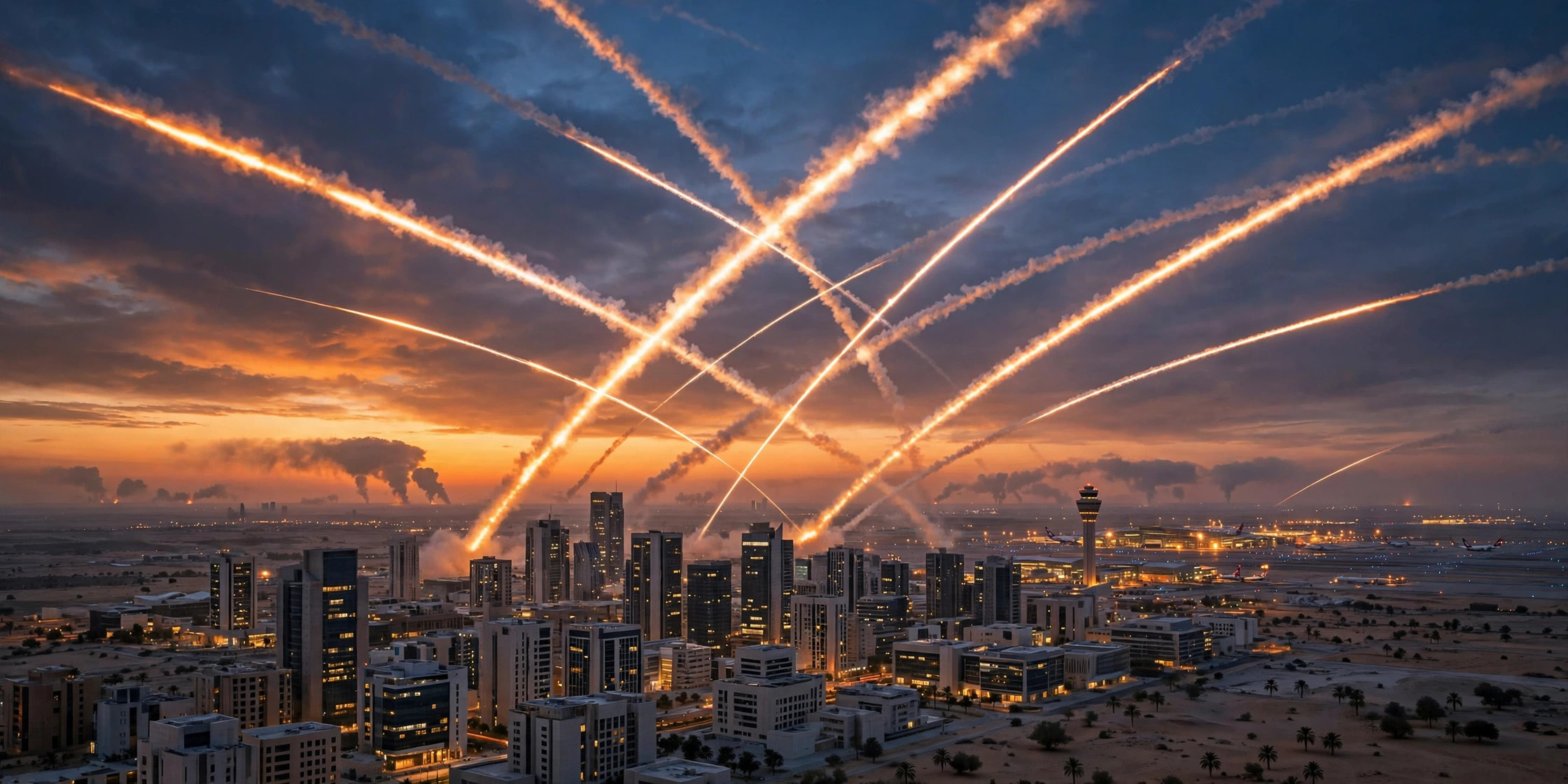
The Houthi attack on Saudi Arabia sharply escalated over the weekend of 24–25 October 2026, as Yemen's Houthi movement claimed a wave of missile and drone strikes on Saudi airports, oil facilities and military sites, and the Saudi-led coalition said it intercepted ten ballistic missiles aimed at the kingdom's Southern Region on Sunday. The exchange unfolded on the same day Riyadh's main airport reopened after a two-week closure, underlining how quickly the renewed Yemen war is spilling across Saudi Arabia's borders. It is the latest flare-up in a conflict that has shattered a United Nations-brokered truce that largely held from 2022, and it is being watched closely by energy markets, airlines and governments across the Gulf.
This article explains what the Houthis claim they hit, what Saudi defences say they stopped, what is independently confirmed, and why this round of fighting matters far beyond Yemen's borders. One important caveat runs through all of it: many of the claims from both sides have not been independently verified, and Saudi authorities have not confirmed that every target the Houthis named was actually struck.
Houthi attack on Saudi Arabia: what the Houthis claim they targeted
Houthi military spokesperson Yahya Saree said the group carried out seven missile and drone operations on Saturday, 24 October. According to his statement, the targets included King Khalid International Airport in Riyadh, attacked in two phases, an Aramco facility in Yanbu, the Rabigh oil refinery, crude oil pumping stations and the East-West Pipeline, which carries crude from Saudi Arabia's eastern oil fields to the Red Sea coast. Saree also named King Fahd International Airport in Dammam, an airport in Najran and an airbase in Khamis Mushait among the targets.
The breadth of the claimed target list is itself significant. Previous rounds of cross-border attacks tended to focus on one or two sites. This time the Houthis claimed to have struck at aviation, energy and military infrastructure across several Saudi cities in a single day — Riyadh, Yanbu, Rabigh, Dammam, Najran and Khamis Mushait. The group has also warned airlines against using Saudi airspace, exempting only the airspace over Mecca and Medina, and it has described Riyadh's airport as a "military target" even as civilian flights resumed there.
Readers following the airport story should note that Riyadh airport reopened on Sunday after a two-week Houthi closure, with Terminal 1 designated for domestic flights and Terminal 2 for international flights operated by national carriers. The reopening came after the airport halted operations on 10 October following an attack, claimed by the Houthis, that killed 13 people and wounded more than 300 — the deadliest attack inside the kingdom in more than a decade.
Houthi attack on Saudi Arabia: what the coalition says it intercepted
The Saudi-led coalition, which backs Yemen's internationally recognised government, gave a different account of the weekend. It said it destroyed two ballistic missiles fired by the Houthis towards Yanbu and Taif on Saturday. Overnight, it said it intercepted two drones and a ballistic missile over Riyadh, and on Sunday morning it said it destroyed a Houthi cruise missile aimed at the southern city of Khamis Mushait. Shortly before noon on Sunday, the coalition said it had intercepted and destroyed ten ballistic missiles aimed at the Southern Region.
Saudi Civil Defense briefly issued emergency alerts for Riyadh, Abha and Khamis Mushait, then said minutes later that the danger had passed. Similar alerts were reported for Taif and Yanbu, as well as for Mecca and Jeddah. The pattern — alerts followed quickly by all-clear messages — suggests air defences were active across a wide area, but it does not by itself confirm which projectiles reached the ground and which were destroyed in the air.
Air India and Air India Express have suspended flights to and from Riyadh and Dammam until 7 November, and to and from Jeddah until 31 October, a disruption that shows how the fighting is already affecting ordinary travellers. Passengers with bookings to Saudi Arabia are being advised to confirm flight status with their airline before travelling.
Debris near Mecca and Jeddah: what is actually confirmed
One of the most sensitive elements of the weekend was debris from intercepted missiles falling in the Mecca and Medina regions, home to Islam's holiest sites, which are visited by millions of pilgrims every year. Saudi Civil Defense said parts of intercepted missiles fell in Wadi al-Mughammas in Mecca, and debris was also reported in areas of Jeddah, Taif and Rabigh. It was not clear whether that debris was linked to the Houthis' reported targeting of the Rabigh refinery.
The Houthis denied that they attacked Mecca and Medina, saying their operations "target Saudi oil facilities and military bases". That denial matters because any strike on the holy cities would carry enormous political and religious consequences across the Muslim world. For now, the confirmed facts are limited: debris fell in the wider regions, alerts were issued and lifted, and neither side claims a direct hit on the holy cities themselves.
Aden: a second front in the Houthi–Saudi confrontation
While attention focused on Saudi territory, fighting also flared in Aden, Yemen's southern port city and the seat of the internationally recognised government. Yemen's Interior Ministry said two Houthi missiles struck a coast guard headquarters, while a third hit a coast guard building in the Tawahi district. Houthi spokesperson Saree said the group's forces had targeted Saudi-backed military gatherings at what he called Al-Nasr camp and a naval military base in Aden, saying Saudi officers were overseeing mobilisation there. There was no immediate comment from the Saudi-led coalition on that assertion.
The Aden attacks show that the escalation is not only a cross-border missile exchange. It is also a ground-level contest for control of Yemen's south, where the internationally recognised government is trying to hold territory while the Houthis press from the north and along the coast. The escalation is unfolding alongside a Saudi-backed offensive by Yemen's government, known as Operation Dawn of Yemen, which aims to reclaim territory held by the Houthis.
Why this escalation matters for oil, shipping and flights
The targets the Houthis named — an Aramco facility, a refinery and the East-West Pipeline — go to the heart of Saudi Arabia's energy system. The East-West Pipeline is a strategic alternative route that lets Saudi crude reach the Red Sea without passing through the Strait of Hormuz, and Yanbu and Rabigh are key nodes in that system. Any credible threat to them raises questions for energy markets, even when interceptions prevent damage, because it forces buyers, insurers and shippers to price in risk.
The shipping dimension is just as important. In September 2026 the Houthis seized the port town of Mokha and territory near the Bab al-Mandeb Strait, one of the world's busiest maritime chokepoints, through which Gulf oil and global container traffic pass between the Red Sea and the Gulf of Aden. Combined with the renewed missile threat to Saudi airports, the fighting now touches aviation, energy exports and sea lanes at the same time. That is why governments and airlines are reacting even though the physical damage from this weekend's strikes remains unclear.
The regional picture is also widening. The escalation has opened another front in the broader US–Israeli confrontation with Iran, which backs the Houthis, and it follows other recent flashpoints in the Gulf, including Iran shooting down a US drone over Bandar Abbas. Travellers should also note that Canada has issued a travel warning for Saudi Arabia amid the deteriorating security situation.
How the Yemen war reached this point
Saudi Arabia intervened in Yemen's civil war in 2015 at the head of a coalition supporting the internationally recognised government, after the Houthis seized the capital, Sanaa, in 2014. Years of fighting followed, with Saudi airstrikes and a blockade on one side and Houthi missile and drone attacks on the other. A UN-brokered truce in April 2022 largely halted major fighting, but it never became a comprehensive political settlement, and disputes over power-sharing, revenue, salaries and security arrangements remained unresolved.
The truce unravelled in 2026. Tensions rose from July, when Saudi and government forces bombed Sanaa airport's runway, and the Houthis responded by declaring a naval blockade on Saudi-linked shipping in the Red Sea. In September the Houthis launched a rapid ground offensive, seizing much of Yemen's Red Sea coastline. On 5 October, Yemen's government launched Operation Dawn of Yemen, backed by Saudi airstrikes, to retake lost territory. On 9 October, UN Special Envoy Hans Grundberg warned the Security Council that Yemen had slid back into full-scale war, with hostilities spreading across multiple front lines. Strikes on airports in Riyadh, Abha and Dammam between 6 and 12 October killed at least 20 people, and a missile strike on a camp in Shabwa on 19 October killed at least 53 and injured about 200. More than 233,000 people have been displaced since the escalation began.
Earlier in October the conflict also produced a separate major incident at Saudi Aramco's headquarters, covered in our report on the Aramco Dhahran strike. Taken together, the airport attack, the Aramco strike and this weekend's claimed barrage show a pattern: the Houthis are systematically targeting the symbols and infrastructure of the Saudi state, while the coalition is relying on missile defences and counter-strikes to limit the damage.
What happens next
Three things will determine whether this weekend marks a peak or a new baseline. First, whether the coalition's interceptions continue to prevent mass-casualty attacks on Saudi cities — the 10 October airport attack showed what happens when one gets through. Second, whether Operation Dawn of Yemen makes ground gains or stalls, which would affect the Houthis' leverage. Third, whether diplomacy gets a new opening: Saudi Arabia has previously said the Houthis turned down an invitation to talks in Oman in July, while the Houthis say their attacks are retaliation for Saudi airstrikes on civilian infrastructure in Yemen.
For now, travellers, energy markets and regional governments are in a holding pattern: flights are disrupted, alerts are frequent, and claims from both sides are running ahead of independent verification. What is certain is that the war that was frozen in 2022 is frozen no longer — and the weekend of 24–25 October showed that its front line now runs through Saudi airports, oil facilities and the Red Sea shipping lanes alike.
Sources: TBS News; The Voice News Magazine; Saudi Press Agency statements carried by regional outlets; statements by Houthi military spokesperson Yahya Saree; Saudi Civil Defense updates; United Nations Security Council briefing by Special Envoy Hans Grundberg (9 October 2026). Claims by either side that have not been independently confirmed are attributed as claims in this article.