
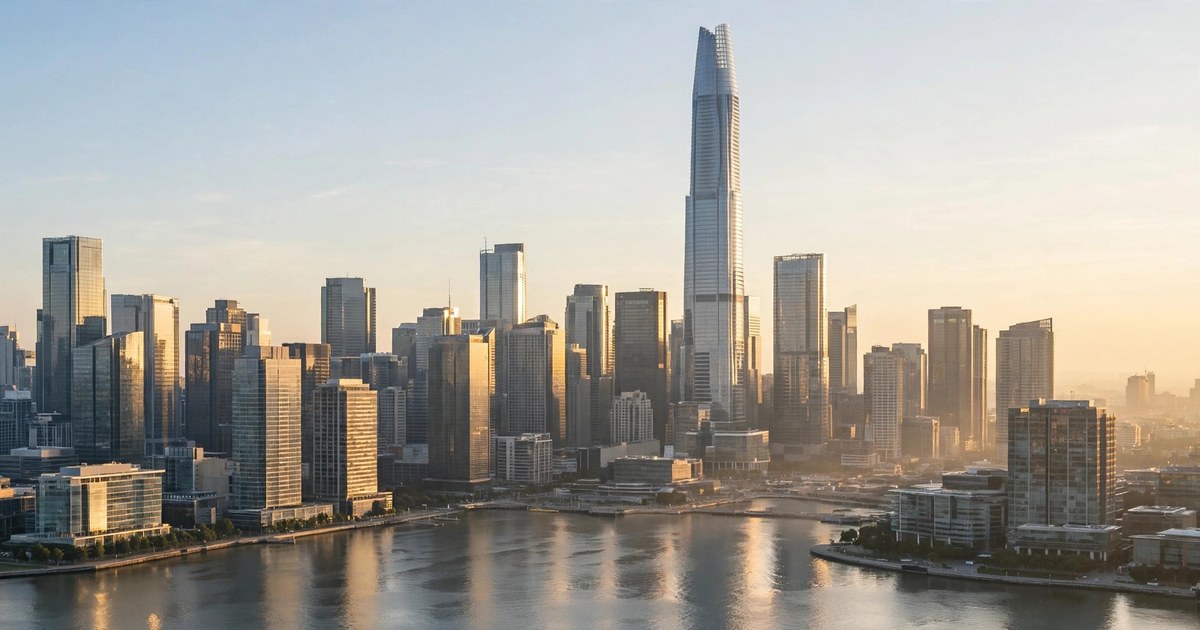
A Houthi missile struck Riyadh's tallest skyscraper before dawn on Thursday, 19 November 2026, blowing out windows across seven to eight floors of the Public Investment Fund Tower and bending parts of its metal facade. The Houthi attack on Riyadh's financial district — the second to damage a landmark there in 11 days — was confirmed by Saudi Arabia's Civil Defense, which said several floors of the 80-storey tower and nearby buildings sustained material damage, with no injuries reported. The Houthis claimed the attack hours later, saying it caused significant damage. This is what happened, what the PIF Tower is, and why the strike reaches far beyond one building.
What happened in the Houthi attack on Riyadh
Reports put the blast at around 4:45 a.m. local time, when residents across the Saudi capital were woken by a loud explosion. The missile hit the Public Investment Fund Tower, the 80-storey, 385-metre skyscraper that houses the headquarters of the kingdom's sovereign wealth fund in the King Abdullah Financial District. Saudi Arabia's Civil Defense said a Houthi attack on a tower in the financial centre caused material damage to several floors and to neighbouring buildings, and confirmed there were no injuries. The Saudi Press Agency published a photograph of the damage, and Reuters and AFP identified the building from the photograph as the PIF Tower.
Entrances to the financial district were closed and people were evacuated from the area, while ambulances and fire trucks were on the scene. The Saudi-led coalition's spokesman, Maj. Gen. Turki al-Maliki, said its forces had dealt with a missile threat launched by the Houthis towards Riyadh, and that an initial assessment showed debris had fallen and material damage had been reported. The coalition said separately that it had intercepted and destroyed four ballistic missiles launched towards the kingdom's southern region, and that it had destroyed a missile launch platform in the Yemeni city of Dhamar.
The Houthis claimed the attack hours later. Their military spokesman, Yahya Saree, said the group had targeted the financial district and the international airport in Riyadh with cruise missiles, and the group said it had targeted the financial centre twice on Thursday — first at dawn and again in the evening. The Houthis also claimed strikes on four targets in Saudi Arabia, naming the financial centre, King Khalid International Airport, the Sadaf petrochemical company in Jubail and an air base in Khamis Mushait, and warned foreign investors to leave the kingdom immediately. Those wider claims have not been independently verified, and the coalition has not confirmed any hit on the airport or the other named sites.
The strike came a day after the coalition said early on Wednesday that it had destroyed 60 Houthi military targets across Sanaa, Hodeidah, Amran and Saada. The Houthi-run Saba news agency also reported that Saudi aircraft had carried out airstrikes on the Houthi-controlled capital, Sanaa, early on Thursday.
What is the PIF Tower, and why does it matter?
The PIF Tower is the centrepiece of the King Abdullah Financial District, the showcase quarter Riyadh built for its ambitions as a financial capital. The 80-storey tower stands 385 metres tall — 1,263 feet — making it the tallest building in the Saudi capital, and it houses the headquarters of the Public Investment Fund, the sovereign wealth fund chaired by Crown Prince Mohammed bin Salman. The Wall Street Journal put the fund's assets at about $1.2 trillion, and the fund sits at the centre of Vision 2030, the crown prince's plan, launched in 2016, to pivot the kingdom's economy away from oil.
That is why the choice of target matters. The financial district is not a military base or an oil refinery; it is the address of the Saudi stock exchange and of global firms such as Goldman Sachs, and the place where the kingdom presents itself to investors as a safe destination for capital. Hitting its tallest tower, in the district built to embody the post-oil economy, is a message aimed as much at boardrooms as at the Saudi government. Most of the fund's employees had been working remotely since early September, according to reports — a sign of how long the threat to the district has been building.
The second Houthi strike on Riyadh's financial district in 11 days
Thursday's strike was the second time in less than two weeks that a Houthi attack damaged a landmark in the financial district. On 8 November, a suspected Houthi missile damaged the Aramco Tower in the same quarter, blowing out windows across multiple upper floors of the building that houses offices of the state oil company. That strike, on the Aramco Tower, was the first to hit the financial district; the PIF Tower strike 11 days later shows the campaign is now aimed squarely at it.
The pattern is wider than the financial district. A Reuters factbox published on 19 November traced a campaign that has intensified since the Houthis resumed attacks on Saudi Arabia: Riyadh's King Khalid International Airport was first targeted on 19 September, then claimed as a target on eight days in October and six in November, and Saudi authorities acknowledged at least four attacks on the airport in the week starting 5 October, in which one person was killed on 7 October, three on 8 October, 13 on 10 October and one on 11 October. Dammam airport, in the Eastern Province that holds the kingdom's biggest energy resources, was claimed as a target twice in October and twice in November. The Houthis have said they targeted the East-West oil pipeline or its pumping stations twice in October and four times in November, and have claimed strikes on refineries at Jazan, Ras Tanura and near Riyadh. The renewed conflict began in July 2026, when the Houthis ended a four-year ceasefire by attacking Saudi oil tankers and establishing a naval blockade in the Red Sea.
Why the Houthis are targeting Riyadh's financial district
The Houthis have not hidden their logic. Their spokesman described the attacks as retaliation for Saudi strikes on civilian facilities in Yemen, and the group has paired its missile claims with a warning to foreign investors to leave Saudi Arabia — an explicit attempt to make the kingdom look unsafe for the money its Vision 2030 plan needs. Each strike on the financial district tests the same proposition: that Saudi air defences, which have intercepted many of the missiles, cannot stop them all, and that the cost of the war is now landing in the capital's most prestigious quarter.
The timing also matters. The strike came on the 266th day of the wider war between the United States and Iran, in which the Houthis fight as Tehran's ally: a tanker was struck near Oman the same day, and President Donald Trump is weighing new strikes on Iran even as he has pushed a decision on new strikes against Iran to 2027. The Saudi-led coalition's war with the Houthis and the US-Iran exchange of fire across the Gulf are now one connected conflict, and the PIF Tower strike is the Houthis' contribution to it. On the same day, Crown Prince Mohammed bin Salman met the chief of US Central Command, Admiral Brad Cooper, in Riyadh to discuss bilateral military relations — a meeting the Saudi Press Agency reported as the capital was still surveying the damage. The US Embassy had warned Americans in Saudi Arabia earlier in the week about the threat.
What happens next after the PIF Tower strike
Saudi Arabia's foreign ministry said the kingdom reserved the right to take "all necessary measures" to defend its sovereignty and protect its citizens and national assets. The coalition's response is already under way: it reported destroying a missile launch platform in Dhamar and striking targets across northern Yemen, and the Houthi-run Saba news agency reported Saudi airstrikes on Sanaa early on Thursday. Earlier strikes on Sanaa show how quickly each side answers the other, and the cycle has now run for months without either side backing down.
What to watch now is whether the Houthis' claim of a second strike on the financial district on Thursday evening is confirmed, whether the coalition's air campaign in Yemen escalates, and whether the attacks start to move oil prices or investor decisions — the two things the financial district exists to protect. The damage to the tower is material but limited; the harder question for Riyadh is whether a district built to attract the world's money can keep doing so while missiles can reach its tallest building.
Sources: Reuters; The Wall Street Journal; Fox News; Saudi Press Agency; Gulf Business; Devdiscourse; TASS; The Media Line.