
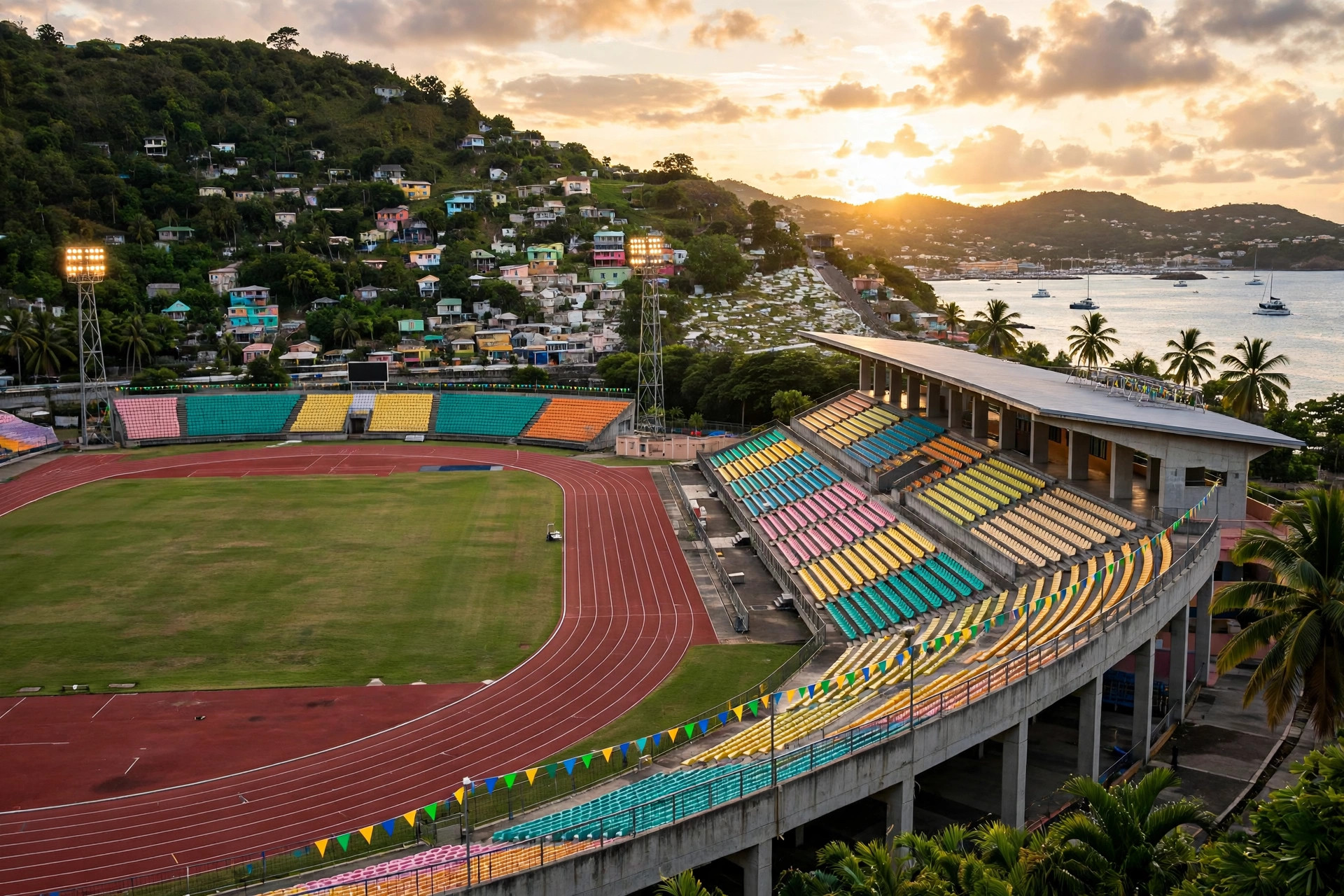
The Grenada election 2026 has delivered one of the most decisive results in the island's history. Prime Minister Dickon Mitchell and his National Democratic Congress (NDC) won 14 of the 15 seats in the House of Representatives in the general election held on Thursday 5 November, giving Mitchell a second consecutive term with a far bigger majority than the nine seats he won in 2022. Mitchell is set to take the oath of office on Sunday 8 November at 4pm at the Kirani James Athletic Stadium in St George's, in a ceremony that will also see the Attorney General sworn in. The results remain provisional, pending an official recount and certification by the Parliamentary Elections Office, but the seat count is settled in every report.
Grenada election 2026: the result in numbers
According to provisional results from the Parliamentary Elections Office, reported by NOW Grenada and Caribbean National Weekly, the NDC received 37,369 votes, or 61 per cent of valid votes, against 22,567 votes, or 36.8 per cent, for the New National Party (NNP), led by Opposition Leader Emmalin Pierre. The Democratic People's Movement, a new party led by former foreign minister Peter David, won 1,189 votes, or 1.9 per cent, and no seats. The NDC's advantage over the NNP was 14,802 votes.
Turnout was 63.3 per cent, with 61,460 ballots cast from 97,031 registered voters, according to NOW Grenada, down from 69.5 per cent in 2022. The NNP kept only one seat, St George North West, won by Adrian Joseph, and its leader Emmalin Pierre lost her own seat. The result is the largest victory in NDC history, and the first time since the party's founding in 1987 that it has won two elections in a row. It is also one of the worst results in NNP history: the party held six seats before the election and nine years in office before 2022.
The scale of the win is striking because of how Grenada's first-past-the-post system works. With 15 single-member constituencies and eight seats needed for a majority, a 61 per cent vote share became 93 per cent of the seats, while the NNP's 36.8 per cent became a single seat. The election was called almost a year before the October 2027 deadline: Parliament was dissolved in early October, and 46 candidates contested the 15 seats across Grenada, Carriacou and Petite Martinique.
The road to the landslide
Mitchell first became Prime Minister in June 2022, when the NDC won nine of the 15 seats and ended the NNP's nine-year period in office under former Prime Minister Keith Mitchell. Four years later, he went to the polls early, betting that voters would reward his first term. Speaking to supporters at Pearls Airstrip in the early hours of Friday, Mitchell promised that over the next five years, the government would continue to put the people of Petite Martinique, Carriacou and Grenada first, according to iWitness News.
The election was also preceded by a legal controversy over the voting rights of Grenadians living abroad. On 4 November, just one day before polling, High Court Justice Agnes Actie dismissed the challenge, ruling that Prime Minister Mitchell had acted constitutionally in initiating the dissolution of Parliament. No verified figures have been published establishing how many overseas Grenadians returned to vote.
The result confounded pre-election polling. A survey by Only Polls, sponsored by WIC News, of 904 respondents between 5 and 14 October had shown the NDC on 63.1 per cent, close to the eventual 61 per cent, but the NNP had led in four constituencies in that poll. In the event, the NNP held only one. The NDC swept all 14 other seats, including the Town of St George, where Attorney General Claudette Joseph defeated Peter David, who had held the seat since 2003.
Grenada election 2026: the oath ceremony on 8 November
The swearing-in takes place on Sunday 8 November at 4pm at the Kirani James Athletic Stadium in St George's, according to Caribbean Pulse, citing a government statement. The Attorney General is also expected to be sworn in during the ceremony. The statement did not say whether the remaining cabinet members will also be sworn in, so the shape of Mitchell's new cabinet, and whether a 14-seat majority changes who holds which portfolio, will become clear in the coming days.
The ceremony is a public one, held in the stadium named after Grenada's Olympic champion, rather than a closed official function. That fits the scale of the occasion: a second term, a historic majority, and a mandate Mitchell has said he will use to modernise the economy, strengthen health services and reduce youth unemployment. With a renewed mandate, his government will continue to focus on economic growth, infrastructure development, healthcare, education, employment and national resilience, according to Writeups24.
Why the result matters for Grenada and the region
A 14-1 parliament changes the politics of Grenada in two ways. First, it gives Mitchell room to govern without the knife-edge arithmetic of his first term, when a nine-seat majority meant every backbencher mattered. Second, it leaves the opposition with almost no parliamentary voice: a single MP, Adrian Joseph, will carry the NNP's scrutiny role, while Emmalin Pierre, who lost her seat, must rebuild the party from outside the House. Kingstonmouth, analysing the result, called it part of a wider Caribbean pattern of vanishing oppositions, in which large majorities leave small parliaments with little formal dissent.
The Grenada election 2026 also matters beyond the island, because Grenada is one of the five Caribbean countries facing the European Union's 12 November deadline on citizenship-by-investment programmes. Grenada's government must tell the EU whether it will phase out its programme by 1 June 2028 or risk losing Schengen visa-free access. A government with a fresh, overwhelming mandate may find it easier to make that call, whichever way it goes.
There are still steps to complete. The Parliamentary Elections Office must certify the final vote totals, and the official recount will confirm the provisional figures. The new cabinet must be named and sworn in. And the government must set out its programme for the next five years, including how it will use a majority this large. For now, though, the verdict is clear: Grenadians gave Dickon Mitchell a second term, and a commanding one. For background on how elections work, see our guide to how voting works, our Brazil 2026 election explainer, and our Grenada travel guide.
Sources: Caribbean Pulse, Kingstonmouth, Writeups24, Barbados Gazette, Wikipedia (Parliamentary Elections Office results), November 2026.