
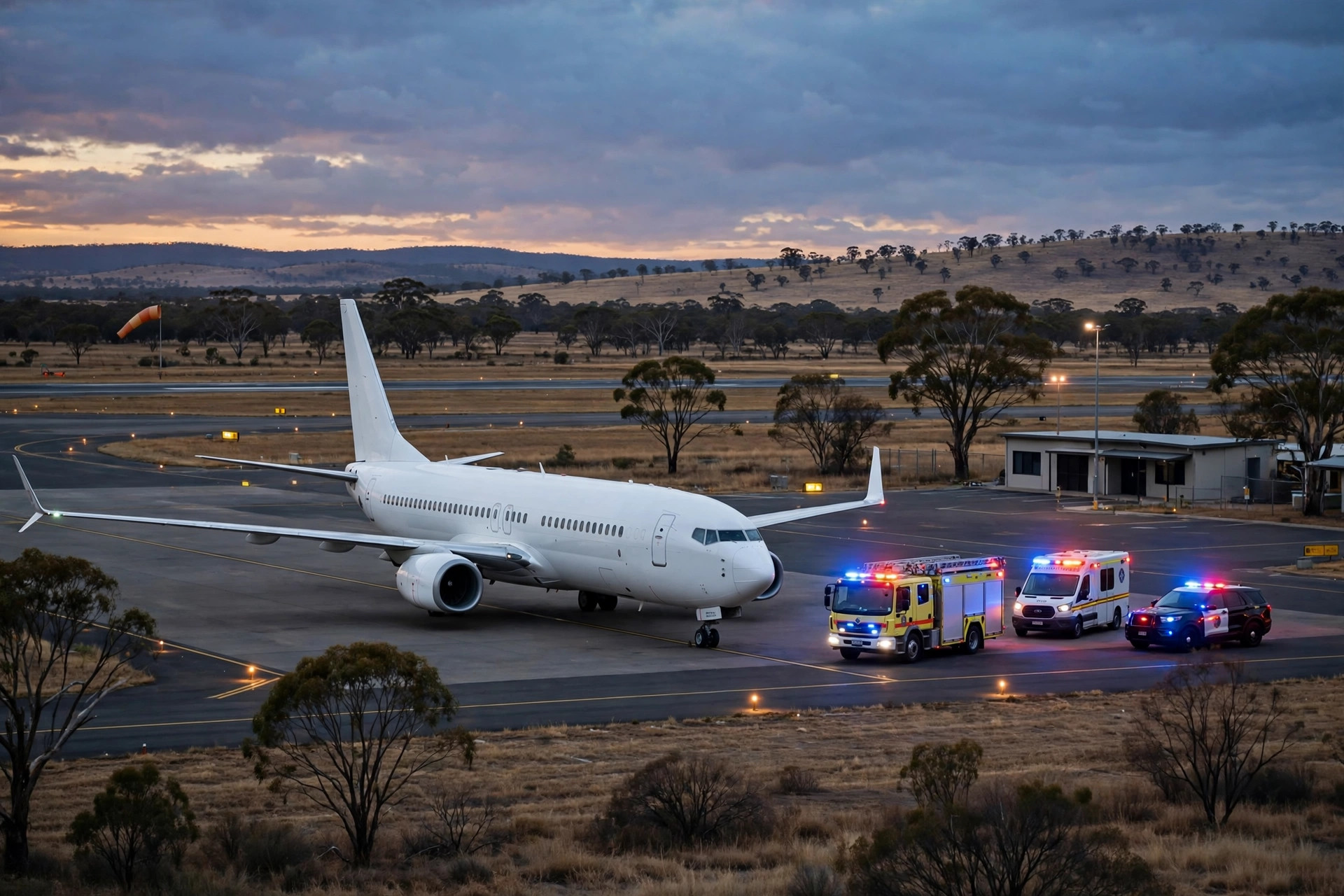
The Singapore Airlines SQ236 diversion ended safely, but it left passengers with a long night in regional Queensland and investigators with a question still unanswered. Flight SQ236, travelling from Brisbane to Singapore on Wednesday, 11 November 2026, diverted to Rockhampton Airport after smoke was detected in the cabin. The Airbus A350-900, registered 9V-SHA, landed at 4:09pm local time. All passengers disembarked normally and no injuries were reported, Singapore Airlines told CNA and The Straits Times. The cause of the smoke is still under investigation, and the airline has not yet said what produced it.
SQ236 was a routine afternoon service. According to the airline's flight status tracker, reported by The Straits Times, it was scheduled to leave Brisbane at 2:35pm local time and arrive at Singapore's Changi Airport at 8:25pm the same evening. It actually departed at 2:32pm, three minutes early. Some time into the flight, the crew detected smoke in the cabin and decided to divert. That decision began the SQ236 diversion. Rockhampton, a regional airport on the central Queensland coast more than 600 kilometres north of Brisbane by road, was the nearest suitable airport, and the aircraft turned for it.
What happened on Singapore Airlines flight SQ236
The first sign of trouble came from the cabin crew. Lim Kai Yang, a 21-year-old passenger returning to Singapore after a holiday, told The Straits Times he realised something was wrong when cabin crew began opening and checking the overhead bins. He saw faint smoke from his seat. Other passengers told ABC News they saw the aircraft's screens go black. The pilots then informed passengers of a technical issue, and the in-flight entertainment and cabin power were switched off, Lim told The Straits Times.
The SQ236 diversion itself was quick. Aviation A2Z, which first reported the aircraft's identity, said flight-tracking data showed the A350-900 registered 9V-SHA, and that the aircraft landed at Rockhampton at about 4:10pm Australian Eastern Standard Time. The Straits Times and CNA put the landing at 4:09pm. A Singapore Airlines spokesperson told The Straits Times the aircraft landed "uneventfully" at Rockhampton Airport, and that all customers disembarked normally. Fire crews and paramedics responded at the airport, CNA reported, but Aviation A2Z reported that the smoke had cleared before firefighters reached the plane, so no firefighting action was needed. ABC News reported that there were no injuries.
Rockhampton is not a scheduled stop on the Brisbane to Singapore route, and it rarely handles widebody jets of this size. Ground facilities for a full A350 load of passengers are limited compared with a major hub such as Brisbane, i-journey noted in its report on the incident. That shaped what happened next: instead of a quick turnaround, passengers faced hours on the ground while the airline arranged another aircraft.
The SQ236 diversion: why Rockhampton
When smoke appears in a cabin, crews do not wait to find out what it is. Aviation rules and airline procedures treat any smoke as a reason to land at the nearest suitable airport, because a small electrical fault and a fire can look identical in the first minutes. Rockhampton was that airport. It sits on the Queensland coast roughly halfway along the Brisbane to Singapore route's first stretch, and it has a runway long enough for an A350. The crew's decision was the standard one, and the uneventful landing shows it worked.
The choice also tells us something about how the flight was going. The aircraft had climbed to 36,000 feet before turning toward the Queensland coast, according to the Chiang Rai Times, which cited flight-tracking records. That means the smoke appeared well into the cruise, not during takeoff or landing, when a diversion would have been simpler. For the passengers, the practical consequence of the SQ236 diversion was the same either way: their evening flight to Singapore became a night in a regional airport lounge.
What passengers saw inside the cabin
Passenger accounts agree on the sequence, even if the details differ slightly. Smoke was visible in the cabin. The screens went dark. The crew checked the overhead bins, looking for the source. The pilots announced a technical issue and switched off the entertainment and power. None of the reporting so far describes panic, and none describes flames. The smoke was faint rather than thick, according to the passenger account given to The Straits Times, and it had cleared by the time the aircraft was on the ground.
That clearing matters. If there had been an active fire, firefighters would have had work to do on arrival. Instead, emergency services met the aircraft and stood by while passengers walked off normally. The absence of a fire does not make the incident minor — smoke in a sealed cabin at altitude is always treated as serious — but it does narrow the list of likely causes of the SQ236 diversion, and it is one reason nobody was hurt.
The relief flight and the wait in Rockhampton
After landing, passengers waited in a lounge at Rockhampton Airport while Singapore Airlines arranged another plane, getaway reported, citing CNA. The airline said it was providing refreshments and helping passengers rebook onward travel where needed, and Singapore Airlines told CNA it was arranging a relief flight. Lim Kai Yang told The Straits Times he was given a light dinner while waiting, and was still at Rockhampton Airport at 6:45pm on 11 November.
The recovery plan took shape during the evening. According to the airline's flight status tracker, reported by CNA, the replacement flight was listed to leave Rockhampton at around midnight local time and arrive at Singapore's Changi Airport at about 5:23am on Thursday, 12 November — nearly nine hours later than the original 8:25pm scheduled arrival. Singapore Airlines apologised to passengers for the disruption. The airline also warned affected passengers that adverse weather in Brisbane could influence the recovery operation, the Chiang Rai Times reported. Passengers with onward connections from Singapore faced rebooking on top of the delay.
Why the cause of the SQ236 diversion is still unknown
Singapore Airlines has said it is investigating the cause of the smoke that forced the SQ236 diversion, a point confirmed to Aviation A2Z and echoed by Bloomberg and the Economic Times. In a message to affected passengers, shared on X by one traveller, the airline described the diversion as due to a technical issue affecting the aircraft's safety monitoring systems, The Straits Times reported. That phrase describes the system that flagged the problem, not the source of the smoke itself.
FTN News, reporting on the incident, noted that the available information does not establish whether the smoke originated from a passenger item, an aircraft component or another source. That is the honest position for now. Engineers will try to find the exact source of the smoke, Aviation A2Z reported, and the aircraft will not return to service after the SQ236 diversion until they do. Until the airline publishes its findings, any claim about what caused the smoke is speculation, and this article does not repeat any.
For context on how often flights are disrupted for other reasons, see our report on the storm that cancelled flights in Madeira and the bomb threats that disrupted European flights this month. The SQ236 diversion was rarer than a weather diversion, and smoke diversions are handled with more urgency for obvious reasons.
What happens next after the SQ236 diversion
Three things happen now. First, engineers examine the A350-900, registration 9V-SHA, to find the source of the smoke. That examination covers the electrical systems, the air conditioning and the cabin equipment, and it will decide when the aircraft flies again. Second, Singapore Airlines completes its own investigation into the cause, which it has already said is under way. Third, the airline works through the rebooking of passengers whose onward connections from Singapore were missed, a process that began on the night of 11 November.
Passengers who were on the flight and need help should contact Singapore Airlines directly, since rebooking and compensation are handled case by case. The reopening of Riyadh airport last month showed how quickly a disrupted route can return to normal once the underlying problem is fixed — but a smoke investigation is not a runway closure, and it will take as long as the engineers need. For now, the facts of the SQ236 diversion that matter are settled: the aircraft landed safely, everyone got off normally, nobody was hurt, and the cause is still being established.