
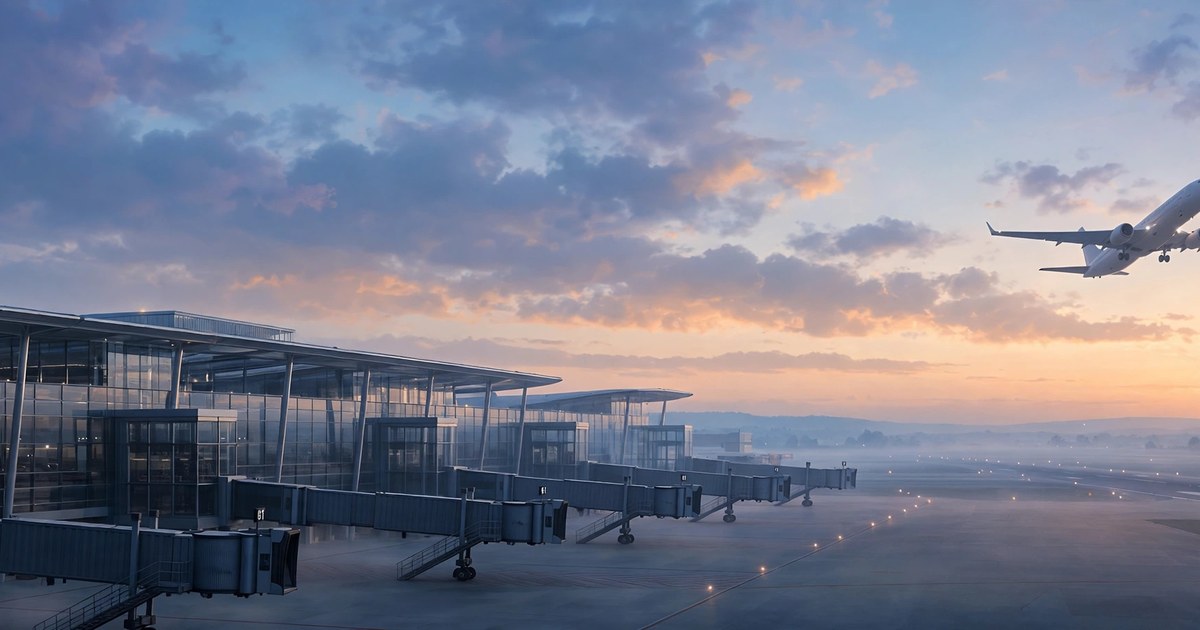
The Riyadh airport reopening is under way on Sunday, 25 October 2026, as King Khalid International Airport resumes flights after a two-week closure caused by Houthi strikes on the Saudi capital. The story is trending per news coverage across international outlets on Sunday, and the first departure tracked early in the morning was a domestic flight to Jeddah — a small but closely watched sign that the capital's main gateway is operating again, even as the Houthis warn airlines and travellers to stay away.
The airport announced on Saturday that Terminal 1 would handle domestic flights and Terminal 2 would handle international flights operated by national carriers, effective Sunday, 25 October. It urged passengers with confirmed bookings to contact their airlines to verify the status of their flights before heading to the airport — a clear sign that schedules are still being rebuilt rather than snapping back to normal all at once.
The reopening matters far beyond one airport. Riyadh is the capital of the world's largest oil exporter, a hub for millions of expatriate workers, and the front line of a renewed war between Saudi Arabia and Yemen's Houthis that has spilled into civilian aviation. Whether flights can keep operating safely in the days ahead will be watched by airlines, insurers, governments and travellers across the Gulf.
Riyadh Airport Reopening: What Changed on 25 October
According to AFP reporting carried by The Business Standard and the Bangkok Post, Riyadh's international airport said flights would resume on Sunday after a two-week closure following strikes by Yemen's Houthis on the Saudi capital. Flight-tracking site Flightradar showed a plane taking off from Riyadh airport early on Sunday, heading to the Saudi city of Jeddah.
The airport's own passenger notice, posted on X on Saturday, set out the new terminal plan in plain terms: Terminal 1 for domestic flights and Terminal 2 for international flights operated by national carriers. The notice also asked travellers to confirm their bookings with their airlines before travelling, reflecting the reality that not every route will restart on day one.
For passengers, the practical meaning of the Riyadh airport reopening is therefore phased, not instant. Domestic services and Saudi national carriers are first in line under the terminal plan, while foreign carriers are expected to restore services only as they complete their own safety assessments — a pattern seen throughout the closure, when airlines suspended services at different times and for different periods.
Riyadh Airport Flights Resume Under an Active Threat
The reopening did not happen in calm conditions. The Saudi-led military coalition fighting the Houthis said early on Sunday that it had shot down two drones in the Riyadh area. An AFP journalist in the capital reported hearing three explosions on Sunday, and the coalition said air defences had intercepted and destroyed a ballistic missile launched by the Houthi militia toward Riyadh.
Hours before flights resumed, Houthi military spokesman Yahya Saree renewed the group's warning in stark terms. He said the airport was still unsafe and a military target, warning international, regional and local airlines — as well as staff and travellers — against using King Khalid Airport. "The Saudi regime shall bear the consequences of any operations at the airport," he said, according to the reports.
That warning is the central tension of the reopening: the airport is open, but the group that forced its closure says it intends to keep attacking it. Travellers and airlines must therefore treat the resumption as conditional, with delays, diversions or fresh suspensions possible if attacks resume.
Why Was Riyadh Airport Closed for Two Weeks?
The closure followed waves of Houthi strikes on Riyadh's airport, including an attack earlier in October that killed 13 people and wounded more than 300, according to AFP — the deadliest attack inside Saudi Arabia in more than a decade. Operations stopped after that strike, and authorities extended the suspension as further attacks and threats continued.
The Houthis have also claimed strikes on other Saudi targets in recent weeks, including energy infrastructure at Yanbu and Rabigh and facilities at Dammam, claims carried by ANI from the group's statements. Those claims are not independently confirmed in every case, but they explain why airlines treated the whole Saudi aviation network, not just Riyadh, as a risk during the closure.
The airport attacks are part of a wider war that reignited in the summer of 2026. A UN-brokered truce between Saudi Arabia and the Houthis had largely held since 2022, but it broke down in July after a strike on Sanaa airport's runway connected to an Iranian plane carrying a Houthi delegation. The Houthis then declared the truce over, announced a blockade of Saudi Arabia, and began firing missiles and drones at Saudi targets. AFP notes the renewed fighting has shifted the focus of the wider US-Iran war and deepened the humanitarian disaster in Yemen, one of the world's poorest countries.
Which Airlines Have Resumed Riyadh Flights?
International carriers suspended Saudi services in stages during October, and their return will also be staged. Air India and Air India Express suspended flights to and from Jeddah, Riyadh and Dammam until 24 October, offering affected passengers a one-time complimentary date change to 10 November, rebooking from alternative Gulf stations, or a full refund. With that suspension period now ending, passengers should check for a fresh advisory before assuming a flight is operating.
IndiGo, by contrast, was still cancelling flights as of 23 October: Riyadh services cancelled until 31 October inclusive, and Jeddah, Dammam and Madinah services cancelled until 27 October, following what the airline described as the evolving security situation, including a recent attack at Dammam's King Fahd International Airport. Akasa Air extended its suspension of Riyadh and Jeddah flights until 27 October, offering a full refund or free rescheduling. The lesson for travellers is simple: the airport reopening and any individual airline's return are two different decisions, and only the airline operating your flight can confirm it.
Air India and Air India Express had earlier suspended services on 8 October after the escalation in threats against Saudi aviation infrastructure, and extended the suspension twice before the 24 October date. The repeated extensions show how airlines have preferred to move in short steps, reassessing after each development, rather than committing to a fixed return date while missiles and drones were still being fired.
What the Riyadh Airport Reopening Means for Travellers
For the millions of people who live and work in Saudi Arabia — including a large Indian diaspora — the reopening restores a vital link that has been disrupted for a fortnight. Family visits, work travel, medical trips and Hajj and Umrah-related journeys all depend on reliable access to Riyadh, Jeddah and Dammam, and the closure forced many passengers into rebookings, refunds or long detours through other Gulf hubs.
For the wider region, the reopening is also a test of confidence. If flights operate without incident in the days ahead, more carriers are likely to follow the national carriers back. If attacks resume, suspensions could return just as quickly. Governments have already reflected that uncertainty in their advice: Canada, for example, has warned against travel to Saudi Arabia, a position covered in detail in our earlier reporting, and other governments continue to urge travellers to monitor local advice closely.
Related coverage of the wider conflict includes the Houthi strike on Aramco's Dhahran headquarters, which shows how energy infrastructure has also been drawn into the campaign, Canada's travel warning for Saudi Arabia, and the UAE-Saudi-Yemen cooperation pact, which underlines how Gulf states are coordinating their response. Together, these stories show a conflict that is being fought across airports, oil facilities and shipping lanes at the same time.
What to Check Before You Fly to Riyadh
First, confirm your flight directly with your airline, as the airport itself advises — do not rely on a booking made before the closure. Second, check whether your airline is still operating under a suspension: IndiGo and Akasa Air, for example, had cancellations running beyond the reopening date. Third, build flexibility into your plans: keep your airline's app and notifications on, know your rebooking and refund options, and allow extra time at the airport for security and schedule changes. Fourth, follow official travel advice from your own government and the airport's passenger notices, and avoid speculating about security incidents from social media rumours.
Finally, keep expectations realistic. A reopening is a beginning, not a guarantee. The airport's return is genuinely good news for stranded passengers and for a capital trying to show it can absorb weeks of attacks and carry on. But Sunday's interceptions and the Houthis' renewed warning mean the story is far from over — the next few days of operations will decide whether this reopening holds or becomes another pause in a war that is still being fought.
Sources: AFP reporting via The Business Standard and Bangkok Post, 25 October 2026; ANI; Reuters; Air India and IndiGo travel advisories, October 2026.