
Russian missiles in Poland. Those four words are the ones nobody in Warsaw wanted to write on the morning of Friday 20 November 2026 — yet by midday they were confirmed by Poland's own defence minister. Three Russian objects crossed into Polish airspace overnight: one was identified as a Kh-101 cruise missile, a second was described by officials as a missile, and the third was most likely a jet-powered drone. All three came down in fields and villages in the south-east of the country, less than 50 kilometres from the Ukrainian border. Nobody in Poland was hurt. But the timing — on the final day of a major allied military exercise, and hours after trilateral talks in China ended without a breakthrough on Ukraine — has turned a night of falling debris into the sharpest test of NATO's eastern flank in over a year.
Russian Missiles in Poland: What Fell Where
Poland's defence minister, Władysław Kosiniak-Kamysz, confirmed the incursion at a press conference on Friday. "There has been a violation of Polish airspace and an incursion by objects from the Russian Federation," he said. "There was a Kh-101 missile… In the second case, one can also speak of a missile; in the third, it was most likely a jet-powered drone."
The three objects came down in three separate places across two provinces in south-eastern Poland. The Kh-101, a long-range cruise missile launched by Russian strategic bombers, fell near Nowy Lipowiec in Biłgoraj County, in the Lublin Voivodeship. A second missile came down near Rudnik nad Sanem in Nisko County. The jet-powered drone fell near Mołodycz in Jarosław County. Emergency services and soldiers secured all three sites, and investigators — including military counterintelligence — began examining the wreckage.
Residents heard it happen. A security camera at a property in the village of Chmielek, near Nowy Lipowiec, recorded an explosion in the distance. Natalia Szponar, a local resident, told reporters she had just got up and was making coffee and getting her children ready for school when she heard a whistling sound, then a dull, muffled thud. Andrzej Borowiec, the mayor of neighbouring Aleksandrow county, said an object around seven metres long had fallen at 05:40 GMT. In Rudnik nad Sanem, a traffic controller heard a loud bang near railway premises, according to Infrastructure Minister Dariusz Klimczak.
The Polish military had been tracking the threat for hours. The first alerts went out at 1:40 a.m. local time, and the armed forces detected 11 aerial objects that posed a threat of entering Polish airspace. Three of them crossed the border. Interior Minister Marcin Kierwiński said operations were under way at all three locations, involving police, firefighters, the military police and special services. The most important news, Kosiniak-Kamysz stressed, was that no one on Polish territory was hurt, and there was no damage to critical infrastructure.
How Poland and NATO Responded Overnight
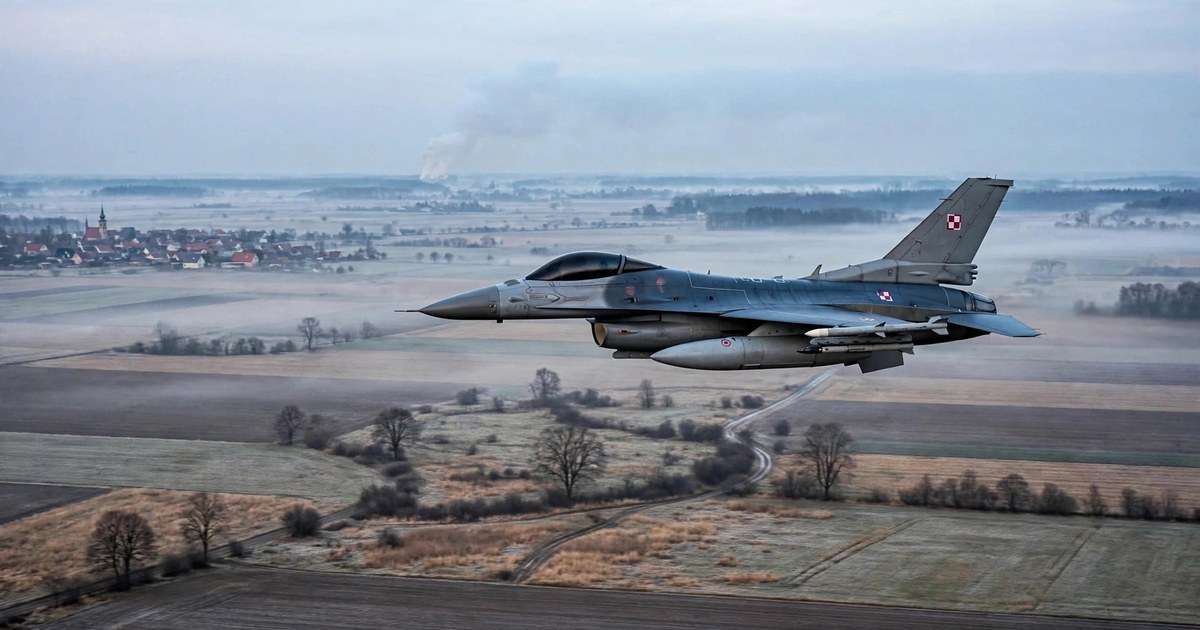
Poland did not wait for daylight to react. Polish F-16 fighters and Swedish Gripen jets were scrambled, supported by a Saab reconnaissance aircraft and a Dutch MRTT aerial refuelling aircraft, according to Major General Ireneusz Nowak, the Polish armed forces' operational commander. Patriot air defence systems were activated around Rzeszów-Jasionka airport and near Świdnik, and Polish air defences were placed on heightened alert in Rzeszów, where journalists and defence ministers had gathered to watch the final day of allied exercises. Air traffic was suspended at Rzeszów airport, controllers were evacuated, and rail traffic was halted across the Subcarpathian region until 07:33.
NATO's response came fast. Secretary General Mark Rutte condemned what he called "grave violations of Polish airspace", and alliance jets were scrambled. Britain's prime minister condemned the violation, Reuters reported. Kosiniak-Kamysz said Poland would ask NATO for more: "I will also request that the Alliance, the Secretary General, allocate additional forces and resources to support Operation Eastern Sentry," he told the press conference. Eastern Sentry is the NATO operation launched in 2025 to strengthen deterrence and air defence along the alliance's eastern flank, after an unprecedented number of Russian drones crossed into Polish airspace that year.
By Friday morning, Poland's Operational Command said its airspace-security operations had ended, no further breaches had been observed, and air defence forces had returned to standard activity. The immediate threat, officials said, had passed.
Was It Deliberate? What Warsaw Says — and What Is Not Proven
Prime Minister Donald Tusk left little doubt about his own reading. There was no doubt the objects that landed in Poland were Russian, he said, adding: "It seems we are dealing with an intentional provocation." Kosiniak-Kamysz used the same word, calling the incursion "another provocation" by Russia, and suggested a possible link to the allied exercise under way on Polish soil. "We cannot rule out, although this remains a hypothesis, that the provocation was also linked to the fact that these exercises were taking place on Polish territory," he said.
But the deliberate-provocation claim is, for now, Warsaw's assessment — not an established fact. Investigators have yet to determine whether the objects entered Polish territory deliberately or as a consequence of their flight paths during the attack on Ukraine, and the defence minister's own account leaves that question open. The confirmed identification of a Russian weapon does not by itself establish where it was meant to go. For its part, the United States has been publicly cautious: President Donald Trump said on Thursday that Russia had been "landing drones in Poland and a couple of little missiles, by mistakes." Russia had not commented on the airspace violations at the time of reporting.
Why the Timing Matters: the Coalition of the Willing Exercise
The incursion landed in the middle of Exercise Koalicja 26.2, the first-ever military exercise of the Coalition of the Willing — the British- and French-led group of Ukraine's allies. The exercise runs from 9 to 22 November and brings together forces from 11 countries across land, sea and air, preparing for a possible ceasefire in Ukraine. Friday was its final day. The Times reported that the Russian missiles exploded about 60 miles from where British troops are training — close enough that the exercise itself became part of the story, and part of the suspicion about motive.
That is also why the incident echoes. The last time Russian objects crossed into Poland in large numbers, in September 2025, NATO answered by launching Operation Eastern Sentry. This time Warsaw is asking for that operation to be reinforced, with surveillance aircraft among the additions requested. The pattern — an incursion, a NATO response, a request for more — is becoming familiar. What is different this time is the hardware: a Kh-101 cruise missile, a weapon designed to be launched from strategic bombers hundreds of kilometres away, landing on the soil of a NATO member.
The Attack on Ukraine Behind the Russian Missiles in Poland
The objects that crossed into Poland were spillover from one of the largest Russian air attacks of the war. President Volodymyr Zelenskyy said Russia fired more than 400 drones and over 110 missiles at Ukraine overnight, 27 of them ballistic, targeting energy, logistics and railway infrastructure across the country. Nine people were killed and 30 injured, Ukrainian officials said — seven in Kyiv and two at a railway station in Lviv. Three bridges across the Dnipro in Kyiv were damaged and closed, and parts of the capital lost power, heat and water. The overnight attack on Kyiv was, by several accounts, the biggest of the war on the capital's crossings.
Moscow's assault was itself retaliation. It came after Ukraine struck the bridge linking occupied Crimea to Russia for the third time in four days, and after President Vladimir Putin — speaking in China, where he had just held the first-ever trilateral meeting with Donald Trump and Xi Jinping — vowed that Russia's response would be "far more painful" than the bridge attacks. Those talks in Shenzhen ended without a breakthrough on Ukraine. Hours later, the missiles were in the air.
What Happens Next for Poland and NATO
Three things will decide how big this incident becomes. The first is the wreckage: investigators are examining debris at Nowy Lipowiec, Rudnik nad Sanem and Mołodycz, and what they find — guidance systems, launch points, flight paths — will shape whether Warsaw's "intentional provocation" reading hardens into an allied position. The second is NATO's answer to Poland's request for reinforcements under Operation Eastern Sentry; surveillance aircraft and additional air defence assets are the specific asks on the table. The third is Moscow: Russia has said nothing so far, and whether it acknowledges, denies or ignores the incursion will set the tone for the days ahead.
Also worth watching is the exercise calendar. Koalicja 26.2 ends this weekend, and with it the concentration of allied troops and attention in south-eastern Poland disperses. The question Warsaw will be asking is whether the deterrent that arrives next — more NATO aircraft, more sensors, more Patriots — outlasts the exercise that coincided with the incursion.
Why It Matters
Strip away the diplomacy and this is a simple, uncomfortable fact: Russian weapons landed on NATO territory for the second time in just over a year, and this time one of them was a cruise missile. Whether the crossings were deliberate or the by-product of a huge strike on Ukraine, they exposed the same gap — that a barrage aimed at Lviv or Kyiv can end in a Polish field, and that Poland's air defences, for all the jets scrambled and Patriots activated, did not stop three objects from getting through. The ministry has described the forces it mobilised; it has not yet explained why the three were not intercepted.
That unanswered question is the one that will linger after the wreckage is cleared. NATO's eastern flank has spent a year building up its defences since the last incursion. Friday morning showed both how far that build-up has come — allied jets in the air within minutes, a coordinated response across several nations — and how far it still has to go. For the people of south-eastern Poland, who woke to explosions in their fields, the distinction between provocation and accident matters less than the fact itself: the war next door arrived in their villages before breakfast.