
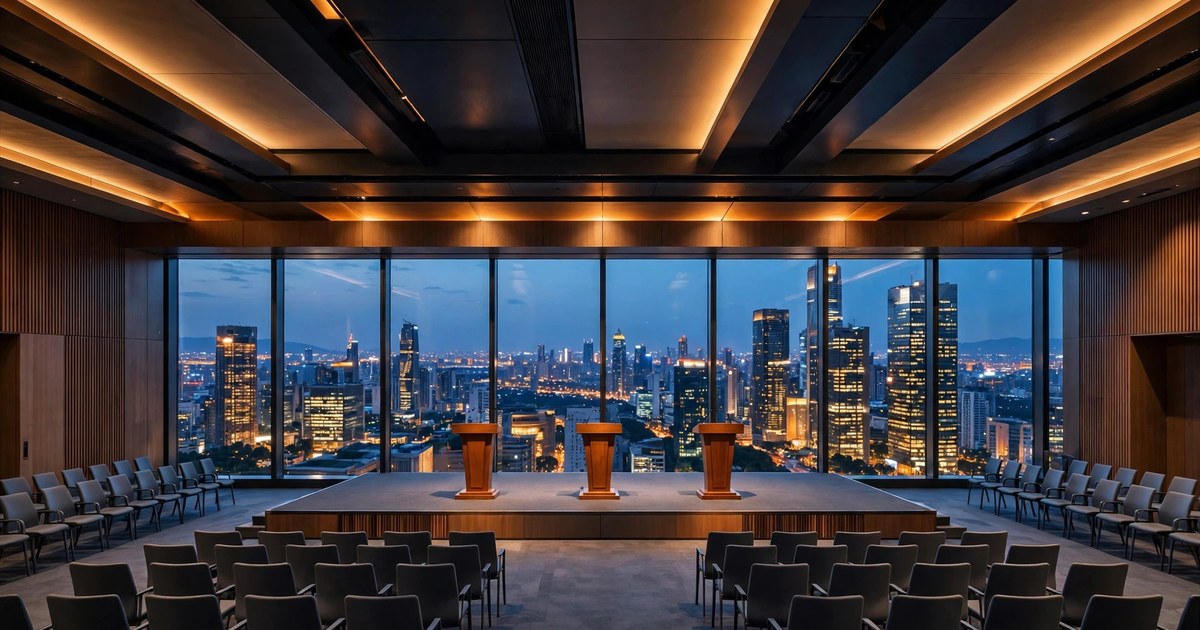
The White House confirmed on Friday 13 November 2026 that Donald Trump, Xi Jinping and Vladimir Putin would meet in Shenzhen on Thursday 19 November 2026 — a gathering that brought the leaders of the United States, China and Russia together in the same room for the first time. White House spokesperson Olivia Wales told reporters the meeting would take place on the sidelines of the Asia-Pacific Economic Cooperation (APEC) leaders summit, with reducing nuclear weapons as the main topic. The confirmation built on Chinese Foreign Ministry spokesperson Mao Ning's statement at a regular press briefing in Beijing on Wednesday 4 November 2026 — reported by the Associated Press, Xinhua and Agence France-Presse — that China "is in communication with relevant parties regarding a meeting between the three heads of state."
Beijing had avoided publicly committing itself to any three-leader meeting until then, which is why the confirmation mattered even though nothing was settled at the time. Kremlin spokesman Dmitry Peskov said on 3 November that work was under way to organise a meeting involving Putin, Trump and Xi. Trump was expected to travel to Shenzhen to meet Xi for the third time this year, and the two leaders were maintaining a fragile trade truce that is set to expire in January. The new development then was that China, as host of the summit, had said openly that the three-way conversation was being discussed. That conversation has now happened: the three leaders met in Shenzhen on 19 November and adopted a four-point joint Declaration toward Peace.
What China confirmed about the Xi-Trump-Putin meeting
The picture has moved on from Beijing's narrow confirmation. On Friday 13 November, the White House confirmed that the meeting would happen, and gave a date — Thursday 19 November — and an agenda: reducing the world's nuclear arsenals, which President Trump has called very dangerous, and the war in Iran. A senior US official said no agreement was expected, describing the session as "the entry point, the first conversation" on nuclear arms control. Both confirmations followed: the Kremlin confirmed on Saturday that Putin would take part in the trilateral meeting, and Beijing confirmed on Monday, 16 November, that President Xi Jinping would host the session in Shenzhen on 19 November. All three capitals confirmed the meeting. The Financial Times reported that the gathering would take place on the sidelines of the Shenzhen summit, with Xi hosting the 21-member forum. And the meeting did happen: the three leaders sat down in Shenzhen on 19 November, talked for about 90 minutes, and adopted a four-point joint Declaration toward Peace — though with no deal on Ukraine, Iran or nuclear arms.
Why the Xi-Trump-Putin meeting was historic
It happened, and it was historic in a literal sense: the three leaders had never met together in one room before. The idea itself is about a month old. Putin first floated it during a 9 October phone call with Trump, according to the Wall Street Journal, which reported the proposal on 18 October; the Kremlin confirmed on 19 October that discussions were genuinely under way. Trump said at the time that he would be open to such a meeting, but he reframed it as a summit about nuclear weapons rather than about Ukraine. Zelenskyy has separately said the United States is working on a trilateral meeting that would include Ukraine, possibly at the G20 in Miami in December. Two different three-leader meetings are therefore on the table, and they could not be more different: one about Ukraine without Kyiv, and one about Ukraine with Kyiv. What Beijing confirmed was the first version — Xi, Trump and Putin, in Shenzhen, on the sidelines of APEC — and that is the meeting that took place on 19 November.
The New START treaty, the last nuclear arms agreement between the United States and Russia, expired in February 2026, CNN reported. Its expiry left the world’s two largest nuclear arsenals without major treaty limits for the first time in more than half a century, according to Press TV. The Shenzhen meeting is the first attempt by the three leaders to talk about that gap together, rather than in separate bilateral channels.
What each leader wanted from the meeting
The three men arrived at the Xi-Trump-Putin meeting with three different agendas, which is the first reason to be sceptical about substance. Trump had said he would like to discuss nuclear arms control, and he had a separate bilateral meeting with Xi to protect: a third Xi-Trump meeting this year, with the fragile United States-China trade truce due to expire in January. US officials said on Friday 13 November that Russia's war in Ukraine would not be discussed at the trilateral meeting, although the Kremlin said Putin intended to speak to Trump about efforts to end the war in Ukraine; no separate meeting between the two presidents was expected. Trump was expected to raise the war in Iran instead. Putin was focused on the war in Ukraine, and his original proposal was to negotiate an end to the war on terms favourable to Moscow, without Zelenskyy at the table. Xi, as host and chair of APEC, wanted the summit itself to succeed and China to be seen as the convening power: Beijing has positioned itself as a neutral mediator between Washington and Moscow while managing its own trade and strategic interests, and its theme for the APEC year is open trade and cooperation. Each leader could therefore claim something from a photograph together, even if they agreed on nothing in the room.
Why APEC Shenzhen, and why 18-19 November
APEC is the Asia-Pacific Economic Cooperation forum, founded in 1989. It now brings together 21 member economies around the Pacific, including the United States, China and Russia, and its members account for more than 60 percent of global GDP and nearly half of world trade. The 33rd APEC Economic Leaders Meeting took place in Shenzhen on Wednesday 18 and Thursday 19 November 2026, with the APEC CEO Summit held on 17 and 18 November. China hosted APEC for the third time, after Shanghai in 2001 and Beijing in 2014, and Xi Jinping announced Shenzhen as the host city, calling it a "miracle in world development." The host-year theme is "Building an Asia-Pacific Community to Prosper Together," with openness, innovation and cooperation as the stated priorities. Shenzhen matters because it put all three leaders in the same city at the same time for an event Xi chaired — the practical reason a trilateral meeting was possible, when it was only an idea a month ago.
Why experts expected a photograph, not a breakthrough
The experts quoted by the Associated Press were blunt: the three leaders were unlikely to discuss anything substantive, because their interests are at odds. If the Xi-Trump-Putin meeting happened, they said, it would gather the three for a photo, with China carefully choreographing the moment. The reasoning is straightforward. A Ukraine settlement cannot be agreed without Kyiv, and Kyiv is not in this version of the meeting. Nuclear arms control is a subject for detailed, months-long negotiation, not a sidelines conversation at a trade summit. And the United States-China trade truce, which was due to expire in January, is a bilateral matter that Trump and Xi would handle in their own meeting. None of that makes the gathering meaningless — a first photograph of the three together would itself be a diplomatic event, and it would set a precedent that future meetings could build on. But anyone expecting a deal from Shenzhen should have lowered their expectations: in the event, the summit produced a four-point joint declaration and no deal on Ukraine, Iran or nuclear arms.
What happened — and what happens next
All three confirmations that would make the planned Xi-Trump-Putin meeting real have now moved — and the meeting itself has happened. First, whether Putin would travel to Shenzhen at all: that question was settled — Kremlin spokesman Dmitry Peskov confirmed on Saturday that Putin would take part, and Beijing confirmed on Monday that Xi would host the session in Shenzhen. Second, Washington confirmed the meeting formally: the White House announced on Friday 13 November that the three leaders would meet on Thursday 19 November, after Trump's bilateral meeting and working lunch with Xi that afternoon. Third, the agenda was set: nuclear weapons reduction first, the war in Iran second, and — US officials said — Ukraine not on the agenda at all. The wider calendar was crowded: the meeting talk came as the United States confirmed fresh limited strikes on Qeshm Island, Iran, on 6 November, with talks with Tehran continuing at the same time, as reported in our coverage of the Qeshm strikes. What remained was the travel: Trump left Washington on Monday 16 November, arrived in the Philippines on Tuesday for the ASEAN summit, and reached Shenzhen on Wednesday. The session itself lasted about 90 minutes at Kylin Villa and ended with the four-point joint Declaration toward Peace — but no deal on Ukraine, Iran or nuclear arms.
Why it matters
The meeting has now happened, and the gap between "scheduled" and "held" is closed. Even a symbolic gathering changed the diplomatic picture. It was the first time the leaders of the United States, China and Russia sat together, and it confirmed China as the convenor of great-power diplomacy at a moment when Washington and Moscow barely speak directly. For markets and businesses, the Xi-Trump bilateral in Shenzhen matters more than the trilateral, because the trade truce expiring in January is the decision with real economic consequences. For Ukraine, the picture has changed: US officials said the war would not be discussed at the trilateral at all, so no terms for ending it were set in a room Kyiv was not in — the Ukraine track runs separately, through the US-Russia channel. And for the United States, the test is whether nuclear arms control gets a real negotiating track or stays a talking point. The value of the Xi-Trump-Putin meeting will be measured by what follows it — not by the photograph.
Sources: Associated Press; Xinhua; Agence France-Presse; Financial Times; Reuters; Wall Street Journal; CNN; BBC; APEC China 2026.