
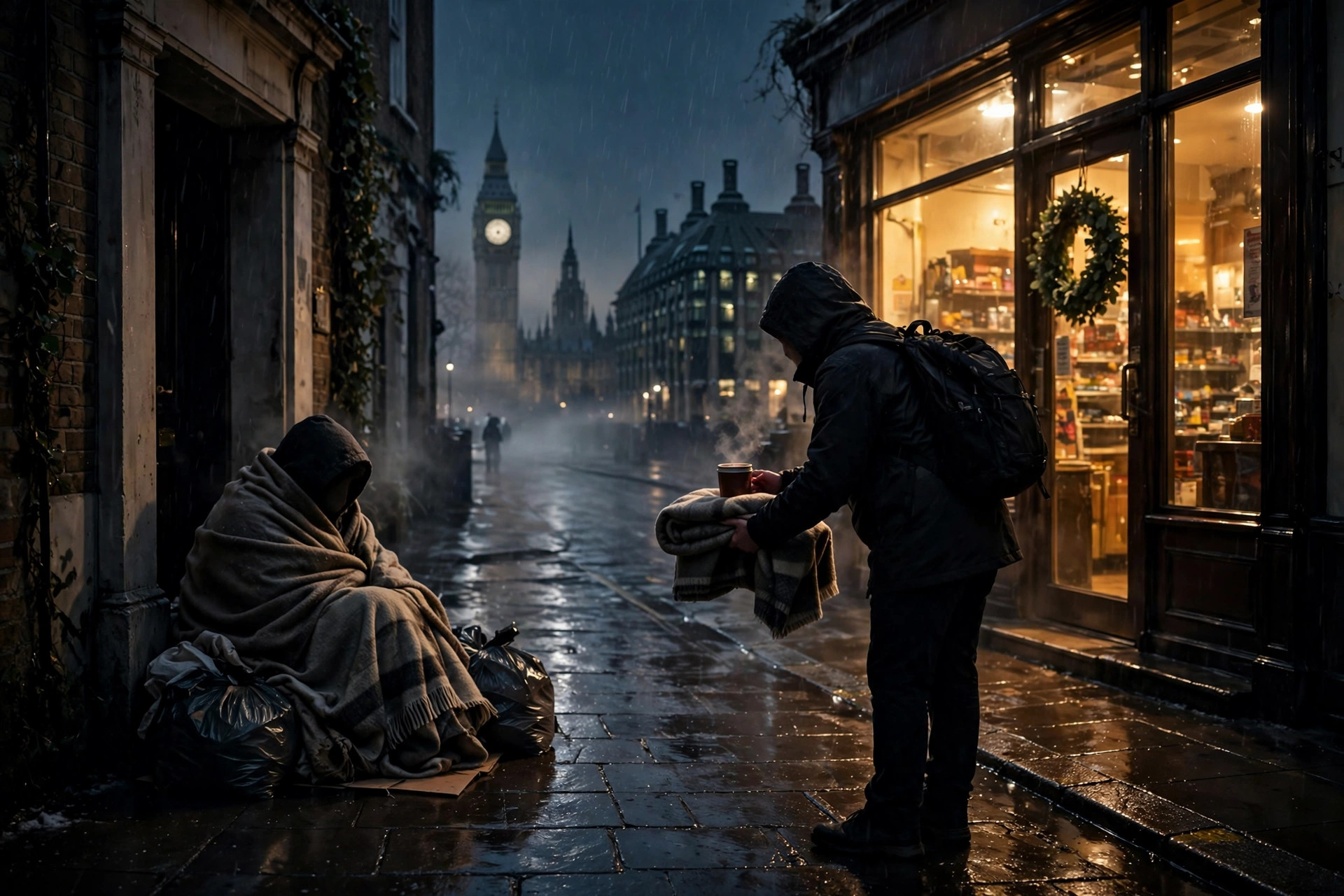
The UK rough sleeping plan has received a major boost, with Britain's government committing a further £432 million to efforts to end rough sleeping and give homeless people a way off the streets in the winter months. Prime Minister Andy Burnham and finance minister John Healey announced the additional funding on Sunday 25 October 2026, almost doubling the funding for the plan and extending support until the scheduled end of parliament in 2029. The announcement sets up a week in which homelessness will be at the centre of British politics: Burnham was due to host a rough sleeping summit at Downing Street on Monday, and Healey is scheduled to announce his first budget on Wednesday.
The UK rough sleeping plan, as set out by the government, is built around a simple and ambitious promise: that every person sleeping rough will be offered a route off the street or wider support before Christmas. Downing Street has said Burnham is confident that commitment can be delivered, with the additional £432 million sustaining support for years to come. The total investment behind the Prime Minister's commitment now stands at £874 million, combining the initial £442 million package with the new funding. The additional money will extend support beyond March 2027 and through to the end of this parliament, ensuring that help does not end when winter does.
The scale of the problem gives the promise its urgency. The most up-to-date annual national statistics estimated that 4,793 people were sleeping rough on a single night in autumn 2025 in England, the highest level since records began in 2010. In Greater Manchester, where Burnham was previously mayor, government data showed 444 rough sleepers across the ten boroughs in June 2026, up from 402 in June 2025 and one of the highest levels in six years. Those figures are the background against which the new funding must be judged: not as an abstract sum, but as a test of whether a government can reverse a trend that has been rising for years.
UK rough sleeping plan: what the £432 million will do
The UK rough sleeping plan funding is intended to provide accommodation and support, not just emergency shelter. The government's account of the programme so far describes specialist outreach teams and new bed spaces already operating in Coventry, with further provision being rolled out in Plymouth and Camden in north London over the coming weeks. The initial £442 million package was focused on ensuring everyone who needs it is offered a route off the streets before Christmas. The additional £432 million extends that work, providing continuity for frontline services and helping people move into settled accommodation and rebuild their lives, rather than cycling between the street and short-term shelter.
The Downing Street summit on Monday is designed to mobilise resources beyond government. It brings together businesses, charities, housing providers and local leaders, with major organisations pledging homes, jobs and practical support. Burnham has said that every part of society needs to contribute to ending rough sleeping, and that rough sleeping is not a fact of life but a thing governments either choose to accept or do not. That framing, that homelessness is a policy choice rather than an inevitability, is the moral core of the plan, and it is also its political risk: if rough sleeping is a choice, then failure to end it is a failure of government, not of circumstance.
The funding also reflects Burnham's personal history with the issue. As mayor of Greater Manchester, he set up the Bed Every Night scheme, which now provides more than 600 beds per night for people who might otherwise be on the streets. He pledged to end rough sleeping in Greater Manchester by 2020 when he came into power, a target he missed: figures fell from 268 in 2017 to 125 in 2020, then to 90 in 2021, before rising each year after that to 197 by 2025. Critics cite that record; supporters cite the scale of the reduction and the subsequent rise as evidence of national pressures, including housing costs and welfare policy, that a mayor alone could not control. Either way, the national plan is Burnham's attempt to do at national scale what he attempted regionally.
UK rough sleeping plan: the political debate
The UK rough sleeping plan has drawn a sharply divided political response. The homelessness charity Shelter welcomed the announcement, with its acting chief executive Mairi MacRae saying the funding showed the government understands that a safe home is not a privilege but a necessity. Housing secretary Angela Rayner called the ambition big and said the government would not back down from ensuring everyone has the offer of a route off the streets this Christmas, while stressing that Christmas is only the beginning and that tackling root causes must follow.
The Conservatives dismissed the move. Shadow housing secretary Katie Lam accused the government of throwing another £432 million at a problem Burnham failed to solve in Greater Manchester, and argued that under Labour, rough sleeping has hit record highs, yet the answer is always more taxpayers' money and more empty promises. Lam also argued that Healey should use his budget to cut taxes, control the benefits bill and ease energy prices, rather than adding costs for working people. That critique frames the debate in terms of fiscal priorities: whether £432 million for rough sleeping is the best use of public money, or whether it should be spent elsewhere.
Between those positions lies the practical question that will determine the plan's fate: can outreach teams, bed spaces and settled accommodation be delivered at the scale and speed required, in the places where rough sleeping is concentrated, before Christmas? The government's own account acknowledges that some people may choose not to accept accommodation, and says support will still be offered to them. The BBC's understanding of the commitment is that every rough sleeper will be able to physically move into accommodation by Christmas or be offered support to prevent them sleeping rough. That is a more precise, and more testable, promise than "ending rough sleeping", and it is the promise against which the plan should be measured in January.
What happens next for the UK rough sleeping plan
The immediate milestones are the Downing Street summit on Monday and Healey's budget on Wednesday, when the £432 million will be formally confirmed. After that, the test becomes delivery: whether outreach teams reach the people counted in the autumn statistics, whether bed spaces are available where they are needed, and whether the move from emergency accommodation to settled housing happens quickly enough to prevent people returning to the streets. The extension of funding to the end of parliament is intended to give frontline services the certainty to plan, recruit and build relationships, rather than operating on short-term grants.
Longer term, the plan's success will depend on tackling the root causes that Rayner identified: housing supply, affordability, mental health and addiction services, and the welfare system's ability to prevent homelessness before it happens. Emergency accommodation can get people off the streets for a night; only settled housing, with support, can keep them off the streets for good. The £874 million total investment is substantial, but it is small compared with the scale of the housing crisis, and its impact will depend on how it is spent, not just how much is spent.
The UK rough sleeping plan is therefore both a humanitarian initiative and a political gamble. If, by Christmas, every rough sleeper has genuinely been offered a route off the street, and if that offer is sustained through the parliament, Burnham will have delivered on one of his first and most personal promises. If the numbers do not move, or if the offer proves to be a bed for a night rather than a route to a home, the plan will be judged as another announcement that did not survive contact with reality. The coming winter will provide the answer, and the people sleeping rough tonight are the ones for whom that answer matters most.
Sources: Reuters, October 2026; GOV.UK; Sky News. Links: UK energy price cap forecast, Chancellor Healey bank tax budget.