
Russia strikes Kyiv bridges in a massive overnight missile and drone attack on 20 November 2026, hours after Vladimir Putin's trilateral talks with Donald Trump and Xi Jinping in China ended without a breakthrough on the war in Ukraine. The attack, which lasted more than six hours, killed nine people — seven in Kyiv and two in the western city of Lviv — and left parts of the capital without power, water and heating as winter approaches.
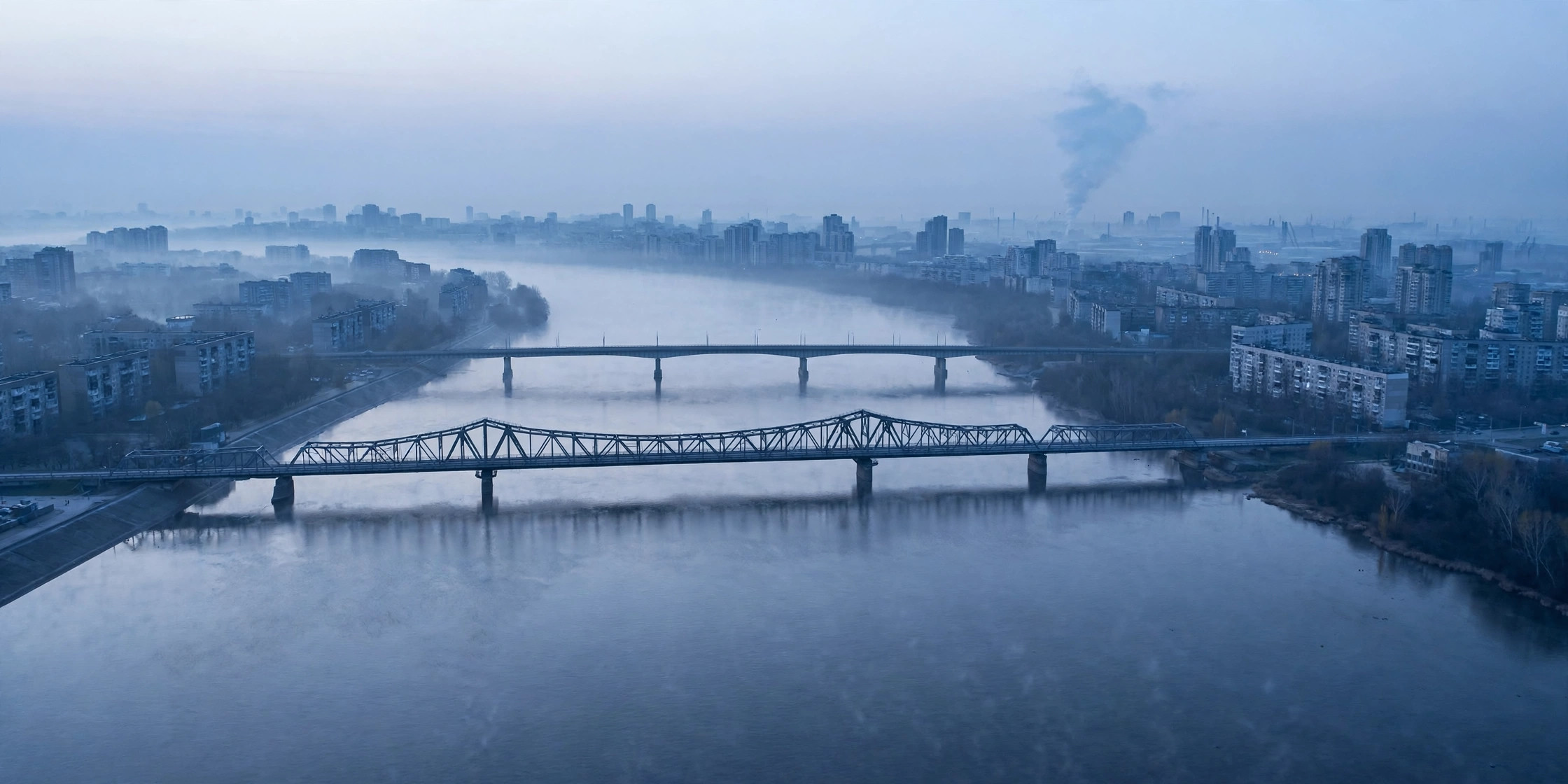
Kyiv Mayor Vitali Klitschko said ballistic missiles damaged the Podilsko-Voskresenskyi, Darnytskyi and Pivdennyi bridges, the crossings that carry daily traffic between the city's left and right banks across the Dnipro River. Traffic from the right bank to the left bank was suspended on the Podilsko-Voskresenskyi crossing, engineers were still assessing the damage to the Darnytskyi bridge, and the Southern Bridge — struck for the second time in four days — stayed partly open with weight limits of 10 tonnes for cars and 18 tonnes for public transport.
Russia's Defence Ministry confirmed the strikes, saying on Telegram that its forces had launched a “massive strike using high-precision weapons from land, sea, and air”, as well as drones, targeting military and energy facilities, port infrastructure in the Odesa region, and transport infrastructure in Kyiv. CNN reported that explosions began shortly after 1:25 a.m. local time, minutes after Ukraine's air force warned of ballistic missiles heading for the capital, and that further waves of missiles and drones followed until early morning. Unofficial monitoring services reported up to three dozen missiles in Ukrainian airspace at one point during the night.
Russia Strikes Kyiv Bridges: The Three Crossings Hit
The three bridges hit overnight are among the most important crossings in a city of three million people, where the Dnipro splits Kyiv into a left bank and a right bank and the bridges carry commuters, freight and public transport every day. The Podilsko-Voskresenskyi bridge, also called the Podilskyi bridge, took the heaviest restrictions: traffic from the right bank to the left bank was closed completely while engineers examined the structure. The Darnytskyi bridge, which carries both road and rail traffic, was damaged and under assessment on Friday morning. The Pivdennyi bridge, known in English as the Southern Bridge and one of the country's busiest transport routes, was hit again but remained partially operational, open only from the left bank to the right bank.
Reports described the barrage as the largest attack on Kyiv's bridges since the war began. Fires broke out in three city districts — Obolonskyi, Podilskyi and Holosiivskyi — following the attacks, Ukrainian media reported. Kyiv residents were advised to avoid driving and businesses were told to ask employees to work from home on Friday, as missiles and drones continued to be launched at the city. Overnight, people sheltered in Kyiv metro stations after warnings of possible air attacks.
The bridges had already been targeted days earlier. Russian strikes late on Monday, 16 November damaged the North and South bridges, cutting water, heating and power in parts of the capital, and Kyiv authorities had only just partially reopened traffic over the Southern and Northern bridges when Friday's attack hit. Read more: Kyiv Bridges Hit in Russian Strikes, Mayor Says — November 2026.
The Human Cost: 9 Killed and 30 Injured
Seven people were killed in Kyiv, according to Mayor Vitali Klitschko, and two more were killed in Lviv, in western Ukraine. Three of the people killed in the capital were employees of Kyivvodokanal, the city's water supply company, who died when the strikes damaged a critical infrastructure facility. Seventeen people were injured in Kyiv, and 30 people were injured across the country in total. In Lviv, two people were killed at a commuter train station on the outskirts of the city, the regional governor said.
“All emergency services have done and will continue to do everything possible to mitigate the consequences of the attack as quickly as possible,” Klitschko said on Telegram. The casualty figures were reported on Friday morning and, as with every major strike on Kyiv, were subject to updating as rescue workers reached damaged sites.
Why Russia Struck Kyiv's Bridges Now
The timing points directly at revenge. Speaking from Shenzhen, Putin had vowed retaliation for Ukraine's recent attacks on the Crimean Bridge, the multibillion-dollar crossing linking Russia with occupied Crimea. “There will be no negotiations,” he said. “I believe our response, as I have just said, will be far more painful than what the Kyiv regime did to the bridge.” A section of the Crimean Bridge's roadway collapsed after a Ukrainian missile strike on 17 November, according to satellite images published by the Vantor imaging firm. Read more: Ukraine Strike Collapses Crimea Bridge Arch as Russia Claims Record 1,441 Drones Downed — November 2026.
The attack also came hours after Putin left China following a day of meetings in Shenzhen with Trump and Xi, the first-ever trilateral meeting of the three leaders. The talks were billed as a show of the three powers acting as a force for peace, and Putin hailed them as historic, telling reporters the discussions took place in a “relaxed and very intimate atmosphere”. But CNN reported that the talks failed to produce any breakthrough on Moscow's more than four-year war in Ukraine, and within hours of Putin's departure the missiles were falling on Kyiv. Read more: Trump Xi Putin Summit Held in Shenzhen, Joint Peace Declaration Issued — November 2026.
Daytime strikes on Thursday, while the Shenzhen summit was under way and as Ukrainian President Volodymyr Zelenskyy met his European backers in Berlin, had already damaged the Austrian, Brazilian and Dutch embassies and a historic cathedral in central Kyiv, killing one person. Friday's overnight barrage was the second, far larger wave in less than a day.
Kyiv's Power Grid After the Strikes
Several districts in Kyiv were left without power by the attack, according to the energy company DTEK. Emergency power outages were implemented in the Lviv, Zakarpattia and Ivano-Frankivsk regions, according to Ukrenergo, the country's state-owned electricity operator, which called the situation in the power grid “extremely critical”. Water and heating supplies were also disrupted in parts of the capital.
The strain on the grid is the part of this attack that will last longest. Russia has intensified its targeting of Kyiv over the last six months, and officials and analysts fear this will be the toughest winter of the war for the city's energy system. Each strike on transport and energy infrastructure forces emergency repairs, rolling outages and rationing, and the damage to three bridges at once makes it harder for repair crews and supplies to move across a city split by a wide river.
Russia Strikes Kyiv Bridges Again: What Happens Next
Klitschko said experts would be able to assess the full extent of the damage to the bridges once the air raid alert had ended, and traffic restrictions would stay in place until then. The immediate questions are practical ones: how badly the Podilsko-Voskresenskyi and Darnytskyi bridges are damaged, how long repairs will take, and whether the Southern Bridge can keep carrying limited traffic safely.
The wider questions are harder. The pattern is now clear — strikes on the bridges on 16 November, then a bigger attack on 20 November, each time aimed at the crossings that hold Kyiv together. The Shenzhen summit produced a joint peace declaration but no movement on Ukraine, and Putin's own words after it — “no negotiations” and a “far more painful” response — suggest Moscow has chosen escalation over talks for now. What to watch next is whether the bridge campaign continues, how quickly Kyiv can restore power and water before the cold sets in, and whether the United States and Europe answer the Shenzhen deadlock with new pressure on Moscow.
For Kyiv's three million residents, the bridges are not an abstraction. They are the route to work, to school, to hospital and to the other half of their own city. Friday's attack hit that daily life directly — and it did so hours after three of the world's most powerful leaders had met to talk about peace.