
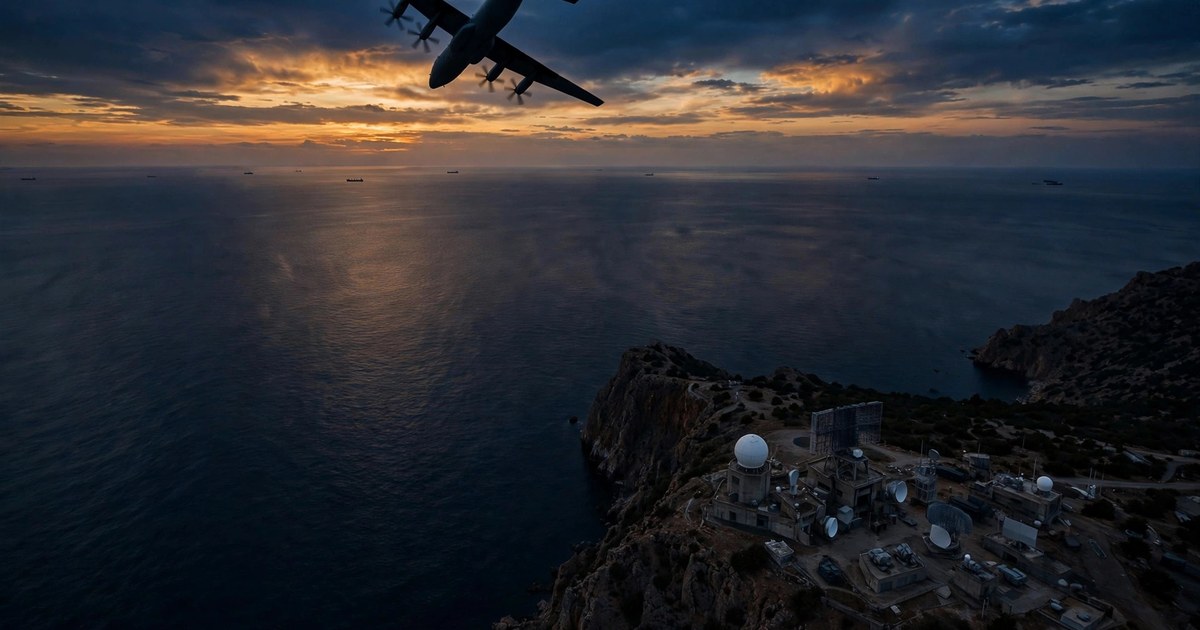
NATO is reinforcing its presence over the Black Sea. After a string of deadly drone attacks on commercial shipping near the coasts of Romania and Bulgaria, the alliance announced on Tuesday that member countries will send additional maritime patrol aircraft, radar systems, drones, intelligence teams and explosives-forensics specialists to the region, according to Reuters. The decision, taken after the alliance's main decision-making body discussed Black Sea security at its Brussels headquarters, is NATO's most visible response yet to a suspected Russian drone campaign that is trending per news coverage worldwide and that European officials say has already cost at least 23 sailors their lives or left them missing.
What exactly is NATO sending
According to the announcement, reported from Brussels by Reuters, allies "have or will send" a layered package of assets:
- Additional maritime patrol aircraft — long-endurance planes designed to watch vast stretches of sea;
- Radar systems and extra drones for persistent surveillance;
- Explosive exploitation teams — specialists who conduct forensic analysis of blast debris to identify what was used and by whom;
- Intelligence personnel to fuse and share sensor data across the alliance.
U.S. Army Colonel Martin L. O'Donnell, a NATO military spokesperson, said the immediate priority is better situational awareness: more sensors, more data, and more sharing between allies. Allison Hart, NATO's principal spokesperson, added in a post on X that the alliance has "already strengthened our posture along the eastern flank, including with counter-drone capabilities," and pledged that NATO would "continue to stand united" to keep its billion citizens safe.
The attack wave that forced the response
The reinforcement follows a grim ten-day stretch. At least six ships have been hit in what EU foreign policy chief Kaja Kallas described as "six attacks in 10 days by suspected Russian drones," calling it a "dangerous and unacceptable escalation."
The timeline, as reported by multiple outlets:
- October 5: Romania reported two deaths when a ship caught fire and sank;
- October 13: suspected Russian drones struck two cargo ships off the coast of Bulgaria;
- Last week: drones struck two chemical tankers near Romania's Black Sea coast, setting them ablaze — seven sailors were reported missing;
- Overall toll: at least five other cargo vessels were hit near the coasts of Romania and NATO member Bulgaria over a ten-day period, with at least 23 sailors reported missing or dead.
Romania and Bulgaria are both NATO members, which is why the attacks have landed on the alliance's agenda. As covered in Worldlession's earlier reporting, the tankers ablaze off Romania and the drone strikes off Bulgaria were treated as early signs that the campaign was widening beyond Ukraine's own coastline. NATO's announcement now confirms that assessment at the alliance level.
Who is behind the attacks
Officially, NATO has not pointed the finger at any country — neither has Romania or Bulgaria. But military analysts quoted in the coverage say Russia almost certainly carried out the strikes, while Moscow has not acknowledged responsibility. That ambiguity is deliberate: as one analysis noted, the public accounts of Tuesday's decision emphasised detecting threats and establishing facts through forensics rather than announcing blame before investigations conclude.
The forensics matter for a practical reason. Under NATO's consultation and collective-defence arrangements, documented evidence of state-directed attacks on the shipping of member states could force far harder decisions than patrol flights. By sending explosive exploitation teams now, the alliance is building the evidentiary foundation for whatever comes next.
Why the Black Sea matters: grain, energy and Europe's food supply
The Black Sea is Ukraine's main outlet for grain and one of the world's most important corridors for food and energy trade. Kallas said the suspected Russian campaign appears aimed at cutting Ukraine's grain export revenue — and warned of a "perfect storm" for global food supplies already strained by droughts and the war in the Middle East.
That warning explains the urgency. Ukraine's agricultural exports feed tens of millions of people worldwide, and insurers, shipping companies and flag states all watch NATO's posture as a signal of how risky the corridor has become. Every successful drone strike raises insurance costs and can push crews and shipowners to avoid the route entirely.
What this says about NATO's eastern flank
The deployment fits a broader hardening of NATO's eastern posture. Earlier this month the alliance's top commander warned that any Russian attack would prove "utterly futile," and NATO is currently rehearsing large-scale deployments in Poland with 1,500 European troops. The Black Sea move extends that logic to the maritime domain: visible sensors and aircraft are both a defensive measure and a message that the alliance is watching.
The timing is also notable. The announcement came on the same day U.S. envoy Steve Witkoff was due in Moscow for talks with Vladimir Putin, carrying proposals from recent Ukraine peace discussions — a reminder that military posture and diplomacy are running in parallel, and that attacks on shipping can continue even as negotiators talk.
What to watch next
The public accounts of Tuesday's decision did not specify a complete force total or a deployment timetable, and not every additional asset is necessarily operating yet. The open questions now are threefold: whether the drones keep coming despite the extra surveillance, what the forensic teams conclude about who launched them, and whether a future attack — particularly one that kills more sailors or strikes a ship more clearly tied to a NATO member — triggers a stronger response than patrols and radars. For now, NATO's answer is eyes on the sea.
What it means for shipping companies and insurers
For the commercial shipping world, NATO's announcement is as much about confidence as it is about security. When drones start hitting merchant vessels in international waters, the first casualty is often the willingness of shipowners, crews and insurers to keep sailing a route at all. War-risk premiums for Black Sea transits are negotiated trip by trip, and every new attack gives underwriters a reason to raise prices or withdraw cover — a cost that ultimately lands on food and commodity prices in importing countries.
Visible NATO patrol aircraft and radar coverage can help steady that market psychology. P-8-style maritime patrol planes and persistent drone surveillance make it harder for attackers to operate unseen and give insurers, flag states and ship crews a concrete reason to believe someone is watching. It does not make the sea safe on its own — sensors are not shields — but in a crisis where the official story from Moscow is silence, an allied eye in the sky changes the risk calculus for everyone deciding whether to sail on Friday morning.
Crew welfare is the other half of the equation. The sailors reported missing after the tanker strikes near Romania were merchant seamen, not military personnel, and seafarers' unions have been vocal in past conflicts about crews being put in harm's way for commercial cargoes. If NATO's surveillance can give earlier warning of inbound drone threats — or even just map the pattern well enough to let captains route around the most dangerous waters — that is a direct safety dividend for the people who keep global trade moving.
Similar tensions are playing out in Asian waters, where China has been tracking the USS Charleston near Sabina Shoal in the South China Sea.
The Black Sea patrols form part of the alliance's wider deterrence posture — the same posture NATO's supreme commander set out when Gen. Alexus Grynkewich warned Russia that any attack on an ally would prove 'utterly futile'.
Deterrence signalling is intensifying on other fronts too: a first UK-France joint nuclear exercise, Rummy, rehearsed an airborne strike mission.