
El Salvador soldiers missing in Haiti are still unaccounted for, a week after they vanished in a gang ambush outside Port-au-Prince — and a dramatic twist on Sunday has deepened the mystery. President Nayib Bukele said four bodies handed to Salvadoran forces in Haiti are not those of the missing men, directly contradicting earlier reports that the remains had been found.
"They are not our men," Bukele wrote on social media, after a non-governmental organisation delivered the remains to Salvadoran forces at one of Haiti's airports, claiming they were the four Salvadoran air technicians abducted the previous Sunday. The president's statement has thrown the search for the four men back into uncertainty — and raised fresh questions about whose bodies were delivered, and why.
The case, trending per news coverage across international outlets on Sunday, sits at the intersection of two crises: Haiti's spiralling gang war, and El Salvador's growing military role in the Caribbean country under a United Nations-backed security mission. Here is what is known, what is disputed, and what happens next.
What happened to the El Salvador soldiers missing in Haiti?
The four men — all members of El Salvador's air force working as aviation technicians — were travelling back to their camp in an armoured vehicle on Sunday, 18 October 2026, when they were ambushed in the Santo sector of Croix-des-Bouquets, north-east of the Haitian capital Port-au-Prince. According to accounts presented to the United Nations Security Council, gangs attacked the vehicle with explosives and heavy gunfire, setting it ablaze. The four men leapt out of the burning vehicle and fled. Contact with them was lost.
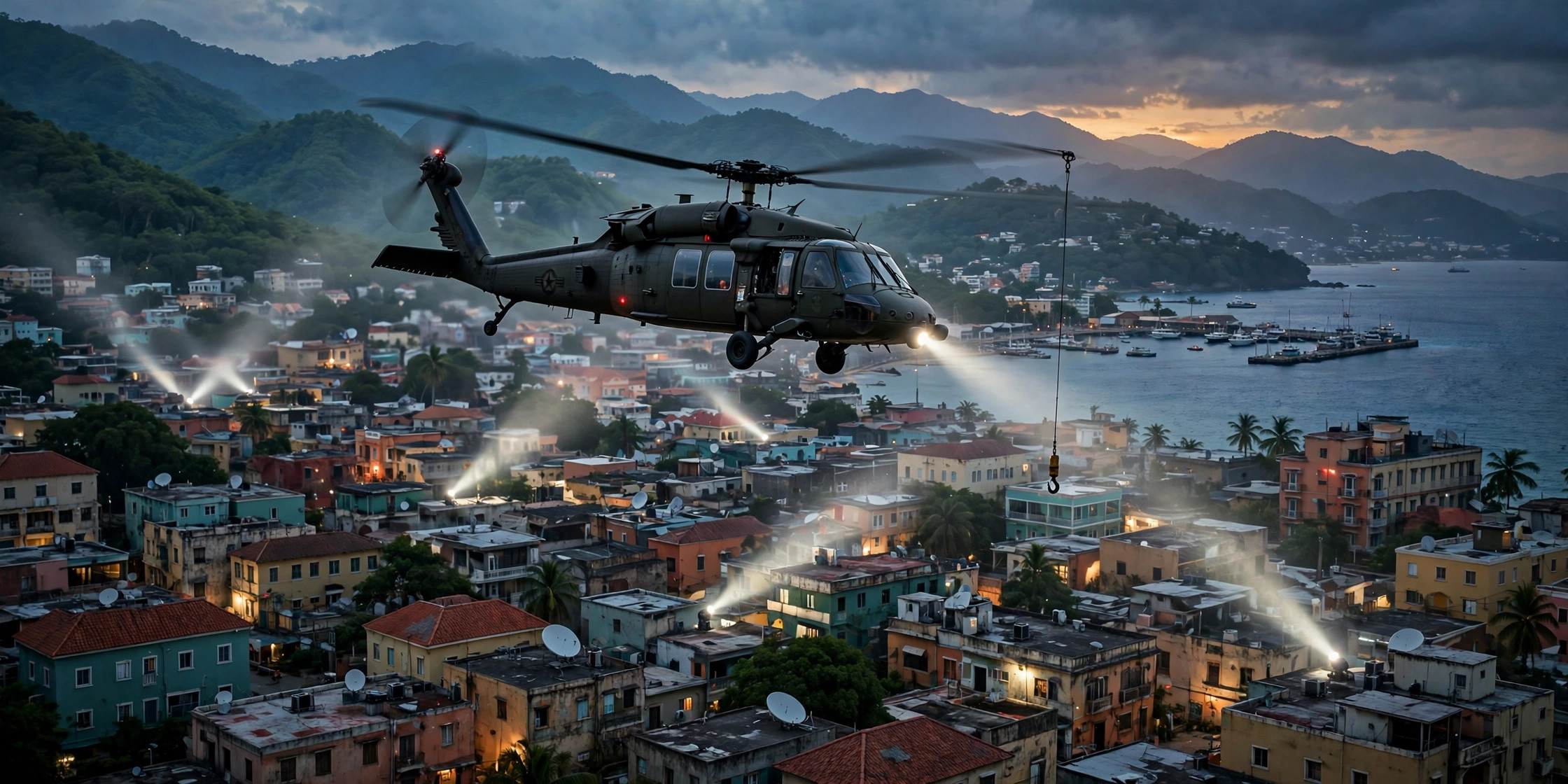
Salvadoran helicopters sent to reach the area came under fire, and repeated attempts to get to the ambush site by land and air were hampered by intense fighting, El Salvador's armed forces said. The international force later advised residents near Santo village — where the Chen Mechan and 400 Mawozo armed groups hold sway — to stay indoors until further notice.
US Ambassador Mike Waltz told the Security Council the vehicle had been hit by "hundreds of bullets and explosives" while the men were returning to base. UN Secretary-General's spokesperson Stephane Dujarric condemned the attack and called for the soldiers' immediate and safe release. No gang has claimed responsibility for the ambush.
Bukele says the Haiti bodies are not the missing soldiers — what is his evidence?
On Saturday, 24 October, four badly burned bodies were found on the outskirts of Port-au-Prince and handed to Salvadoran forces. The New York Times, citing people close to the Salvadoran mission, reported that the remains were thought to belong to the missing men, while noting that a medical examination would be needed to identify them.
Bukele rejected that account on Sunday. He said the remains delivered by the NGO included the body of a child, a man of "considerably greater height" than the Salvadoran air technicians, and a person wearing part of a uniform from an army that is not El Salvador's. He also said identification cards and uniforms from other countries were found among the remains, and he posted photographs showing a Gang Suppression Force identification card alongside a corresponding national identity card from Chad.
The contradiction remains unresolved. The Times later cited one unnamed source briefed on the situation as saying the identification card posted by Bukele in fact belonged to a soldier who had lost it when he had been injured. As of Sunday, no authority had publicly confirmed the identity of the four bodies, and the fate of the four missing technicians remained officially unknown.
Why are El Salvador troops in Haiti at all?
The missing men were part of the UN-backed Gang Suppression Force (GSF), a multinational security mission created by the UN Security Council in 2025 to help Haiti's police confront armed gangs that control large parts of the country — including an estimated 70 to 80 percent of the capital. The force replaced a Kenyan-led mission and is planned to reach around 5,500 military and police personnel plus 50 civilians, with contingents from countries including El Salvador, Chad, Jamaica and Guatemala.
El Salvador's involvement goes back further. Bukele first offered in March 2024 to help "fix" Haiti's gang violence, subject to a Security Council resolution, Haiti's consent and full funding of the mission's costs. Salvadoran personnel began arriving in early 2025, initially in a narrow role: medical evacuations for the international mission, an area where El Salvador's air force has experience. A transitional law approved in September 2026 and in effect from October broadened that role, authorising aircraft "equipped for specific missions" and personnel "according to the needs of the mission".
The ambush has already changed the mission's character. After the four men vanished, Bukele announced a military operation to bring them home, warning Haitian gang members on social media: "We have already finished with the gangs in El Salvador, and we can finish with you too." Gang leader Lanmo Sanjou responded with a video filmed beside large quantities of ammunition, warning his group would fight to stay alive.
How many El Salvador troops are now in Haiti?
Reports of the deployment's size have varied as it has grown. Initial reports described a force of around 100 elite troops arriving in Port-au-Prince aboard Salvadoran and US aircraft on 22–23 October. Haitian newspaper Le Nouvelliste later reported that the Salvadoran contingent had reached approximately 450 personnel by Friday, 23 October, as further transport aircraft arrived.
Bukele has said the operation's sole purpose is to return the four men alive. The GSF has said its own search operation has involved days of armed clashes, leaving at least seven gang members dead and four force personnel wounded, according to a force spokesperson.
The deployment also comes at a moment of financial strain for the mission: reports say US financial support was frozen on 21 October, with $13.3 million in pending aid withheld, adding pressure on regional contributors to sustain the operation.
What is the wider crisis in Haiti behind this story?
The ambush is a symptom of a security collapse that has displaced a record 1.5 million people in Haiti. Since January 2026 alone, gang-related violence has caused more than 5,700 deaths and injuries and more than 230 kidnappings, according to figures cited in recent reporting. Armed coalitions such as Viv Ansanm have used hostages as leverage in the past, and analysts warn the gang coalition could use the missing Salvadorans to pressure authorities and deter further operations.
For Bukele, the stakes are also personal and political. His domestic reputation was built on crushing El Salvador's own gangs, and the Haiti mission is the most visible export of that security model. A failed rescue — or a confirmed killing of Salvadoran personnel — would be a serious blow to that record. For Haiti, the incident tests whether the international force can protect its own people, let alone the civilians it was sent to defend.
Similar flashpoints elsewhere in the world this week show how quickly local security crises are drawing in outside powers — from Iran's claim to have shot down a US drone over Bandar Abbas to the protest crackdown across Italian cities and the deadly village raid in north-east Nigeria.
What happens next in the search for the missing soldiers?
Three questions now dominate. First, will forensic examination identify the four bodies delivered on Saturday — and if they are not the Salvadorans, whose are they? Second, will the expanded Salvadoran deployment, now reportedly hundreds strong, reach the ambush area and make contact with the missing men or their captors? Third, will any gang come forward with a claim or a demand, turning a search into a negotiation?
Until one of those questions is answered, the official position remains the same as it has been for a week: four Salvadoran air force technicians are missing in Haiti, their fate unknown, and a major search operation is under way. Bukele's Sunday statement guarantees the story will stay in the headlines — because it replaced an apparent ending with a new mystery.
Sources: BBC News, Reuters, CNN, The New York Times (as reported), Le Nouvelliste, United Nations Security Council briefing, statements by President Nayib Bukele and the Gang Suppression Force. Some details — including the size of the Salvadoran deployment and the identity of the recovered bodies — remain disputed or unconfirmed and are reported here with attribution.