
Is the Iran war over? On Monday 9 November 2026, President Donald Trump told reporters at the White House that the war with Iran "militarily is effectively over" — then, in the same breath, said the United States would keep its naval blockade in place and stay "locked and loaded". The declaration came hours after Trump met Qatar's prime minister, Sheikh Mohammed bin Abdulrahman Al Thani, and it is the clearest signal yet that Washington wants the eight-month conflict to wind down. But no peace deal has been signed, Iran rejects the claim outright, and American forces were still striking Iranian air defences days ago. So what does "effectively over" actually mean — and what would have to change before the war is genuinely finished?
The short answer is that the war has entered a strange middle ground. Large-scale fighting has paused, yet the economic siege continues, the military threat remains on the table, and the diplomacy meant to end the conflict has produced no signed agreement. Understanding Trump's words means separating three things that are easy to confuse: the fighting, the blockade, and the deal that does not yet exist.
What Trump Actually Said on 9 November
Trump made the remarks at a surprise appearance in the White House briefing room on Monday, after a closed-door meeting with Qatar's prime minister and foreign minister. UFC chief executive Dana White stood alongside him. "Iran militarily is effectively over," Trump told reporters. "We're just keeping it the status quo."
He was blunt about Iran's condition. The country's leadership had been "decapitated", he said, and Iran was "a failing country" with "301% inflation", a figure he offered without citing a source. He added that American forces had not "lost a soldier in six months" and that the conflict, which began in February 2026 with US and Israeli strikes on Iran, was heading for an end. "I think it's going to be ending fairly soon," he said.
On new strikes, his message was deliberately two-sided. "At this point … taking the military action doesn't seem to be a very necessary thing," he said. "But we're locked and loaded, ready to go for any reason that changes." Renewed military action, he added, seemed "quite unlikely" for now. In a phone interview with CNN the previous day, he had put it the same way: as long as negotiations with Iran keep moving and Tehran signs a "strong agreement", it is "highly unlikely" strikes will resume.
One line from the briefing matters more than the rest. Trump said he had decided to hold the current line after his conversation with Qatar's prime minister — and that the Gulf states around Iran agreed. "Qatar, Saudi Arabia, UAE, Bahrain, Kuwait, and others would prefer the status quo," he said, describing a blockade by sea and a new effort by land. "So you have land and sea, total lockdown."
Is the Iran War Over? The Blockade Says Otherwise
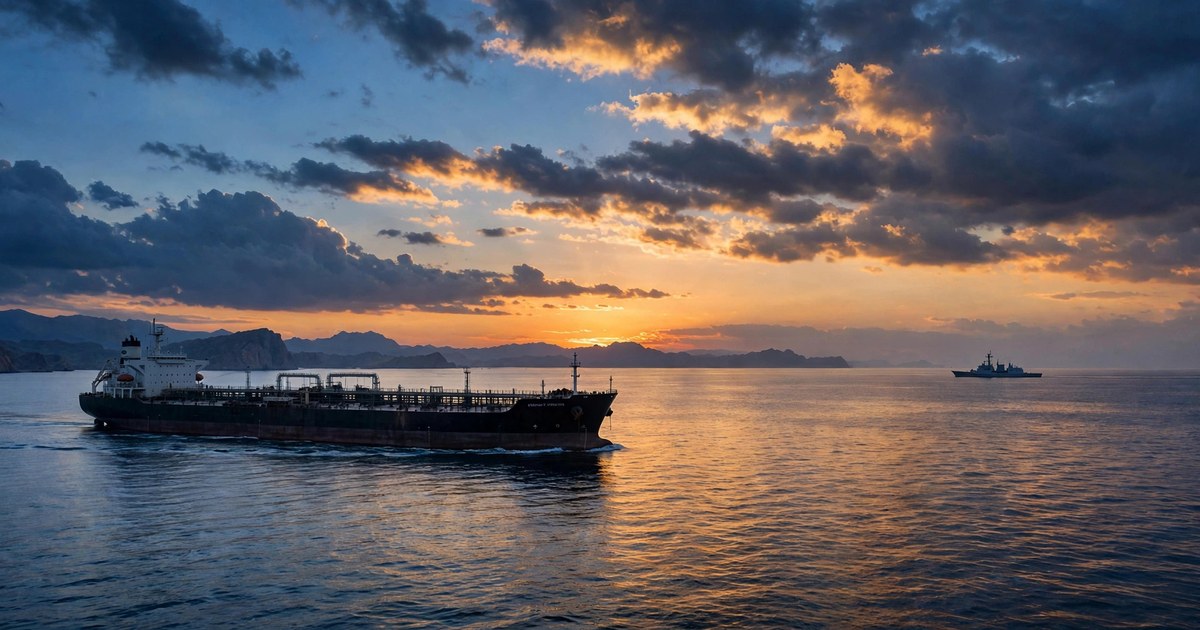
If the war were truly over, the first thing to change would be the blockade. It has not. Trump was explicit that the naval blockade of Iranian ports continues — "We're keeping it going. We have the greatest military blockade ever," he said — and he paired it with a new land operation. US Central Command announced on Saturday 7 November that it had set up Task Force Iron Gate to disrupt the movement of Iranian weapons and sanctioned goods by land and across the Caspian Sea. Together, the sea blockade and the land effort amount to what Trump called a "total lockdown" of Iran's trade.
The scale of that pressure is large. According to US Central Command, the sea blockade has prevented more than $25 billion of Iranian crude exports in recent months. Tehran has made lifting the blockade a condition for reopening the Strait of Hormuz to normal traffic, and the US has shown no sign of agreeing. The strait, through which roughly a fifth of the world's oil and liquefied natural gas passes in peacetime, remains the conflict's central pressure point.
The military threat is not rhetorical either. The Hindu Business Line reported that the US has identified infrastructure targets — including 38 bridges — that it would strike if military action resumes. And limited strikes have not stopped: American forces hit Iranian air defences on Qeshm Island over the weekend, which Trump himself described as "minor strikes", and the US has carried out at least two such limited strikes in the past week. The Qeshm Island strikes were aimed, the administration said, at preventing Iranian surface-to-air missiles from hitting US assets in the region.
That is why the phrase "effectively over" needs reading with care. The big bombing campaign has stopped. The war has not.
Why Trump Is Calling the War Over Now
Three pressures explain the timing. The first is political. The war has been unpopular at home: USA Today reported voter resentment over the conflict, and the midterm elections a week ago delivered what The Times called a historic battering for Trump and the Republican Party. Declaring the war over lets the president present the conflict as closed without signing anything.
The second is cost. The war has cost the US military more than $47 billion as of 16 October, according to the latest Pentagon estimate cited by USA Today — and holding the status quo, with warships on station and a blockade to enforce, keeps that bill growing. The third is the oil market. Fears of renewed strikes had pushed Brent crude above $120 a barrel in April; with Trump talking the risk down, Brent eased to about $93 a barrel, removing some of the war premium from fuel prices.
Trump also pointed to what he called "positive momentum" in negotiations, without giving details. The talks have been running on and off for months — including a two-day round in Doha aimed at reopening the Strait of Hormuz — but they have yet to produce a signed agreement. The president's own history cuts against his optimism: The Times noted that he has made similar comments about a deal being close before, and that so far his pronouncements that a deal was close have not come to pass.
What Iran Says: No Deal, No End
Tehran's answer to the declaration was rejection. Mohsen Rezaei, the chief of Iran's security council, said the US should "stop manufacturing fake news about imaginary talks" and that it was "time to surrender to the seven conditions Iran has repeatedly set out", Reuters reported. Iranian officials have also dismissed the idea that the conflict is effectively over while military and economic pressure continues, and Iran has outlined its own conditions for entering nuclear negotiations with the United States.
The gap between the two sides is the nuclear question. Trump has said that Iran never having a nuclear weapon is a "non-negotiable point" — and claimed that "everybody's agreed" on it, though Tehran has not said so publicly. Iran, for its part, has tied reopening the Strait of Hormuz to the blockade being lifted, and has set out its own conditions for nuclear negotiations. Neither side has moved on those points in public. Iran's decision to lift its own 2,000 km missile-range cap earlier in November showed how quickly the military picture can still escalate.
As things stand, then, there is no formal end to military operations and no comprehensive peace agreement. That is the fact against which Trump's words have to be measured.
Is the Iran War Over? Three Things a Real End Needs
A real end to the war would look different from a press-conference sentence. It would need at least three things, and none of them exists yet. First, a signed agreement — the "strong agreement" Trump mentioned to CNN — settling the nuclear question and the terms under which the conflict stops. Second, the blockade lifted, by sea and by land, so Iranian oil can move and the strait returns to normal traffic. Third, an Iranian acceptance that the war is over, rather than a public rejection of the claim.
Until those three things happen, the situation is a ceasefire in all but name — except that no ceasefire has been declared either. The fighting has paused, the siege continues, and both sides keep their options open. That is a meaningful change from the bombing campaign of the spring, and it matters for oil prices, for shipping, and for the Gulf states that asked Washington to hold the line. But it is not peace.
What Happens Next
The next test comes quickly. Watch whether the blockade eases at all — any softening would be the first concrete sign that "effectively over" means more than a pause. Watch whether another limited strike follows the Qeshm Island attacks; a third strike in as many weeks would test Trump's "quite unlikely" within days. And watch the negotiations themselves: the question is not whether the two sides keep talking, but whether a text exists that both are willing to sign.
For the millions of people living around the Gulf, and for anyone watching fuel prices, the difference between a war that is over and a war that is paused is not academic. A paused war can restart with a single strike, a single mine, or a single failed round of talks. Trump has said the war is effectively over. The blockade, the bridges on a target list, and Iran's flat rejection say it is not over yet — and the answer to the question will be written by what happens next, not by what was said on Monday.
Sources: New York Post; USA Today; The Times; The Hindu Business Line; InvestingLive; Reuters; Al Jazeera.