
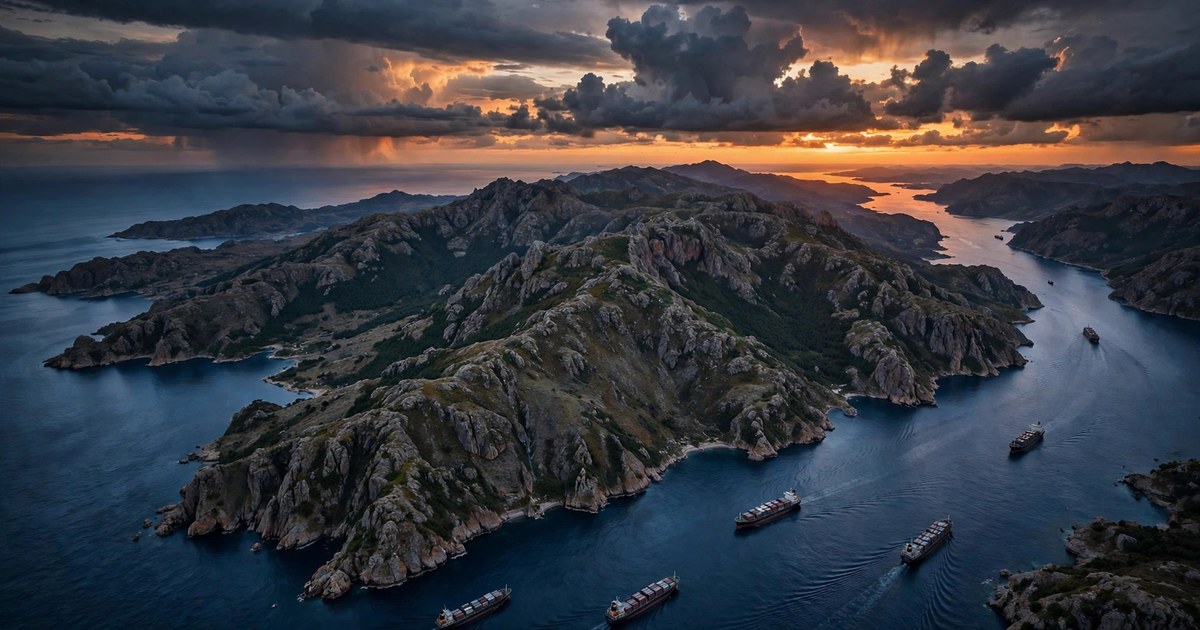
US strikes Iran's Qeshm Island in the Strait of Hormuz late on Monday, 2 November 2026, just hours before Americans began voting in the midterm elections. US officials described the operation as defensive, saying it targeted Iranians using surface-to-air missiles against US assets in the Strait of Hormuz. Iranian state media reported several explosions on the island, the largest in the Persian Gulf, but neither side has confirmed what was hit, whether there was any damage, or whether anyone was killed. The strikes were first reported by The Wall Street Journal, citing US officials, and were then confirmed by the Associated Press, Reuters, CNN and CBS. They are the latest in a series of limited US strikes in recent weeks that Washington has deliberately kept quiet — and they land at a moment when diplomacy over the eight-month-old war is suddenly moving fast.
What Happened: US Strikes Iran's Qeshm Island
Explosions were heard in rapid succession on Qeshm Island late on Monday, Iran's state news agency IRNA reported, citing witnesses who saw two aircraft over the island. The semi-official Fars news agency said blasts were also heard in the port city of Bandar Lengeh, and residents of nearby Hengam Island and Bandar Abbas heard the explosions too. The Wall Street Journal was first to report that the US military had carried out the strikes, citing US officials. The Associated Press then quoted a US official, speaking on condition of anonymity, who said the strikes targeted "Iranians using surface-to-air missiles against US assets". CNN, citing three US officials, reported that the action was limited and defensive and came in response to Iran firing at a US aircraft. CBS, the BBC's US partner, was told the same by US officials.
Washington has issued no public statement about the operation. The Pentagon referred questions to US Central Command, which oversees American forces in the Middle East, and Central Command did not respond to requests for comment. USA Today noted that Central Command had not publicly disclosed any strike on Iranian military targets since 1 September. What was hit, how much damage was done and whether anyone was killed remain unconfirmed by either side.
Where Is Qeshm Island and Why Does It Matter?
Qeshm Island is the largest island in the Persian Gulf, sitting in the Strait of Hormuz about 14 miles (22 kilometres) from the Iranian port city of Bandar Abbas. It is a core Iranian military base: the island hosts naval and missile bases of the Islamic Revolutionary Guard Corps, a large underground missile facility, a naval base, major seawater desalination plants and a dense concentration of oil and gas infrastructure. That combination makes it one of the most strategic pieces of land in the region — whoever controls Qeshm helps control the narrow waterway through which oil moves from the Gulf to the rest of the world. Before the war, about 20 million barrels of oil passed through the Strait of Hormuz every day.
The war began on 28 February 2026, when the United States and Israel attacked Iran, and Iran retaliated against Israel and US assets in the region. Since then the strait has been virtually closed, sending fuel prices soaring and putting shipping, airlines and economies across the Gulf on edge. The US has targeted Qeshm Island previously during the war, according to CNN, which underlines how central the island is to the fighting. Across the Gulf, governments have been bracing for the worst even while hoping for a breakthrough, and the UAE recently lifted air traffic restrictions imposed during the war.
Why the US Calls the Qeshm Island Strikes Defensive
US officials have been careful to frame Monday's operation as defensive rather than the start of a new campaign. One official told the Associated Press the target was Iranians using surface-to-air missiles against US assets; others said the strikes were a response to Revolutionary Guard fire on a US aircraft, and a defensive measure to stop Iran from attacking commercial vessels in the strait at will. A US official told Fox News the strikes were not the start of expanded operations.
The secrecy around the operation is deliberate. The Wall Street Journal reported that the Qeshm Island strikes were the latest in a series of limited strikes carried out by Washington in recent weeks, kept small and unannounced so as not to signal any intent to resume the major military campaign against Iran. One person familiar with the matter told CNN the administration deliberately kept the attack under wraps so as not to overstate what was a defensive move.
Earlier on Monday, the Revolutionary Guard's navy said a tanker that had strayed from its course in the eastern part of the Strait of Hormuz struck a mine and caught fire — a reminder of how dangerous the waterway has become. The contrast with the public messaging was striking: on Monday, President Donald Trump told reporters he was in "no rush" to escalate, and when asked whether he was considering resuming strikes on Iran after the elections, he answered "no". He also said a deal with Tehran "could happen".
What Iran Says About the Qeshm Island Strikes
Iran has not confirmed the cause of the explosions, what was hit, or whether there was any damage or casualties. What Tehran has said publicly is about its own claims in the strait. The Revolutionary Guard said on Monday that it had shot down two US reconnaissance drones south of Qeshm Island, and Iranian media reported that an MQ-9 Reaper drone was also brought down east of the Strait of Hormuz. Those claims have not been independently verified, and US Central Command has partly disputed the drone claims, according to reporting on Monday.
Iran's foreign minister, Abbas Araghchi, said intensive negotiations with the United States were under way through mediators, and that Tehran is offering to open the Strait of Hormuz within two days if an agreement is reached. His ministry's spokesman, Esmaeil Baghaei, said the ball was in Washington's court. The diplomacy and the strikes are therefore running side by side: talks about reopening the waterway continued on the same day American aircraft hit the island that guards it.
US Strikes Iran's Qeshm Island: What Happens Next After the Midterms
The timing is impossible to ignore. Americans are voting on Tuesday, 3 November 2026, in midterm elections that will decide whether Republicans or Democrats control Congress, and the war with Iran — and the fuel prices it has driven up — has become a major issue in the campaign. More than 54 million Americans had already voted early, and the result will shape how much room the White House has to keep fighting, keep talking, or do both.
On the diplomatic track, Iran and the United States have been discussing a two-day plan to reopen the Strait of Hormuz, and Vice President JD Vance said on Monday that the two sides have "made some progress" toward an off-ramp to the war. But the military track has not stopped: in an interview with Fox News, Trump suggested the United States might need to target Pickaxe, a facility linked to Iran's nuclear programme. General Brad Cooper, the head of US Central Command, visited the White House last week to brief Trump on the conflict.
Oil markets reacted immediately. West Texas Intermediate crude for December delivery had settled at $96.46 a barrel, down more than 7% from the previous session on expectations of progress in the talks, but climbed back above $97 after news of the strikes broke, and rose again in early Asian trading on Tuesday. Brent crude prices will be watched closely in the coming days, along with shipping through the strait.
What to watch now is whether Central Command says anything publicly, how Iran responds once the scale of the damage is clear, and whether the talks survive a week in which both sides are still shooting. The strikes were limited and defensive by Washington's own description — but they are also a reminder, on the eve of an election, that the war in the Gulf is not over.
Sources: The Wall Street Journal (first report, via Reuters); Associated Press; Reuters; CNN; CBS News and BBC News; USA Today; IRNA; Fars News Agency.