
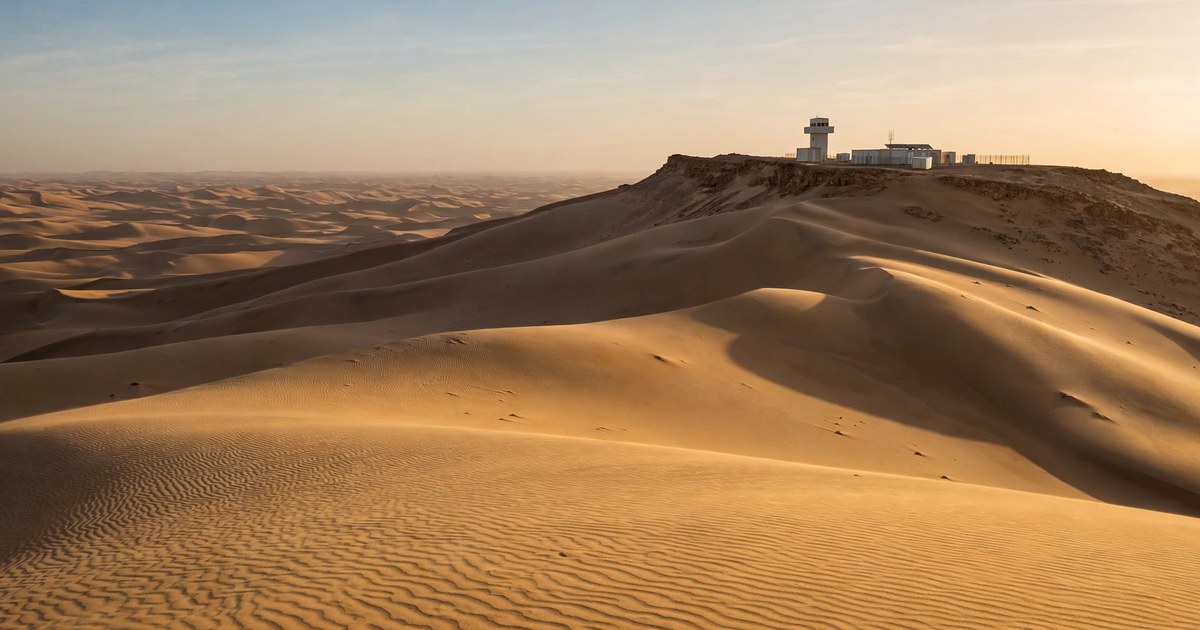
The MINURSO mission ends after 35 years in Western Sahara, closing one of the United Nations' longest-running peacekeeping operations. The mandate of the United Nations Mission for the Referendum in Western Sahara expired at midnight on Saturday, 31 October 2026, after the UN Security Council failed on Friday to agree on its future, and 1 November marked the start of the mission's liquidation phase, with its personnel and equipment now being withdrawn. Secretary-General António Guterres confirmed the end of the mission on Sunday, saying the United Nations would keep working towards a peaceful resolution of the half-century-old dispute over the territory through his Personal Envoy, Staffan de Mistura.
Why the MINURSO mission ends now
The Security Council met on Friday, 30 October 2026, to renew the mandate, as it had routinely done for decades. This time, two competing draft resolutions were put to the vote, and both failed. A draft tabled by the United States would have extended the mission for another year while cementing Morocco's autonomy plan as the only basis for talks on the territory's future and scaling back the mission's military component. It won 11 votes in favour, but Russia vetoed it, with three abstentions, including China and Pakistan. The Russian delegate said the text would have imposed one-sided solutions, describing the veto as "a life-saving veto, so to speak". The United States delegate said his country's draft would have supported the principle of self-determination and "moved the 50-year conflict forward", calling the status quo unacceptable.
Russia then tabled its own draft, proposing a plain one-year extension of the mandate to 31 October 2027, keeping the mission's name and tasks unchanged. It won only three votes in favour — China, Somalia and Russia — with the United States voting against and 11 abstentions, short of the nine votes needed for adoption. With neither text adopted, the mandate simply lapsed when it expired at midnight on 31 October.
How the MINURSO mission ends: the liquidation phase
From 1 November, MINURSO entered what the United Nations calls its liquidation phase. A smaller team reporting to the UN's Department of Operational Support is handling the transport of the mission's assets back to the countries that supplied its troops, and the disposal of equipment that belongs to the United Nations. When its mandate ended, the mission was headquartered in Laayoune, with nine team sites — four west of the berm and five east of it — and a liaison office in Tindouf.
Morocco, which controls most of the territory, welcomed the non-renewal. The royal palace called it a "significant development" towards withdrawing the Western Sahara issue from consideration by the Security Council. Foreign Minister Nasser Bourita said Morocco would not expel the mission's staff and would guarantee an orderly withdrawal, providing the necessary time and resources and coordinating the departure with the Secretary-General's office. He also stressed that the end of the mission does not mean Morocco is abandoning the ceasefire: Rabat remains fully committed to the agreement of 6 September 1991. Algeria's Foreign Ministry expressed "deep regret" over the non-renewal, blaming what it called the "excessive bias" of the United States towards Morocco's position. The Polisario Front, which seeks an independent state in the territory, said it was "concerned at the deadlock in the Security Council meeting."
What MINURSO did in Western Sahara for 35 years
MINURSO was established by Security Council Resolution 690 in 1991, under settlement proposals accepted in 1988 by Morocco and the Frente POLISARIO, the Polisario Front. Its job was to monitor the ceasefire that ended the fighting between Morocco and the Polisario Front, and to organise a referendum in which the people of Western Sahara would decide the territory's future, with independence as one of the options. The United Nations classes Western Sahara as a non-self-governing territory, and the dispute over it has lasted for half a century.
For 35 years, MINURSO's observers monitored the ceasefire line and kept a UN presence on the ground in one of the world's longest-running territorial disputes. But the referendum it was created to organise never took place, and that failure is the central fact of the mission's history. The two sides could never agree on who was eligible to vote, and the vote was postponed again and again until it became clear it would not happen under the terms set in 1991.
Why the referendum never happened
The referendum failed on the question of voter eligibility. Morocco and the Polisario Front disagreed over who counted as a Sahrawi voter, and the disagreement was never resolved despite decades of negotiation. In the meantime, the political ground shifted. A year before the mandate lapsed, the Security Council adopted a US-drafted resolution that accepted Morocco's plan to give the territory autonomy under Moroccan sovereignty as the "most feasible" solution to the conflict. The American draft tabled on 30 October would have gone further still: it would have removed the reference to a referendum from the mission's name, renaming it the United Nations Mission in Western Sahara, or MINUSO, and made Morocco's autonomy proposal the exclusive framework for negotiations. Russia, which had abstained in the 2025 vote, opposed that step this year, and its veto ended the mission instead.
What happens to Western Sahara now
For the first time in 35 years, there is no UN peacekeeping force on the ground in Western Sahara. The ceasefire itself remains in force — Morocco has said it will keep respecting the 1991 agreement — but the Polisario Front withdrew from the ceasefire in 2020 after clashes, and the UN has said the territory has since remained the scene of tensions and low-intensity hostilities. The Secretary-General said he "remains concerned about the security situation throughout the Territory and the risk of escalation of hostilities", and called on all sides to "exercise maximum restraint". Without UN observers in place, any future incident will be harder to verify independently, which is why the call for restraint matters.
Diplomacy continues without the mission. Guterres said the departure of MINURSO "does not abrogate" the people's "inalienable right to self-determination", and that the United Nations "stands ready to continue supporting efforts to advance dialogue and pursue a peaceful resolution of the conflict" through his Personal Envoy, Staffan de Mistura. The Security Council will no longer hold its routine meetings to renew the mandate and review the Secretary-General's reports, although it can still convene if a situation affecting international peace and security requires it. The autonomy plan is now the centre of gravity for any negotiation, backed by the 2025 resolution and by the 11 votes the American draft won on 30 October. Whether that produces a settlement — or a new standoff without peacekeepers to watch it — is the open question the end of MINURSO leaves behind.
The deadlock also underlined how far relations between the United States and Russia have frayed across other files, from the war in Iran to the pause in Ukrainian strikes on Russian refineries, and to the messages Washington and Tehran have exchanged as diplomacy continues.
Why did the MINURSO mission end?
The MINURSO mission ended because the UN Security Council failed to renew its mandate. On 30 October 2026, the Council voted on two competing drafts: the United States' draft won 11 votes but was vetoed by Russia, and Russia's draft won only three votes, short of the nine needed. With no resolution adopted, the mandate expired at midnight on 31 October 2026.
What happens to Western Sahara now that MINURSO has ended?
MINURSO has entered its liquidation phase, with personnel and equipment being withdrawn from 1 November 2026. The 1991 ceasefire remains in force, Morocco says it will keep respecting it, and the United Nations continues its diplomatic effort through Personal Envoy Staffan de Mistura. The Security Council no longer holds routine renewal meetings on the territory, and Morocco's autonomy plan is now the central framework for negotiations.
What was MINURSO?
MINURSO was the United Nations Mission for the Referendum in Western Sahara, a peacekeeping mission established by Security Council Resolution 690 in 1991. It monitored the ceasefire between Morocco and the Polisario Front and was tasked with organising a referendum on the territory's self-determination — a vote that never took place.
Why did the referendum in Western Sahara never take place?
The referendum never took place because Morocco and the Polisario Front could not agree on who was eligible to vote. The disagreement over voter eligibility persisted for decades, and the political ground later shifted towards Morocco's autonomy plan, which the Security Council described in 2025 as the "most feasible" solution.
Who voted against renewing the MINURSO mandate?
Russia vetoed the United States' draft resolution, which would have extended the mission for a year while cementing Morocco's autonomy plan as the basis for talks. Russia's own draft, a plain one-year extension, was then defeated, winning only three votes in favour, with the United States voting against and 11 abstentions.
Sources: Reuters; UN News; UN Meetings Coverage and Press Releases.