
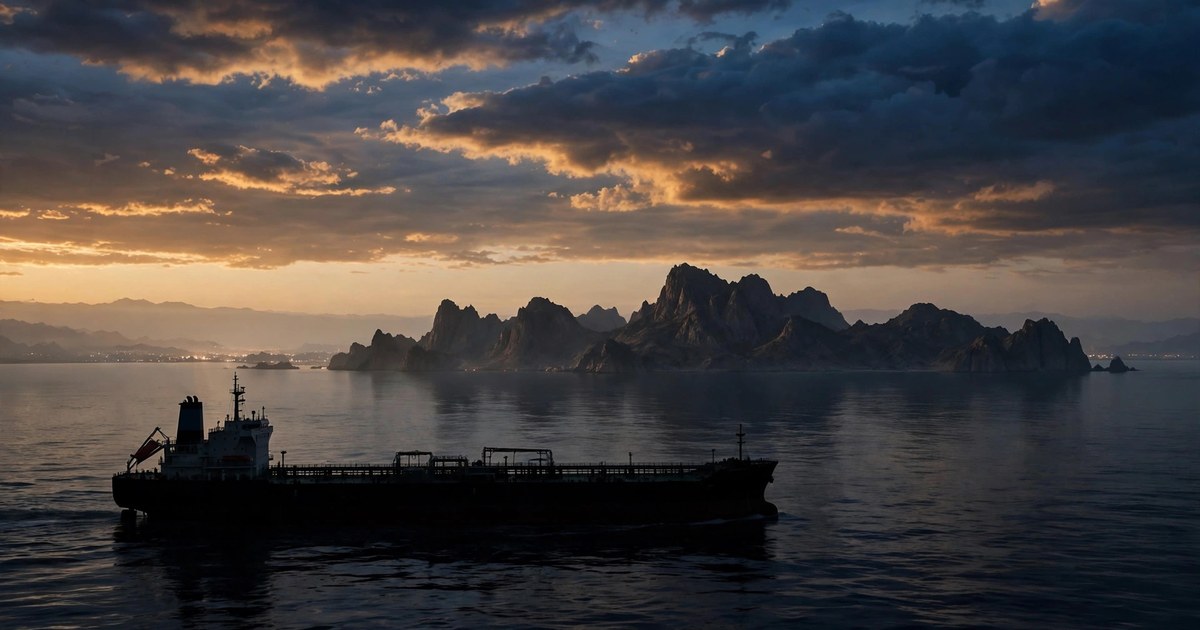
The US Iran exchange fire of 17–18 November 2026 turned a week of drone attacks on Bahrain into a two-sided fight across the Gulf. On Tuesday, Iran's Revolutionary Guards sent drones at a US-operated radar system at Sheikh Isa Air Base in Bahrain. Hours later, American fighter jets struck a Revolutionary Guards missile launch site on Qeshm Island, in the Strait of Hormuz. Before dawn on Wednesday, Kuwait said its air defences were engaging hostile drones, and Bahrain reported fresh Iranian aerial attacks — then issued an all-clear. No casualties were reported anywhere, and each side says the other's fire did no damage. But the exchange ended a roughly two-month lull in a war that began in February, pulled a second Gulf state into the firing line, and pushed oil markets and shipping in one of the world's most important oil waterways back into focus.
US Iran Exchange Fire: What Happened on 17–18 November 2026
The night's exchanges began in Bahrain on Tuesday morning. Iran's Islamic Revolutionary Guard Corps said its combat drones carried out a precision operation against a radar system operated by US forces at Sheikh Isa Air Base, describing the strike as a reply to what Tehran calls repeated violations of Iranian airspace by American drones. It was the third Iranian drone attack on Bahrain in five days, after strikes on Friday and Sunday. Bahrain said its air defences intercepted the attack and reported no casualties or damage, and blasts were heard over the capital, Manama, according to AFP. US Central Command said a number of Iranian one-way attack drones aimed at the radar were intercepted, with no damage to American equipment and no injuries to US personnel — and it rejected the Guards' claim that the radar had been hit, calling it false.
Washington answered within hours. A US military official, speaking on condition of anonymity, told Reuters and Al Jazeera that American fighter jets used precision munitions to strike a Revolutionary Guards missile launch site on Qeshm Island, in the Strait of Hormuz, describing the operation as self-defence in response to Iranian aggression against US personnel and assets. Iran's official IRNA news agency reported that five to six explosions were heard on the island on Tuesday evening. Ahmad Nafisi, the deputy governor of the southern province of Hormozgan, told IRNA the attack caused no damage to residential, commercial or infrastructure areas, and an Iranian official told the Tasnim news agency there was no damage to vital infrastructure.
The firing did not stop there. At about 1.39am Gulf time on Wednesday, the General Staff of the Kuwaiti Armed Forces said on X that its air defences were countering hostile drone attacks, and that any explosions people heard were the result of interceptions. Early on Wednesday morning, Bahrain's Defence Force said its air defences had repelled a number of Iranian aerial attacks that day, accusing Tehran of maintaining what it called a systematic hostile approach towards the kingdom. Bahrain's Interior Ministry issued two separate threat alerts in the early hours, urging residents to move to the nearest safe location, and announced the all-clear after each one.
US Strikes Qeshm Island After Bahrain Radar Attack
Qeshm Island sits in the Strait of Hormuz, one of the world's most important routes for oil shipments, and it has become a repeat target in this war. The Associated Press noted that the US military has periodically carried out what appear to be limited strikes on Qeshm Island and other Iranian targets this month. The United States had already struck Qeshm Island on 2 November, hours before Americans voted in the midterm elections, in an operation US officials also described as defensive. Tuesday's strike followed the same pattern: a limited, acknowledged-by-officials action, described as a response to an Iranian attack rather than the opening of a wider campaign.
What is different this time is the sequence around it. The Qeshm strike came the same day Iran attacked Bahrain for the third time in five days, and it was followed within hours by drone alerts in Kuwait. US Central Command posted on Tuesday that the aircraft carriers USS Theodore Roosevelt and USS George Washington were sailing in the Arabian Sea. A third US carrier, the Theodore Roosevelt, had already arrived in the Middle East as the region's naval presence built up. The Revolutionary Guards, for their part, warned Bahrain over its alliance with the United States and its stance towards Shi'ite clergy, according to Reuters.
Kuwait Drone Attacks: What Kuwait Said — and What It Did Not
Kuwait's statement was short, and what it left out matters as much as what it said. The General Staff said its systems were countering hostile drone attacks and urged residents to follow security and safety instructions. It gave no detail about where the drones came from, what they were aimed at, or whether anyone was hurt. It did not say the drones were Iranian, and it reported no casualties or damage.
That restraint contrasts with Bahrain, where the Defence Force explicitly accused Tehran of a systematic hostile approach. Kuwait's silence on the origin leaves the key question open: whether the drones over Kuwait were part of the same Iranian campaign against US-linked targets, or something else entirely. Either way, the reports put a second Gulf Arab state on alert in a single night, hours after American jets bombed an Iranian missile site — the clearest sign yet that this round of fighting is spreading beyond Bahrain.
Bahrain on Alert Again: Wednesday's Attacks and All-Clear
For Bahrain, Wednesday morning was the fourth round of attacks in six days. Friday's strike was the first Iranian attack on a Gulf country since early September, according to AFP. On Sunday, the Guards said they had targeted a radar system at the Al-Rifaa helicopter base, and Iran said six drones had been aimed at it. Tuesday brought the third attack in five days, aimed at the Sheikh Isa radar. Wednesday's attacks, which Bahrain's Defence Force said were intercepted before they could achieve their objectives, showed the pattern is still running.
Bahrain is home to the headquarters of the US Navy's Fifth Fleet, which is why it keeps being targeted: the attacks are aimed at American military infrastructure on Bahraini soil, not at Bahrain itself. The kingdom's Interior Ministry sent mobile phone alerts and sounded air raid sirens on Tuesday before blasts were heard in Manama, and it repeated the warnings twice more in the early hours of Wednesday. Each time, the ministry announced the all-clear once the immediate danger had passed. Through four rounds of attacks, neither Bahrain nor US Central Command has reported any casualties or damage to American equipment.
Why the US Iran Exchange Fire Matters for Oil and Shipping
The Strait of Hormuz carries a large share of the world's seaborne oil, so any shooting around it moves markets — and Tuesday's exchange came with fresh shipping claims. Iran's Revolutionary Guards and navy said a ship carrying LNG and two oil tankers had caught fire in the strait on Tuesday, and Iran's navy separately said a tanker had caught fire after striking a naval mine east of the waterway. Neither claim has been independently confirmed. Shipping through the strait was already under strain: the Panama-flagged LPG carrier MT Tara Gas was attacked twice in the strait on 16 and 17 November, leaving one Indian seafarer missing and 21 rescued.
Oil prices fell on Wednesday, but only modestly. Brent crude futures were trading down 16 cents, or 0.17%, at $92.98 a barrel as of 0149 GMT, while US West Texas Intermediate futures fell 56 cents, or 0.65%, to $85.45 a barrel, Reuters reported. Prices dropped on data showing higher US crude and fuel inventories, but continued tensions between the US and Iran and the disruption to shipping through the strait limited the losses. Oil prices had jumped $3 earlier in the crisis as Gulf tensions escalated, a reminder that the market is pricing in the risk of a wider disruption even when each individual exchange stays limited.
What Happens Next in the US Iran Exchange Fire
Two tracks are running at once, and they point in opposite directions. On the diplomatic track, Qatari and Iranian officials met on Tuesday for talks aimed at bridging perspectives and narrowing the gap between proposals on the table, Qatari spokesperson Majed Al Ansari said. Iran has also been talking to mediators Oman and Qatar even as the strikes continued. On the military track, the pattern of the last ten days is attack, retaliation, and another attack — and neither side has shown any sign of stepping back.
The exchange also came a day after CNN reported, citing seven US officials, that US intelligence says Iran is developing plans to target senior Trump administration officials with a dirty bomb or chemical weapon in Washington — a claim Iran rejects and the White House says is not a credible threat to the homeland, as explained in our report on what US intelligence says, and what it does not prove. That report, and the strikes that followed it, frame the question now facing the region: whether this round stays a limited exchange of fire, as the November strikes on Qeshm have so far, or whether the widening to Kuwait marks the start of something bigger. What to watch next is whether Kuwait names an origin for its drones, whether the US carries out further strikes, and whether the talks with Qatar and Oman produce anything that can hold. The war that began on 28 February, after US and Israeli attacks on Iran, has been fought in bursts ever since — and this burst is not over yet.