
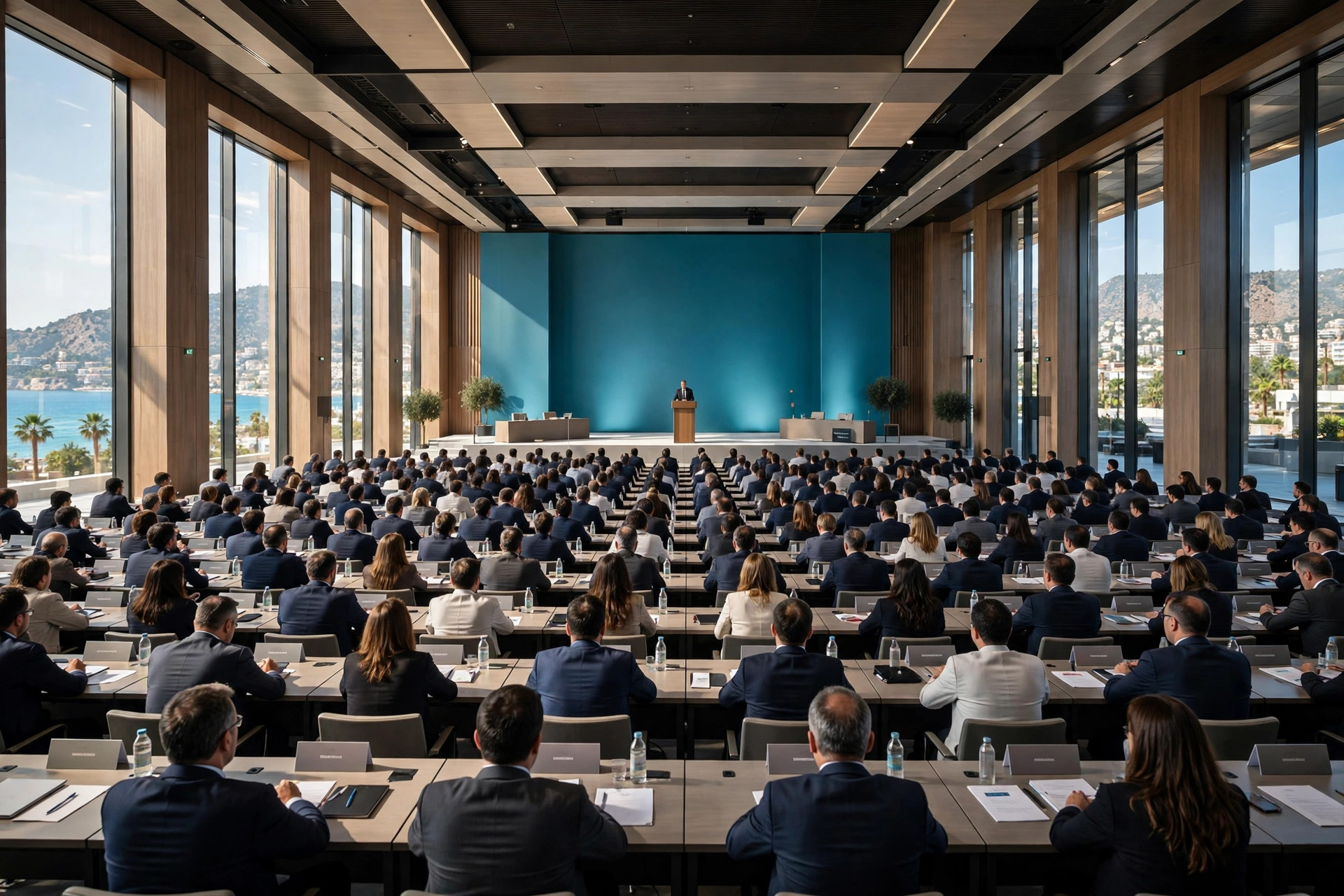
The COP31 leaders summit opened its first day in Antalya, Türkiye, on Wednesday, 11 November 2026, with the bluntest language of the conference so far. UN Secretary-General António Guterres told heads of state and government that "our planet is heating up. The clock is winding down. It's make or bake time," and warned that even if every current national climate plan is fully implemented, the world is still heading towards more than 2.5°C of warming by the end of the century. His answer was a "climate justice compact" to help developing countries move away from fossil fuels while protecting those already suffering from climate change. The leaders' segment runs across 11 and 12 November, inside a conference that opened on Monday 9 November and runs to Friday 20 November, and day 1 was also the summit's Zero Waste thematic day. What followed was a day of sharp contrasts: record pledges on electrification, a new oil discovery announced by the host president, and a warning from the UN's climate chief that progress is nowhere near fast enough.
COP31 Leaders Summit Day 1: Guterres' "Make or Bake" Warning
Guterres set the tone for the COP31 leaders summit in his opening address to leaders. His warning was specific: even if current national plans are fully implemented, the planet heads towards more than 2.5°C of warming by century's end, well above the Paris Agreement's goals. UN climate chief Simon Stiell backed him up in blunter bureaucratic language, saying progress was "nowhere near fast enough". The setting matters. Türkiye holds the COP31 presidency, with Environment Minister Murat Kurum as COP President, and Australia's Chris Bowen serves as President of Negotiations; the two countries are co-hosts of the conference. The leaders' segment, running 11–12 November, is the first part of the high-level segment, where heads of state and government deliver national statements. One absence hung over the room: the US government has sent no delegation to COP31. For a summit whose purpose is to turn national plans into faster action, the world's largest economy and biggest historical emitter was not in the room on day 1.
The Climate Justice Compact Guterres Wants
At the centre of Guterres' speech was a proposal he called a "climate justice compact". The idea has two halves. First, it would help developing countries move away from fossil fuels, giving them the finance and support to make the switch. Second, it would protect the people already suffering the effects of climate change, who in most cases did least to cause it. Guterres also urged taxes on fossil fuel companies, arguing that the industry's profits should help pay for the damage its products cause. The compact is not a negotiated text yet — it is a political proposal from the Secretary-General, aimed at shaping the talks over the remaining nine days. He urged Türkiye and Australia, as the presidency and the negotiations lead, to keep developing the fossil-fuel transition roadmap introduced by Brazil at COP30, the previous summit. That roadmap is the thread connecting last year's conference to this one: a plan for moving the world off fossil fuels, now handed to the Antalya presidency to carry forward. Disagreements persist over adaptation finance — the money for countries to cope with climate impacts already under way — and the compact is Guterres' attempt to frame that argument as a matter of justice rather than charity.
$95 Billion Against $600 Million: The COP31 Leaders Summit Money Gap
Guterres made the money gap concrete with two numbers. The world's nine largest oil companies earned $95 billion in a single quarter, he said. Set against that, the international fund that helps vulnerable countries recover from climate-related loss and damage has received roughly $600 million. The comparison was the sharpest line of his speech, and it was aimed at the finance argument running through the whole summit: the money exists, but it is not reaching the people who need it. Adaptation finance — funding for sea walls, drought-resistant crops, early warning systems and rebuilding after floods — remains one of the unresolved disputes at COP31, and the compact is meant to close part of that gap. A related step came with the launch of the Electrify Now Finance Coalition, with the World Bank and the African Development Bank as its inaugural co-chairs in 2027, a vehicle for channelling money into clean power in developing economies. The pattern of climate disasters hitting the poorest hardest is visible well beyond Antalya: storm flooding in Gaza's tent camps this month showed how fast extreme weather overwhelms people with the fewest resources, which is the kind of loss the fund exists to address. For readers catching up on the conference itself, our earlier report on COP31 opening in Antalya sets out the dates, agenda and stakes.
The "35 by 35" Electrification Pledge
The presidency's flagship initiative is the "35 by 35" Global Electrification Pledge, which aims to raise electricity's share of final energy consumption from about 23% to 35% by 2035. Electricity is the easiest form of energy to clean up, so raising its share of what homes, factories and transport actually use is one of the fastest routes to cutting emissions. The pledge got backing from industry on day 1: the Utilities for Net Zero Alliance (UNEZA) said its members will raise annual investment in grids, renewables and storage to at least $156 billion, and reported building more than 21,000 km of new grids in 2025, up 50% year on year. The numbers matter because grids are the bottleneck for clean power — solar panels and wind turbines are of little use if the wires cannot carry their electricity to where it is needed. A 50% annual rise in new grid construction shows the build-out is accelerating, but the $156 billion commitment is the test of whether that pace can be held through the decade. The pledge and the finance coalition together were the concrete deliverables of day 1, set against the speeches. The science behind the urgency was restated in the WMO state of the climate report presented at COP31, which found the last 12 years to be the warmest on record.
Oilfields in Gabar: The Day's Sharpest Contradiction
On the same day Guterres was calling for a move away from fossil fuels, President Recep Tayyip Erdoğan announced the discovery of two new oilfields in the Gabar mountains, with an estimated potential of 135 million barrels. Production began in October, Erdoğan said, and the fields are expected to increase oil output by 30% in the region. The announcement was made in Antalya on the opening day of the leaders' summit, and the contrast with the Secretary-General's message was impossible to miss: the host president of a climate summit announcing a major new oil discovery while the UN chief urged taxes on fossil fuel companies. Türkiye's position is that it needs the energy and the revenue, and that its co-hosting of the summit shows commitment to the transition. Critics will read the timing differently. Either way, the Gabar announcement is now part of the COP31 story, and it will be quoted back at the presidency every time the fossil-fuel transition roadmap is discussed. It is the clearest illustration of the tension at the heart of this conference: almost every country in the room wants cheaper clean energy and more of it, while many of them are still expanding oil and gas at home.
Emissions Flat, the US Absent, and What Day 2 Must Settle
A scientific assessment presented at the summit offered a narrow piece of good news with a warning attached: global CO2 emissions from fossil fuels are expected to remain broadly stable in 2026, a projected decline of 0.4% against 2025, though the researchers cautioned that the dip could be temporary. Flat emissions are not falling emissions, and a 0.4% decline that reverses next year would change nothing about the 2.5°C trajectory Guterres warned about. That is the context for day 2 of the leaders' summit on Thursday 12 November, when the leaders' segment concludes and the focus shifts to the hard negotiations. Three questions will decide whether day 1's words become outcomes: whether adaptation finance moves from disagreement to a number, whether the fossil-fuel transition roadmap from COP30 gets real backing from Türkiye and Australia, and whether the "35 by 35" pledge attracts enough countries to matter. The US absence will also linger over the talks — the world's biggest economy chose not to send a delegation, and the other leaders will have to decide how much that limits what Antalya can deliver. Day 1 produced a memorable phrase, a concrete pledge, and a contradiction. The next nine days will show which of the three defines COP31.