
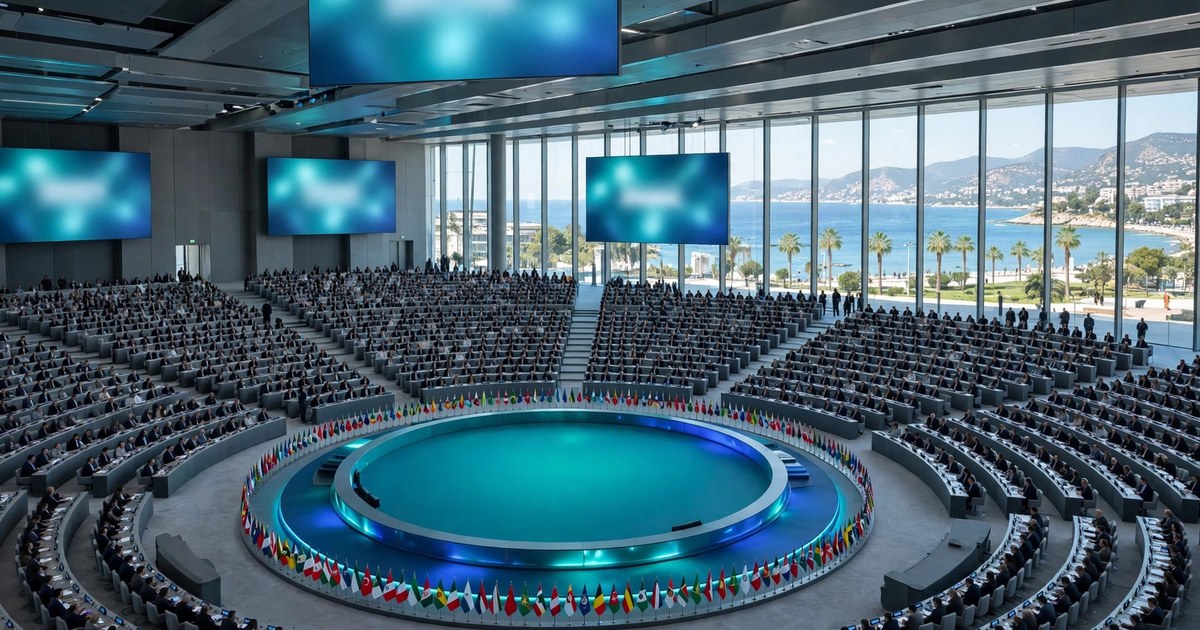
COP31 2026 opened in Antalya, Türkiye, on Monday 9 November, bringing representatives from nearly 200 countries together for twelve days of climate talks at a moment when the fight against global warming is under more strain than at any point since the Paris Agreement was signed. The formal opening plenary began at 10:00 am local time at the COP31 venue in Soğucaksu, and the conference runs until 20 November, with a World Leaders Summit on 11 and 12 November. Türkiye is hosting the summit under the theme "Towards a Sustainable, Resilient and Equitable Future", while Australia leads the formal negotiations — the first shared presidency in the roughly 30-year history of the talks. What makes this summit different is not a single new treaty but the question hanging over all of it: after a decade of pledges, can countries at COP31 2026 actually deliver on what they have already promised?
What Is COP31 2026?
COP31 is the 31st Conference of the Parties to the United Nations Framework Convention on Climate Change, the UNFCCC — the treaty adopted in 1992 to tackle climate change. The COP31 2026 meeting in Antalya brings together three bodies at once: the 31st session of the Conference of the Parties, the 21st session of the meeting of the Parties to the Kyoto Protocol, and the eighth session of the meeting of the Parties to the Paris Agreement. Around 100,000 participants are expected across the twelve days, according to the UNFCCC and Reuters, making it one of the largest climate gatherings ever held.
The summit also falls on a symbolic date. This year marks the tenth anniversary of the Paris Agreement entering into force, on 4 November 2016. That agreement — adopted in 2015 — commits countries to keeping global temperature rise well below 2°C above pre-industrial levels, while pursuing efforts to limit it to 1.5°C. Ten years on, the Council on Foreign Relations notes that projections indicate the world will overshoot the 1.5°C threshold, which is why the Antalya talks are framed as an "implementation COP": less about new promises, more about turning existing ones into action.
COP31 2026 Dates, Venue and Thematic Days
COP31 2026 runs from 9 to 20 November 2026 at the Antalya Expo Center in Soğucaksu, on Türkiye's Mediterranean coast. The formal negotiations run for twelve days, with each day given a thematic focus. The World Leaders Summit — formally the Antalya Leaders Summit — takes place on Wednesday 11 and Thursday 12 November, bringing heads of state and government into the conference in its first week.
The thematic days give the summit its shape. Monday 9 November is devoted to food, agriculture and health; Tuesday 10 November to energy and transport; Wednesday 11 November to zero waste, alongside the first day of the leaders' summit; and Thursday 12 November to resilient cities and the built environment. Later days cover finance and trade, children and youth, science and technology, oceans and nature, and human development, before final negotiations on Friday 20 November.
The summit is also Türkiye's biggest diplomatic stage in weeks — its parliament ratified the Mecca defence pact with Saudi Arabia and Pakistan earlier this month. The presidency is split in a way the climate process has never tried before. Murat Kurum, Türkiye's Minister of Environment, Urbanisation and Climate Change, serves as COP31 President and runs the summit's Action Agenda, while Chris Bowen, Australia's Minister for Climate Change and Energy, leads the formal negotiations as President of Negotiations. The arrangement was agreed at COP30 in Belém, Brazil, after rival hosting bids, and a pre-COP meeting was held from 5 to 8 October 2026 in Fiji and Tuvalu with Australia's partnership.
The COP31 2026 Agenda: Electrification, Finance and Adaptation
Three issues dominate the COP31 2026 agenda, and the first is electrification. The Turkish presidency has made it the summit's flagship: a 35-by-35 Global Electrification Pledge that would raise electricity's share of final energy consumption to 35% by 2035, up from around a fifth today, according to Reuters. Electricity already powers a growing share of transport, heating and industry, and the argument from the presidency is that electrifying more of the economy is the fastest practical route to cutting emissions — provided the power itself is clean.
The second issue is money, and it is the hardest. Developing countries are pushing for a delivery plan for the $300 billion a year in total climate finance by 2035 agreed at Baku, with a $1.3 trillion aspirational figure above it. The gap is stark: developing countries will need around $305 billion a year for adaptation alone by 2035, against international public adaptation finance flows of $28.2–31.7 billion recorded in 2024. The UN Environment Programme's Adaptation Gap Report, published on 4 November, estimates that tripling current flows would bring adaptation finance to $85–120 billion a year — still far short of the need. The finance framework meant to replace the $100 billion-a-year promise made in 2009, which was never fully delivered, has now been under negotiation for five years.
The third issue is adaptation itself: helping countries that contributed least to climate change survive its effects. COP31 will seek to operationalise the Belém-Addis Vision on adaptation and define how global resilience is measured, alongside the second Global Stocktake — a two-year accounting exercise, launched here, that will assess collective progress toward the Paris Agreement's goals. The presidency's Action Agenda wraps these threads into ten priority themes, from zero waste and oceans to food security, climate-resilient cities and clean energy, plus a Climate Implementation Bridge meant to turn commitments into bankable projects. Türkiye is also asking governments, businesses and other institutions to sign a pledge on developing artificial intelligence sustainably, Reuters reported — a recognition that surging AI power demand is now part of the climate equation.
Why the United States Is Not at COP31 2026
One chair at the table is empty. The United States — the world's second-largest emitter and historically its biggest — formally withdrew from the Paris Agreement, with the exit taking effect on 27 January 2026, and is sending no official delegation to COP31 2026 in Antalya, the Council on Foreign Relations reported. The absence removes the world's largest economy from the negotiating rooms and weakens the finance talks, since the US was historically a major contributor to climate finance.
The backdrop makes the absence harder to ignore. October 2026 was the warmest October on record, and the latest national climate plans put global emissions only about 6% below 2019 levels by 2035 — or about 9% if conditional pledges are delivered. Against that, the Antalya summit is where countries must show whether the system can still move without Washington. Our coverage of October 2026, the warmest October on record, sets out the 1.5°C milestone the talks are measured against.
What to Watch as COP31 2026 Unfolds
The first real test at COP31 2026 comes on 11 and 12 November, when heads of state and government arrive for the leaders' summit. Their speeches will show whether the electrification pledge attracts broad sign-on, and whether any leader is willing to put new money behind adaptation. After that, the work moves to the negotiating rooms, where the genuine deliverable is likely to be fragments rather than a single headline deal: a delivery workplan for the $300 billion finance floor, tighter transparency rules for pledges, and a handful of fresh commitments.
The Council on Foreign Relations cautions that major concrete outcomes are not expected — and that honesty matters for judging the summit fairly. COP31's value will show in smaller decisions: whether it gets easier for vulnerable countries to access money, use it, and prove what it delivered. The fossil fuel question will shape the politics even though it is not formally on the agenda: on 3 November, Brazil's COP30 presidency published a voluntary roadmap for transitioning away from fossil fuels, and how far Antalya goes toward it will be closely watched.
For the countries most exposed to climate change, the stakes are immediate rather than abstract. They need adaptation money now, not in 2035, and they need the finance system to work for small projects in small countries, not only for large ones. If COP31 2026 produces a credible delivery plan for the $300 billion floor and a working method for measuring adaptation, it will have done something no recent summit has managed. If it does not, the tenth anniversary of the Paris Agreement will be remembered as the year the gap between promise and delivery became impossible to ignore. The final decisions are due on 20 November.
Sources: Reuters; UNFCCC; Council on Foreign Relations; UN Environment Programme; Asian Development Bank; BBVA; Sustainability Magazine.