
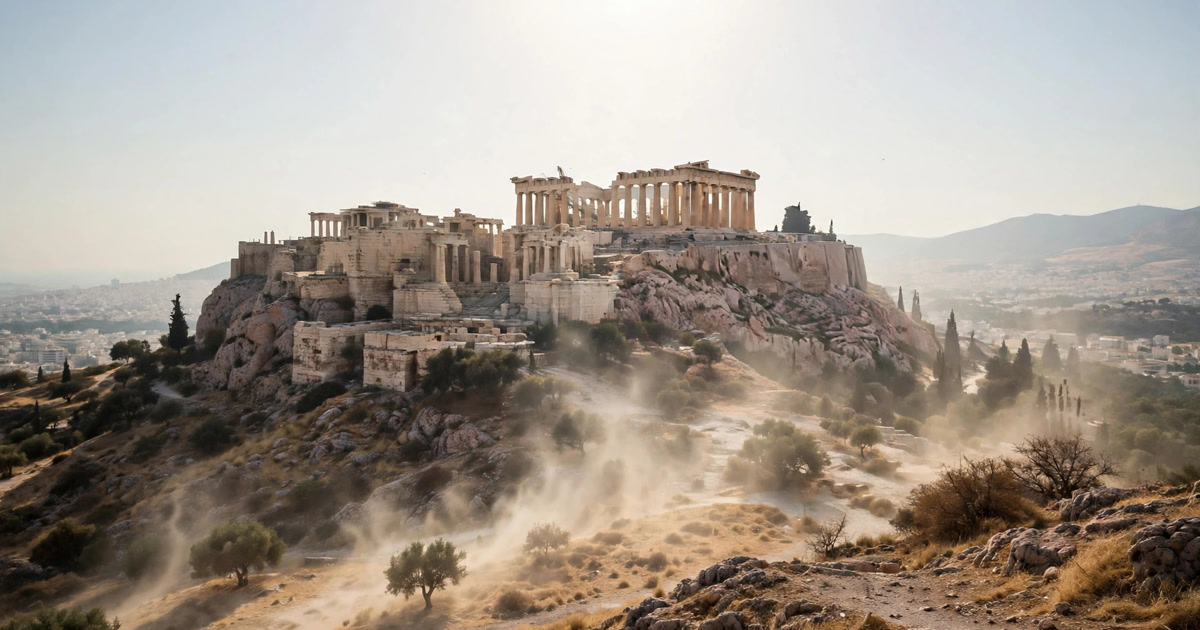
Greece is famous for summer sunshine, but in recent years that sunshine has increasingly arrived as dangerous heat. A Greece heatwave forecast is therefore essential reading for residents and visitors alike, because temperatures above 40 degrees bring health risks, wildfire danger and disruption to travel and outdoor work.
This guide explains how the Greece heatwave forecast works, who issues warnings, what the risks are, and how to plan days, travel and activities around extreme heat. It covers Athens, the islands and the mainland, where heat behaves differently.
Who Issues the Greece Heatwave Forecast
The Greece heatwave forecast is issued by EMY, the Hellenic National Meteorological Service, which publishes daily forecasts, temperature outlooks and warnings. Civil Protection authorities add heat alerts, fire-risk maps and public advice, especially when prolonged high temperatures are expected.
Warnings consider not just daytime highs but night temperatures, humidity and duration, since consecutive hot nights prevent recovery and raise health risks. When checking a Greece heatwave forecast, look at the multi-day outlook, not just tomorrow's maximum, because a three-day heatwave is far more dangerous than a single hot day.
Where Greece Gets Hottest
Inland mainland areas, including Thessaly, central Macedonia and parts of the Peloponnese, often record Greece's highest temperatures, while Athens traps heat in its urban basin. Islands are usually cooler thanks to sea breezes, especially where the meltemi wind blows in the Aegean, but they still suffer heatwaves.
The Greece heatwave forecast also varies by altitude and coast: mountain villages stay cooler, while low-lying inland towns bake. Travellers should check the forecast for their exact destination, since a comfortable island breeze and a scorching Athens afternoon can occur on the same day.
Health Risks in a Greece Heatwave Forecast
Heat exhaustion and heatstroke are the main dangers when a Greece heatwave forecast shows extreme temperatures. Warning signs include dizziness, nausea, confusion, rapid pulse and hot, dry skin, and heatstroke is a medical emergency requiring immediate cooling and an ambulance call.
Older people, young children, pregnant women, outdoor workers and people with heart or respiratory conditions face the highest risk. During heatwaves, check on vulnerable neighbours, keep medicines and water accessible, and never leave children or pets in parked cars, even briefly.
Wildfire Risk and the Greece Heatwave Forecast
Heatwaves in Greece go hand in hand with wildfire risk, and Civil Protection publishes daily fire-risk maps alongside the Greece heatwave forecast. High risk days bring bans on outdoor burning, restrictions on forest access, and heightened readiness for fire services.
Visitors should never light fires or barbecues in dry landscapes, should follow evacuation advice immediately if issued, and should avoid driving into smoky areas. Registering for emergency alerts, such as the 112 system, ensures warnings reach your phone wherever you are in Greece.
Practical Tips for Hot Days in Greece
Plan outdoor activities for early morning or evening, rest in shade or air conditioning during the hottest hours, drink water regularly even before feeling thirsty, and wear light clothing, a hat and sunscreen. Light meals, including salads and fruit, suit hot days better than heavy food.
For travel, check transport and site opening hours, since archaeological sites and outdoor attractions sometimes close or shorten hours during extreme heat. Understanding climate change also helps explain why Greek summers are getting hotter, and why heat planning is now a permanent part of visiting Greece.
Heat and Vulnerable Groups
Babies, older people and people with chronic illness need special attention during heatwaves, since they regulate temperature less effectively and may not feel thirst. Carers should check on them twice daily, ensure cool rooms, and watch for confusion, dizziness or reduced urination.
Community support matters: municipalities open air-conditioned cooling spaces during severe heat, and neighbours can help by sharing forecasts and checking on isolated residents. A heatwave plan for vulnerable household members should be made before summer, not during a crisis.
Working Outdoors in Extreme Heat
Outdoor workers in construction, farming and tourism face the highest heat exposure, and Greek rules and guidance call for water, shade, rest breaks and adjusted hours during extreme heat. Employers should reschedule heavy work to cooler hours and provide protective measures.
Workers should wear light, breathable clothing, hats and sunscreen, drink water regularly, and report symptoms early. Heat illness can develop quickly, and colleagues should know how to cool an affected person and call emergency services without delay.
Heat, Tourism and Site Closures
Tourist sites, especially the Acropolis and other exposed archaeological areas, may close or shorten hours during extreme heat, and visitors should check before travelling. Museums, shaded venues and indoor attractions offer alternatives that keep a trip enjoyable on hot days.
Tour operators and hotels increasingly adjust schedules, offering early-morning tours and evening activities. Travellers who build flexibility into itineraries, with indoor options for hot afternoons, enjoy Greece more and avoid the worst heat.
Long-Term Adaptation to Hotter Summers
Greek cities and islands are adapting to hotter summers with more shade, green spaces, cool roofs, water points and heat-health action plans. Building design, urban trees and public drinking fountains all reduce heat stress, especially in dense Athens neighbourhoods.
Individual adaptation helps too: choosing accommodation with air conditioning, planning travel for shoulder months, and understanding forecasts are now normal parts of visiting Greece. Adaptation does not remove heat risk, but it makes hot summers manageable and safer.
Greece Heatwave Forecast: Regional Warning Examples
Regional examples show how a Greece heatwave forecast plays out differently: Athens may face 42 degrees with hot nights, Thessaloniki may combine heat with humidity, and Aegean islands may stay near 35 degrees thanks to the meltemi wind. Reading the forecast regionally prevents both panic and complacency.
Compare forecasts across sources too: EMY, Civil Protection and European services such as a Germany weather forecast guide or a France weather forecast guide show how neighbouring countries present warnings, helping travellers interpret Greek alerts with a broader perspective.
Greece Heatwave Forecast: Travel Insurance and Planning
Heatwaves can disrupt travel through flight delays, site closures and health emergencies, so check that insurance covers heat-related illness and trip changes when a Greece heatwave forecast turns severe. Keep bookings flexible where possible, especially for outdoor tours and island ferries.
Practical planning includes booking morning activities, choosing accommodation with reliable cooling, and carrying water on every outing. A Greece heatwave forecast is a planning tool: use it to reshape days, not to cancel a holiday outright, unless warnings reach emergency levels.
Greek summers remain wonderful, but they demand respect. Check the heatwave forecast, plan around the hottest hours, protect vulnerable people, and never ignore fire warnings.
Sources: EMY (Hellenic National Meteorological Service); Greek Civil Protection; European heat-health guidance.