
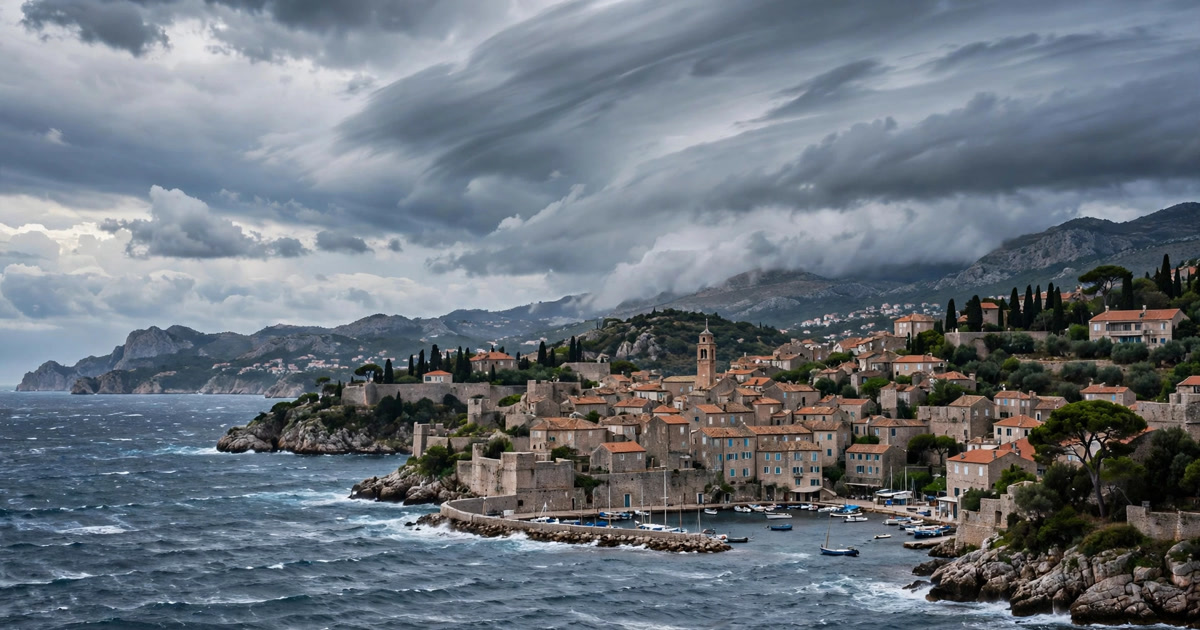
Croatia's Adriatic weather is shaped by two famous winds, the bora and the jugo, plus Mediterranean seasons that make the coast warm in summer and mild in winter. Croatia coastal weather matters for sailing, swimming, island travel and daily coastal life.
This guide explains Croatia coastal weather: how DHMZ forecasts work, what bora and jugo mean, how seasons vary from Istria to Dubrovnik, and how to plan coast and island trips safely.
Who Issues Croatia Coastal Weather Forecasts
Croatia coastal weather forecasts are issued by DHMZ, the Meteorological and Hydrological Service, which publishes coastal, sea and mountain forecasts, plus warnings for wind, storms, rain and heat. Sea forecasts cover wave height, wind and visibility.
Sailors, ferry passengers and beach visitors should check DHMZ marine forecasts specifically, since land forecasts miss sea conditions. Warnings are issued by region, so check your exact coastal area, from Istria to southern Dalmatia.
Bora: Croatia's Cold, Gusty Wind
Bora dominates Croatia coastal weather in winter and shoulder seasons, a cold, gusty northeasterly wind that rushes through mountain gaps onto the coast, sometimes exceeding hurricane force in gusts. Bora brings clear skies, rough seas and dangerous conditions for sailing and driving.
During strong bora, bridges, including the Pag Bridge and Krk Bridge, may close to high vehicles, ferries cancel, and coastal roads demand caution. Check bora forecasts before travelling, especially for island crossings and mountain passes.
Jugo: The Warm, Wet Southerly
Jugo, the southeasterly wind, brings warm, humid air, cloud, rain and rough seas to Croatia coastal weather, often lasting days and raising sea levels in harbours. Jugo suits neither sailing nor beach days, but it brings dramatic skies and high waves.
Jugo affects mood and health for some coastal residents, with headaches and restlessness commonly reported, though evidence is anecdotal. For travellers, jugo means indoor days, museum visits and restaurant meals rather than boats and beaches.
Adriatic Seasons for Coastal Weather
Summer in Croatia coastal weather brings sunshine, warm seas, afternoon sea breezes called maestral, and occasional thunderstorms, with July and August hottest. Spring and autumn offer milder temperatures, fewer crowds and changeable winds, while winter is mild but stormy.
Sea temperatures peak in August, often above 25 degrees, and stay swimmable into October in the south. Island microclimates vary: sheltered bays stay calm while exposed capes face full wind and waves on the same day.
Sailing and Travel Safety
Sailing safety in Croatia coastal weather starts with DHMZ marine forecasts, wind warnings and harbour advice, plus VHF weather broadcasts for boats. Never underestimate bora, reef early, and seek shelter before winds build, since Adriatic conditions change fast.
For land travellers, an Ireland weather forecast guide shows how Atlantic coasts compare, while climate change explains why Mediterranean weather intensifies. Check Croatia coastal weather daily for ferry, sailing and island plans, and build buffer days into itineraries.
Maestral: The Summer Sea Breeze
Maestral, the summer northwesterly sea breeze, cools Croatia's coast on hot afternoons, aiding sailing, swimming and outdoor dining. Maestral typically builds by midday, peaks in afternoon, and fades by evening, creating predictable daily rhythms.
Sailors plan around maestral, using morning calms for passages and afternoon breezes for sailing, while beach visitors enjoy cooling winds after hot mornings. Maestral is Croatia coastal weather at its most pleasant.
Thunderstorms on the Adriatic
Adriatic thunderstorms, especially in summer and autumn, bring lightning, heavy rain, gusty winds and waterspouts, developing fast over warm seas and coastal mountains. Forecasts warn of convective activity, but exact timing remains uncertain.
Boaters and beach visitors should seek shelter during lightning, avoid exposed ridges and open water, and monitor forecasts through the day. Thunderstorms pass quickly, but their intensity demands respect.
Island Microclimates
Island microclimates in Croatia vary sharply: sheltered bays stay calm while exposed capes face wind and waves, and island interiors differ from coasts in temperature and rain. Hvar's sunny south contrasts with windier northern shores.
Travellers should check forecasts for specific islands and bays, not just regions, since a calm day in Split may mean rough seas at Vis. Local knowledge from harbourmasters and hosts helps interpret island forecasts.
Winter Coastal Weather
Winter Croatia coastal weather brings mild temperatures, rain, bora and jugo storms, and quiet towns, with Dubrovnik, Split and Istria offering cultural trips without summer crowds. Winter sea temperatures drop, but coastal walks remain pleasant.
Winter travellers enjoy lower prices, Christmas markets and carnival events, especially in Rijeka, while packing waterproofs and windproof layers. Coastal winter rewards visitors who embrace changeable weather.
Croatia Coastal Weather: Sailing Forecast Guide
A sailing forecast guide for Croatia coastal weather means reading DHMZ marine forecasts for wind speed, gusts, direction, wave height and visibility, plus harbour observations and VHF broadcasts. Gusts matter more than average wind for safety.
Croatia coastal weather sailing decisions should include shelter options, reefing plans and buffer days, since Adriatic winds shift fast. Experienced sailors check forecasts multiple times daily during passages.
Croatia Coastal Weather: Beach Planning Tips
Beach planning for Croatia coastal weather means checking wind, waves, UV and sea temperature, plus shade, water and reef shoes for rocky shores. Morning swims suit calm seas, while afternoons bring maestral breezes and busier beaches.
Croatia coastal weather beach days work best with flexible plans: sheltered coves for windy days, sandy beaches for families, and island boats for calm-water swimming. Forecast-aware beach choices improve every coastal trip.
Coastal Weather and Croatian Agriculture
Coastal agriculture, including olives, grapes, figs, lavender and citrus, depends on forecasts for frost, drought, harvest rain and wind, with island microclimates shaping yields. Farmers watch bora and jugo patterns closely during growing seasons.
Visitors notice agricultural rhythms in olive harvests, wine festivals and lavender fields, which follow forecast-driven farm calendars. Understanding farm weather adds depth to coastal and island trips across Croatia.
Coastal Weather Apps and Alerts
Coastal weather apps from DHMZ, marine services and phone systems deliver wind, wave and storm warnings to sailors, ferry passengers and beach visitors, with location alerts ensuring relevant warnings arrive while travelling. Enable alerts for coastal regions visited.
Customise alerts by phenomenon, so bora wind warnings stand out from general rain forecasts, and check harbour observations alongside model forecasts. Well-set alerts inform without alarming, supporting calm, timely coastal decisions.
Croatia's coast rewards travellers who respect its winds. Check marine forecasts, understand bora and jugo, and plan buffer days, so Adriatic weather becomes part of the adventure, not a disruption.
Sources: Croatian Meteorological and Hydrological Service (DHMZ); Croatian Civil Protection.