
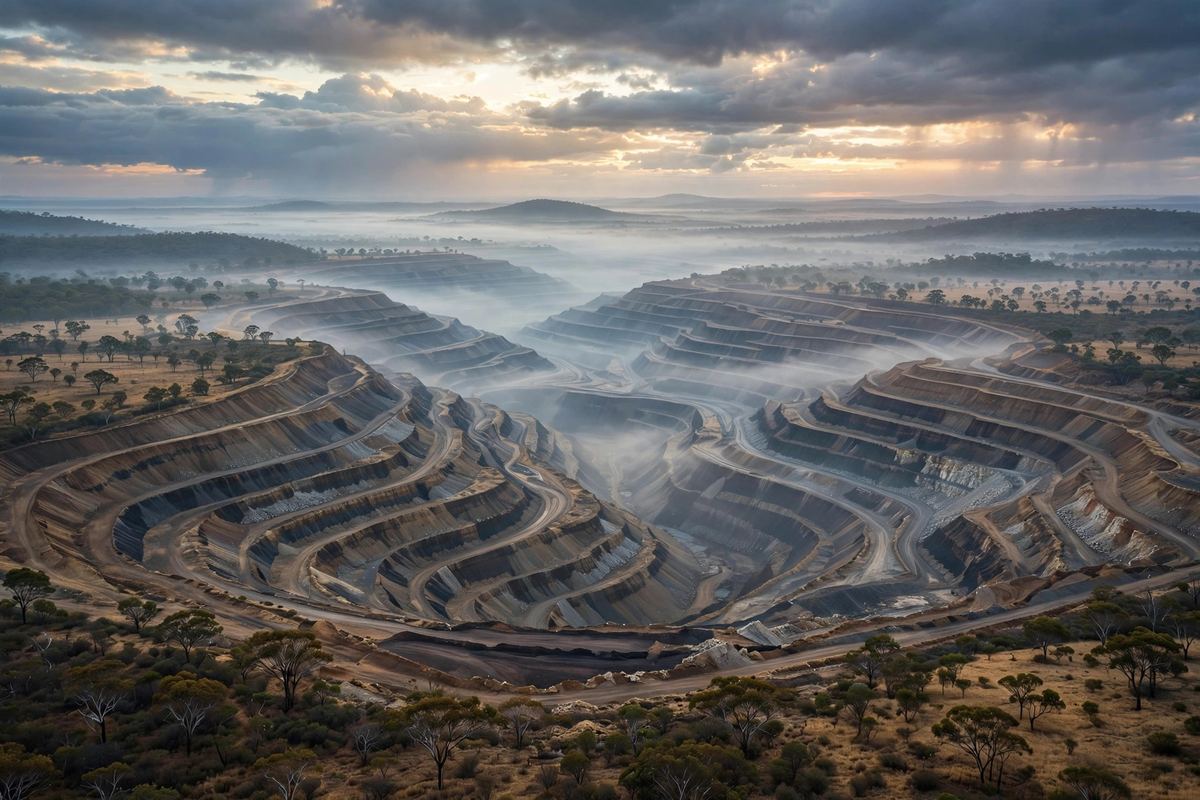
On 7 October 2026, Australia's highest court delivered a decision that climate advocates are calling a turning point. In MACH Energy Australia Pty Ltd v Denman Aberdeen Muswellbrook Scone Healthy Environment Group Inc — [2026] HCA 35 — the High Court ruled, by three votes to two, that planning authorities must properly consider the greenhouse gas emissions of major fossil-fuel projects, including emissions from exported coal burned overseas. It is the first climate change case the High Court has ever decided, and its logic could reshape how fossil-fuel projects are approved across Australia.
Background
The case centres on the Mount Pleasant mine, an open-cut thermal coal operation near Muswellbrook in the Hunter Valley of New South Wales, about 120 kilometres northwest of Newcastle. The mine's original development consent dates back to 1999. MACH Energy acquired the mine in 2016 and began operating it in 2018. In September 2022, the NSW Independent Planning Commission (IPC) approved the company's "optimisation" project — an expansion that would extend the mine's operations from December 2026 to December 2048, double annual production from 10.5 to 21 million tonnes, and allow the extraction of an additional 406 million tonnes of coal.
Under NSW planning law, the Commission is required to consider imposing conditions that would minimise the greenhouse gas emissions of a project "to the greatest extent practicable" — clause 2.20(1)(c) of the State Environmental Planning Policy (Resources and Energy), read with section 4.15 of the Environmental Planning and Assessment Act 1979. Greenhouse gas emissions are conventionally divided into three "scopes": scope 1 covers direct emissions from a facility, scope 2 covers emissions from purchased electricity, and scope 3 covers all other indirect emissions — including, for a coal mine, the emissions released when exported coal is burned overseas. For Mount Pleasant, scope 3 makes up roughly 98 per cent of the project's total footprint; the Commission focused only on the 2 per cent of scope 1 and 2 emissions. The project would generate more than 870 million tonnes of carbon dioxide-equivalent through overseas combustion — roughly twice Australia's total annual emissions.
A local community group, the Denman Aberdeen Muswellbrook Scone Healthy Environment Group (DAMSHEG), challenged the 2022 approval, arguing that planners had unlawfully ignored the downstream climate impacts of the exported coal. In July 2025 the NSW Court of Appeal agreed, finding that the project's global emissions would cause local climate-change impacts in the Hunter region and that the Commission had failed to consider them. MACH Energy appealed to the High Court.
What Happened
On 7 October 2026, the High Court dismissed MACH Energy's appeal, with costs. The three-judge majority held that the Independent Planning Commission had failed in a mandatory legal obligation: it did not properly consider whether conditions should be imposed to minimise the project's greenhouse gas emissions to the greatest extent practicable, because it never turned its mind to the scope 3 emissions from coal burned overseas. The approval was therefore invalid.
The Court's reasoning addressed one of the central arguments in climate litigation worldwide. The Commission — and MACH Energy — had taken the view that overseas emissions would be accounted for by the countries importing the coal under the international carbon-accounting framework of the Paris Agreement. Justices including Edelman J and Gordon J held that this international accounting does not decide Australia's domestic obligations under NSW planning law. In other words, the fact that another country counts the emissions in its carbon inventory does not excuse an Australian planning authority from considering how to minimise them when approving a project.
The decision was split 3–2, reflecting how contested the legal questions were. But the majority's conclusion was clear: a planning authority cannot ignore the chain of causation from a project's emissions simply because the combustion happens abroad. As DAMSHEG president Wendy Wales, a retired science teacher, put it after the ruling: "We cannot dig up coal, ship it overseas, watch it drive climate change, and then pretend the consequences have nothing to do with us" — pointing to the droughts, bushfires and floods the Hunter Valley itself endures.
Importantly, the Court did not rule that emissions conditions must be imposed on the mine — only that the Commission must properly consider whether to impose them. The case now returns to the Commission for reassessment. The NSW government has confirmed that Mount Pleasant retains a separate approval allowing operations to continue until 2032, so the existing mine does not immediately close, and MACH Energy can continue pursuing options for an expansion.
Why It Matters
This is the first time Australia's highest court has decided a case on climate grounds, making the judgment a landmark regardless of what happens next at Mount Pleasant. For years, fossil-fuel companies and regulators have treated scope 3 emissions as someone else's problem — counted in the ledgers of importing countries, invisible in domestic approvals. The High Court has now said that under NSW planning law, that invisibility is unlawful: planners must at least confront the full emissions picture, including the 98 per cent that happens after the coal leaves Australian shores.
The logic extends well beyond one mine in the Hunter Valley. The same planning provisions and the same scope 3 argument apply to other proposed coal and gas projects across Australia. Environmental lawyers say every planning authority in the country must now take downstream emissions seriously. That does not amount to a judicial ban on new mining — the Court stressed it was deciding only what must be considered, not what must be decided — but it removes a convenient legal shortcut that has long allowed approvals to look the other way on climate.
The ruling also illustrates a broader global shift. Around the world, courts are increasingly being asked to close the gap between governments' climate commitments and the fossil-fuel projects they continue to approve — a trend playing out alongside community protests over resource projects in Indonesia and intensifying extreme weather events that sharpen the climate debate. Australia's High Court has now added its voice: the physics of emissions does not stop at national borders, and neither should planning law.
Key Facts
- Case: MACH Energy Australia Pty Ltd v Denman Aberdeen Muswellbrook Scone Healthy Environment Group Inc, judgment [2026] HCA 35, delivered 7 October 2026.
- Outcome: appeal dismissed with costs by 3 votes to 2 — the first climate change case ever decided by Australia's High Court.
- Project: Mount Pleasant open-cut coal mine near Muswellbrook, NSW; expansion would extend operations from Dec 2026 to Dec 2048, double annual output from 10.5 to 21 million tonnes, and extract an additional 406 million tonnes of coal.
- Legal flaw: the 2022 IPC approval was invalid because the Commission failed to consider conditions minimising all greenhouse gas emissions, including scope 3 emissions from coal burned overseas (98% of the project's total; over 870 Mt CO₂-equivalent).
- Key reasoning: international carbon accounting under the Paris Agreement does not decide domestic obligations under clause 2.20(1)(c) of the Resources SEPP and s 4.15 of the Environmental Planning and Assessment Act 1979.
- Claimants: DAMSHEG, a local Hunter Valley residents' group, which had already won in the NSW Court of Appeal in July 2025.
- Limit of ruling: the Court did not order emissions conditions — only that the Commission must properly consider them. The case returns to the Commission; the mine keeps a separate approval running until 2032.
What's Next
The immediate next step belongs to the NSW Independent Planning Commission, which must reassess the expansion while properly considering conditions to minimise emissions — including the vast scope 3 component. MACH Energy could re-apply, propose emissions conditions, or scale back its plans; what it cannot do is obtain approval on the old reasoning that overseas emissions are out of scope.
Watch for ripple effects. Environmental groups are expected to invoke the High Court's reasoning in challenges to other coal and gas projects, and planning authorities across Australia will need to show they genuinely considered downstream emissions. The strength of those future challenges will depend on how the Commission now handles Mount Pleasant: its reassessment will become the template.
Industry will push back, arguing that forcing Australian planners to account for emissions that foreign governments already count creates regulatory duplication and threatens investment. The tension between climate accountability and resource economics is far from resolved — but the legal ground has shifted.
Britain has made its own call in the same debate, approving the Jackdaw North Sea gas field after years of legal battles.