
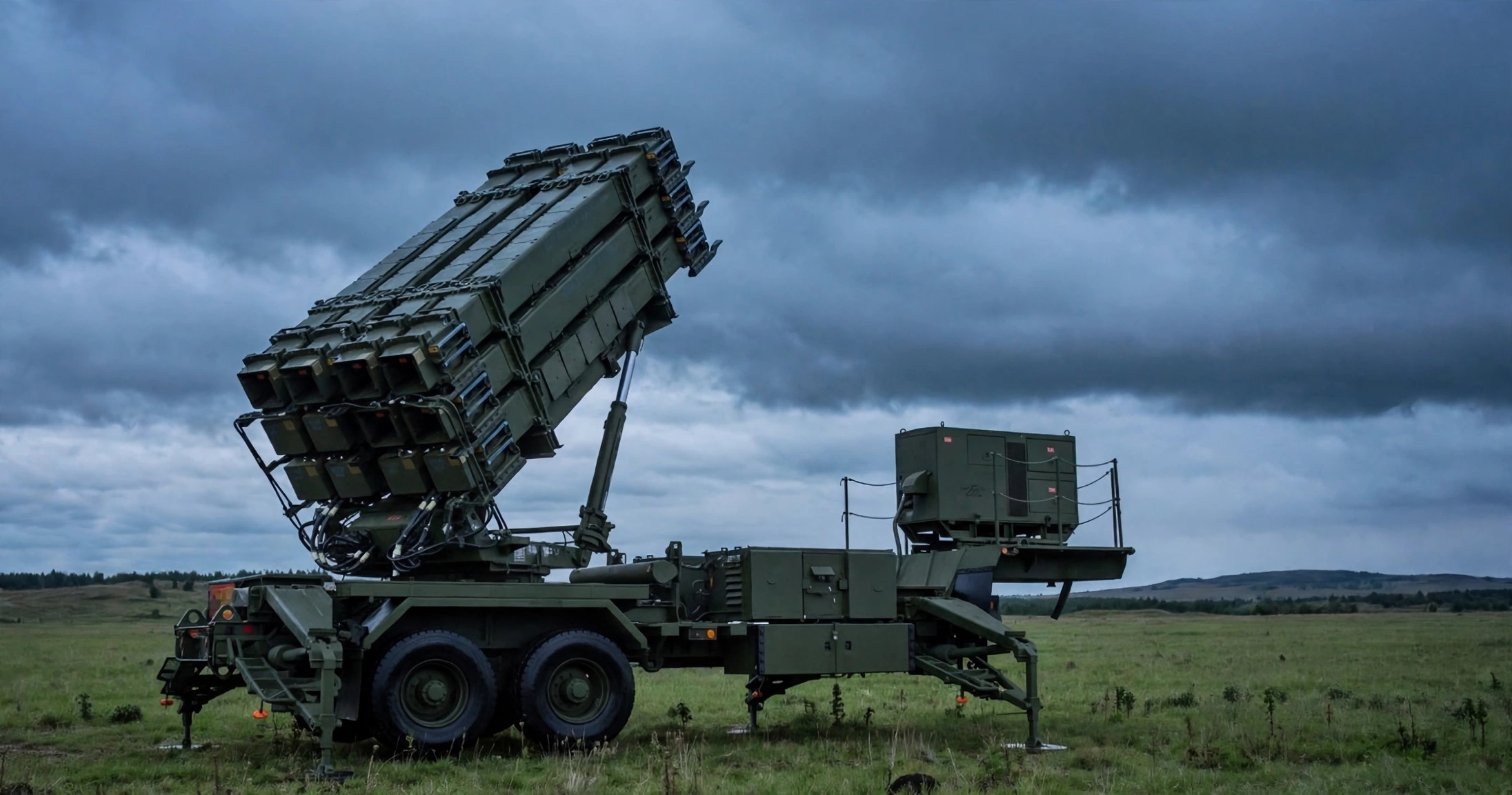
The United States has approved the sale of 500 Patriot missiles Ukraine needs to defend its cities against Russian ballistic missile attacks, in a $2.1 billion deal announced on Friday, 30 October 2026. The US State Department said it had cleared the potential sale of 500 Patriot PAC-3 MSE interceptor missiles, with the bill to be paid not by American taxpayers but by Ukraine's allies. The decision, trending per news coverage, is one of the most significant steps to supply defensive weapons to Kyiv since the start of the second Trump administration — but it comes with a catch Kyiv has already flagged: the missiles are not expected to arrive for years.
Patriot Missiles Ukraine: What the $2.1 Billion Approval Covers
The State Department's announcement, made on Friday, 30 October 2026, approves the potential sale of 500 Patriot Advanced Capability-3 (PAC-3) Missile Segment Enhancement (MSE) missiles, along with classified and unclassified parts, spare parts, logistics and support, according to the department's congressional notification. The estimated cost is $2.1 billion, and Lockheed Martin, the defence firm that builds the Patriot system, is the principal contractor.
The approval is a notification of a possible sale, not a signed contract. It now goes to Congress for review, and quantities and prices can still change as contract negotiations continue. The State Department did not say when the missiles would be delivered, and no production schedule was announced.
For Ukraine, the number matters. President Volodymyr Zelenskyy has said Ukraine needs about 350 interceptors a month to defend its territory properly, a figure he has given to ABC News. Against that scale, 500 missiles is a substantial stockpile — Zelenskyy himself called it a number that "could make for a highly effective defense package" this winter.
Who Pays for the Patriot Missiles Ukraine Is Buying?
No US funds are involved in the sale. The State Department said Ukraine will pay for the purchase with donations from Canada, Germany and Norway routed through a programme called US JUMPSTART, along with national funds financed by the European Union's Ukraine Support Loan.
JUMPSTART — the Joint Ukrainian Multinational Program–Services, Training and Articles Rapid Timeline — was established in 2022 as a mechanism for third-party countries to contribute funds so Ukraine can buy American equipment. The programme was used in August 2026 to buy 3,350 air-launched cruise missiles worth $825 million.
The funding model is as important as the missiles themselves. The State Department said the potential sale "will support the foreign policy and national security objectives of the United States by improving the security of a partner country that is a force for political and economic stability in Europe." In practice, European allies are buying American weapons for Ukraine, with Washington's approval but not its money.
What Is the PAC-3 MSE Missile?
The PAC-3 MSE is the most advanced interceptor in the Patriot family and one of the few weapons capable of shooting down incoming ballistic missiles. Unlike earlier Patriot missiles that relied mainly on blast-fragmentation warheads, the PAC-3 MSE uses "hit-to-kill" technology: it destroys its target through direct impact at extremely high speed.
The missile is specifically designed to counter tactical ballistic missiles, cruise missiles and advanced airborne threats, with an upgraded motor and control surfaces that give it improved range and manoeuvrability over earlier variants. A single launcher can carry up to 12 PAC-3 MSE interceptors, according to Lockheed Martin, far more than the four missiles of earlier Patriot configurations.
Production is the bottleneck. Only about 600 PAC-3 MSE missiles are produced a year, according to the US Department of Defense. Lockheed Martin delivered 620 of them in 2025, and the Pentagon and Lockheed have set a framework to raise output toward 2,000 a year within seven years. Standard engagement doctrine also requires firing at least two interceptors per incoming target, so 500 missiles does not mean 500 targets defeated.
When Will Ukraine Get the Patriot Missiles?
This is the hardest question in the deal — and the one Kyiv is pressing hardest. The State Department gave no delivery date. Two people briefed on the US decision told Reuters the missiles, which have yet to be manufactured, are not expected to be delivered until a couple of years into the 2030s. A 2026 analysis by the Center for Strategic and International Studies estimated an average of 29 months between procurement and first PAC-3 MSE deliveries.
Zelenskyy welcomed the approval as a "strong decision" but warned in a post on X early on Saturday, 31 October: "It has been stipulated that deliveries may begin ONLY IN A FEW YEARS. We are asking our American partners to find a solution for the time when there is a real danger and a real need to use PAC-3 interceptors."
His proposal is a swap: the US and European allies should send interceptors from their existing stocks to Ukraine now, for the winter of 2026–2027, and replenish their own arsenals later with the newly contracted production. He said 500 missiles would be "enough to protect our skies over the coming months" and would put Ukraine in a strong position ahead of potential negotiations — but only if the timing works.
Why Ukraine Needs the Missiles Now
Ukraine's need is immediate. CNN reported earlier in October 2026 that Ukraine's stockpile of Patriot interceptors had run dry. Zelenskyy said Ukraine had received an average of only about 12 Patriot interceptors a month from the US this year, while roughly 150 Russian ballistic missiles a month need to be intercepted.
Russia has stepped up attacks on energy and civilian infrastructure. In a video statement on Friday, 30 October, Zelenskyy said Russia had launched 17 ballistic missiles overnight, some hitting oil refining infrastructure in central Ukraine. Over the preceding two weeks of October, he said, Ukraine had endured more than 30 Russian strikes on critical elements of the power grid.
The coming winter makes the shortage more dangerous. Russian strikes on power plants and heating infrastructure during the cold months have been a recurring feature of the war, and air defence is Ukraine's main shield for its cities. Zelenskyy has asked Washington for 100 interceptors a month for the winter — a pace the new deal, on its current timeline, cannot meet.
The Month of Friction Behind the Deal
The approval follows a rough October for US–Ukraine relations. On 19 October, The Washington Post reported that the US appeared to have delayed the transfer of Patriot interceptors to Ukraine amid a falling out between President Donald Trump and Zelenskyy. The report came after Trump announced a diesel deal with Russia and criticised Zelenskyy over Ukraine's attacks on Russian refineries.
Zelenskyy said Ukraine had waited almost a month for the Pentagon to sign off on critical missile supplies for its Patriot and NASAMS systems. On 25 October, he said two other disputes — interruptions to Starlink connectivity and US-provided missile-warning information — had been resolved, but added: "The issue of air defense remains. There is progress on missiles for Patriot systems, but things are moving very slowly. More slowly than Russian missiles fly."
NATO's top commander in Europe, General Alexus Grynkewich, pushed back on the idea of delays, saying on 30 October in Riga that "not a single item included in the PURL package paid for by European allies has been delayed." PURL — the Prioritized Ukraine Requirements List — is the programme through which allies buy US weapons for Ukraine. The site's earlier report on the hold-up is covered in Trump Holds Up Patriot Missiles for Ukraine as US-Ukraine Rift Deepens, and NATO's wider Black Sea air patrols are covered in NATO Is Sending Patrol Planes and Drones to the Black Sea After Deadly Shipping Attacks.
What Happens Next
The approval now moves to Congress for review, and contract negotiations between the US government and Lockheed Martin begin. Foreign military sales notifications are generally early steps in processes that can take years, and the State Department did not respond to questions about how the announcement affects Kyiv's near-term interceptor shortage.
Three things will decide whether the deal helps Ukraine this winter: whether Congress clears it without delay, whether the Pentagon agrees to bring the delivery date forward — possibly by giving Kyiv missiles already in the US arsenal and backfilling with new production, as Ukraine's defence ministry has suggested — and whether European allies follow through with the funding they have pledged. The Black Sea shipping war that has shaped the region's security picture is covered in Black Sea Drone Attack 2026: Contship Jet Sinks, All 18 Crew Rescued.
For now, the deal is both a breakthrough and a warning: the Patriot missiles Ukraine is buying are among the world's most advanced interceptors, but on a timetable measured in years, while the missiles falling on its cities are measured in days.
Sources: Reuters; CNN; The Times; Breaking Defense; Bloomberg Law; Army Recognition; US Department of State congressional notification; The Washington Post (19 October 2026 report).