
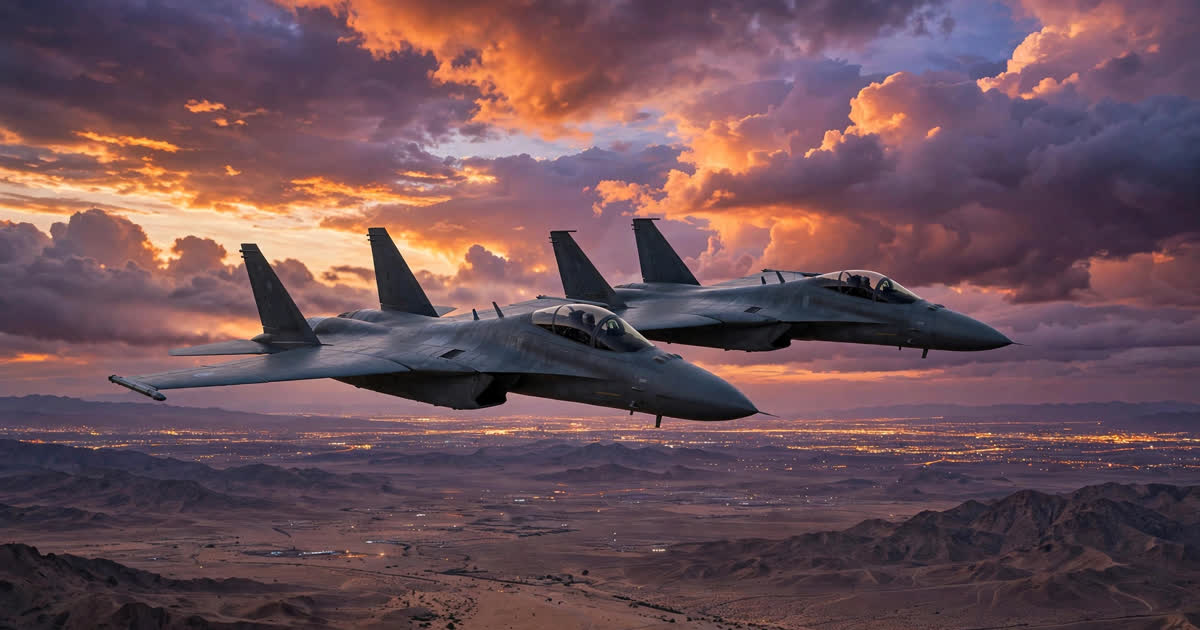
The United Kingdom announced on Tuesday, 20 October 2026, that it will deploy Royal Air Force Typhoon fighter jets to help defend Saudi Arabia against escalating drone and missile attacks by the Iran-backed Houthi rebels in Yemen. The jets will fly defensive counter-air missions to protect Saudi cities, civilian populations and critical national infrastructure — a significant expansion of Britain's military role in a Middle East conflict that has been intensifying for weeks.
The announcement, made by Defence Secretary Wes Streeting and authorised by Prime Minister Andy Burnham, quickly became one of the day's most-covered international stories, reported by the BBC, CNN, Reuters, the Associated Press and The Times.
What the UK Announced
Streeting told reporters that RAF Typhoons "will fly defensive air missions to help protect Saudi airspace from drones and missiles," adding: "The continuing attacks from the Houthis on our ally Saudi Arabia are absolutely despicable. The targeting of the airport in Riyadh in particular shows the lengths the Houthis are going to escalate the situation in the region."
The deployment was first revealed by Bloomberg, which reported on Tuesday citing British officials familiar with the matter that RAF jets would take on defensive missions over the kingdom. The UK's Ministry of Defence confirmed the move later in the day.
The package goes beyond fighter jets. Britain will also send an Atlas A400M military transport aircraft to help move equipment within Saudi Arabia, along with an unspecified number of military advisers. Separately, the RAF's existing air-to-air refuelling mission in support of Saudi aircraft operating against the Houthis — announced last month — is being extended by a further 90 days.
What the Jets Will — and Will Not — Do
The mission is strictly defensive. According to the Ministry of Defence, the Typhoons will intercept Houthi drones and missiles in the air but will not conduct offensive strikes against Houthi targets on the ground in Yemen, and will not operate in Yemeni airspace.
The Times reported that the Typhoons, based in Qatar, will patrol Saudi skies. A defence source told the newspaper: "[The RAF] will carry out defensive air missions above Saudi. If Houthi drones or missiles come over the border towards Saudi Arabia they will take them out." The paper described the October 10 attack on Riyadh's airport as "like Heathrow being blown up," underlining the scale of what British planners are responding to.
The RAF has carried out similar defensive missions before, protecting Gulf states and Cyprus from Iranian missiles and drones.
Why Now: The Escalation Timeline
The decision follows a sharp intensification of Houthi attacks on Saudi Arabia over the past month. The Iran-backed group has been launching ballistic missiles and drones at key Saudi infrastructure, including oil facilities and airports.
The conflict reignited in earnest in July, when the Houthis announced they would target Saudi shipping in the Red Sea as well as infrastructure inside the kingdom, following a Saudi attack on the Houthi-controlled airport in the Yemeni capital, Sana'a.
Strikes have stepped up in recent weeks, with repeated attacks on Riyadh's King Khalid International Airport. One strike on October 10 killed 13 people and wounded more than 300 — making it the deadliest attack on Saudi Arabia in more than a decade, according to CNN. On Tuesday, Saudi Arabia announced it had downed a missile over the capital, Riyadh, where the main airport remains closed. Yemen's authorities also said a strike on a government security forces training camp in Shabwa on Monday had killed dozens.
For background on the airport strike, read our explainer on the Riyadh airport attack and how Saudi Arabia retaliated as the airport shut indefinitely.
The Growing International Coalition
Britain is not the only Western power stepping up. Saudi Arabia has been looking for military support from regional and Western allies to counter the intensified Houthi attacks, and several have answered:
- France has agreed to deploy defence assets to the kingdom.
- The United States has more than 100 military advisers on the ground providing intelligence and targeting support under a newly established joint forces command — though Washington has notably declined to conduct air strikes of its own against the Houthis this time around, despite having bombed the group under both the Biden and Trump administrations, the Associated Press reported.
- Pakistan already has forces stationed in Saudi Arabia.
- Egypt is weighing a role, with parliament debating whether to send support after President Abdel Fattah al-Sisi called an emergency session on deploying military assistance to the kingdom.
The breadth of the response reflects how seriously governments take the threat. The Houthis have secured a stranglehold over the Bab el-Mandeb strait, a maritime chokepoint on the Red Sea vital for traffic heading to Europe through the Suez Canal, according to the Press Association — putting global shipping and energy flows at risk.
What It Means for Britain
The Ministry of Defence said it is "in the UK's national economic and security interest to halt the Houthis' efforts to destabilise the region." British officials have warned of the economic stakes: there are fears the deepening Middle East crisis will add to cost pressures facing British households and disrupt energy supplies.
Streeting framed the decision in terms of alliance obligations: "The United Kingdom is the kind of country that when our allies call for help, we respond." Prime Minister Burnham, who had already announced the defensive refuelling mission last month, is understood to have authorised the jet deployment after the escalation in recent weeks.
What Happens Next — and the Limits of the Mission
Despite the military buildup, the UK has stressed there is no military solution to the conflict — a point Streeting emphasised even as he announced the deployment. The Typhoons can knock missiles and drones out of the sky, but they cannot, by design, degrade the Houthi launch sites firing them.
The defensive framing is deliberate. The RAF deployment avoids entangling Britain in Saudi Arabia's offensive operations in Yemen, but it still places British forces in the line of fire: if Houthi missiles or drones keep coming over the Saudi border, RAF pilots will be the ones intercepting them.
What comes next depends on whether the Houthis pause or escalate. The group has repeatedly vowed more attacks on the kingdom. If the strikes continue despite the reinforced defences — including the missile Saudi Arabia said it intercepted over Riyadh on Tuesday — pressure will grow for a wider response, from any of the countries now stacking forces around the kingdom.
For now, the skies over Saudi Arabia are about to get a new guardian. For related coverage, see the Houthi missile strike on the Shabwa training camp and the widening flight cancellations as airports stay shut.