
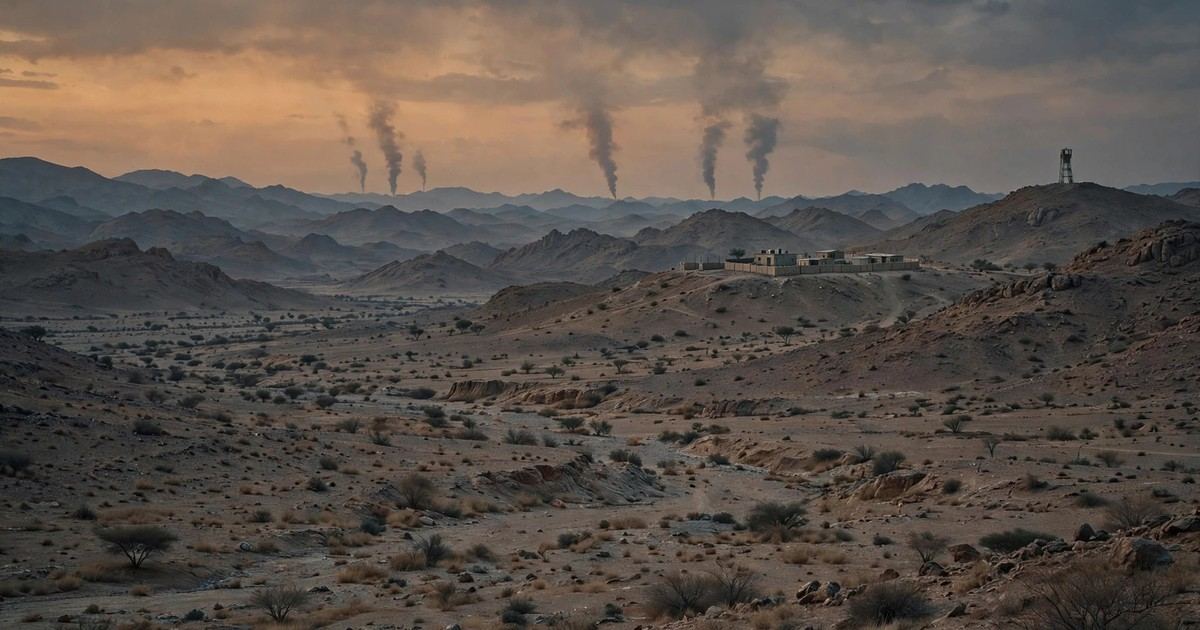
Iran-aligned Houthi forces fired three ballistic missiles at a Yemeni government military training camp in the southern province of Shabwa on Monday, 19 October 2026, killing at least 53 soldiers and wounding around 200 recruits, according to the provincial government and international wire agencies. The strike — one of the deadliest single attacks since fighting resurged in Yemen this summer — targeted new recruits standing in formation at the start of a training session. The story is trending per news coverage.
The missiles struck the Al-Alam military camp in Jardan district, north of the provincial capital Ataq, hitting the Ahmed Al-Sulaimani Training Centre inside the base. Emergency teams spent hours evacuating the wounded, with hospitals across Shabwa mobilising to receive casualties and the provincial authorities warning that the preliminary death toll could rise further.
Who was targeted
The recruits belonged to a newly established force known as Rapid Intervention, raised to defend the area and preparing to join Yemen's internal security forces, according to a military official quoted in international coverage. They were lining up in formation when the missiles hit — a timing that explains the severity of the toll. The Houthis acknowledged carrying out the strike.
The Shabwa provincial government described the attack as "a bloody, treacherous attack" on new recruits in the training and preparation phase, calling it "an extremely critical military escalation and a blatant aggression on the security and stability of Shabwa province." Shabwa is an energy-rich province overlooking the Gulf of Aden and home to the Balhaf liquefied natural gas facility, Yemen's largest industrial investment, which gives the region strategic importance well beyond the immediate military picture.
Conflicting casualty counts
The casualty figures evolved through the day, as is common in fast-moving reporting from conflict zones. Reuters initially reported at least 18 killed, citing four government and medical sources. Later filings from Reuters and the Associated Press put the toll at at least 53 killed and 200 wounded, citing the Shabwa local authority. AP cited Yemeni military officials and described the wounded as 200 recruits; Reuters reported verified video from Shabwa province showing injured people and bloodied bodies scattered across the ground. Readers should treat the 53/200 figures as the local authority's preliminary count, with final numbers subject to revision.
Yemen's government responds
Rashad Al-Alimi, chairman of Yemen's Presidential Leadership Council, condemned the attack and pledged a "firm response." He said the assault reflected the Houthis' "approach of resorting to cowardly terrorist attacks whenever they face pressures or their Iranian-backed sabotage plots falter." Shabwa's authorities went further, urgently calling on Yemen's president, the government and the Saudi-led coalition to provide air-defence and early-warning systems to protect the province — an acknowledgement that ballistic missiles now pose a persistent threat to government-held areas far from the front lines.
Why the attack matters now
The strike lands at a dangerous inflection point in Yemen's war. Fighting between the Houthis and Yemen's Saudi-backed government has intensified in recent weeks, and the conflict has become another front in the wider regional war that began with US and Israeli strikes on Iran in late February 2026. This month, government forces began a campaign to recapture Houthi-held territory, recovering ground near the Bab el-Mandeb Strait — the shipping chokepoint at the mouth of the Red Sea — while the Houthis have besieged Taiz, the last major urban stronghold of anti-Houthi forces in the southern highlands.
The Houthis have meanwhile escalated attacks on Saudi Arabia itself, the world's largest crude exporter, striking Riyadh's international airport and facilities of the state oil company Aramco. That widening of targets, now paired with a mass-casualty strike deep in government-held southern Yemen, signals a Houthi strategy of hitting high-visibility objectives on multiple fronts. The UAE and Saudi Arabia only recently rebuilt their Yemen alliance against the Houthis, and this attack is an early, brutal test of that coordination.
The wider war behind the strike
War broke out in Yemen in 2014 when the Houthis seized the capital Sanaa, driving the internationally recognised government south. A Saudi-led military intervention the following year led to a bloody stalemate before a 2022 truce that largely held until this year. That truce has now shattered. UN experts and others say Iran and its allies in Lebanon and Iraq provide the Houthis with expertise, training and sophisticated weapons — a charge Iran denies, which would violate a UN embargo.
The Yemen front does not exist in isolation. Washington has issued Middle East security alerts as speculation of further strikes on Iran intensifies, and every Houthi escalation raises the risk that the conflict spills further into regional energy infrastructure and global shipping lanes. Yemen is already one of the world's worst humanitarian crises, with aid agencies warning of rapidly deteriorating conditions — and a return to full-scale war would deepen that catastrophe.
For civilians in Shabwa, the immediate aftermath is humanitarian as well as military. Local hospitals have asked for blood donations and trauma supplies, and provincial officials have warned of heavy military movement on roads around Ataq in the coming days — a reminder that in Yemen's wars, the line between battlefield and civilian life is vanishingly thin. Aid agencies, already stretched by one of the world's worst humanitarian crises, are bracing for what a renewed offensive in the south could mean for displaced families across the province.
What happens next
Several things are now in motion. First, Yemen's government and its coalition partners face a decision on retaliation — and Saudi Arabia has already shown a willingness to retaliate against Houthi escalation. Second, the call for air-defence systems puts the coalition's missile-shield posture under scrutiny: if ballistic missiles can strike a training camp in Shabwa, other government-held cities and economic assets may need similar protection. Third, the battle around the Bab el-Mandeb Strait continues, with the fate of a vital global shipping route hanging on its outcome.
Diplomatically, the attack complicates any path back to the 2022 truce. A mass-casualty strike on recruits — the kind of event that hardens public opinion and entrenches both sides — makes de-escalation harder, not easier. Expect further coalition airstrikes in the coming days, more Houthi claims of retaliatory operations, and continued pressure on Red Sea and Gulf of Aden shipping as this front of the wider regional conflict burns hotter.