
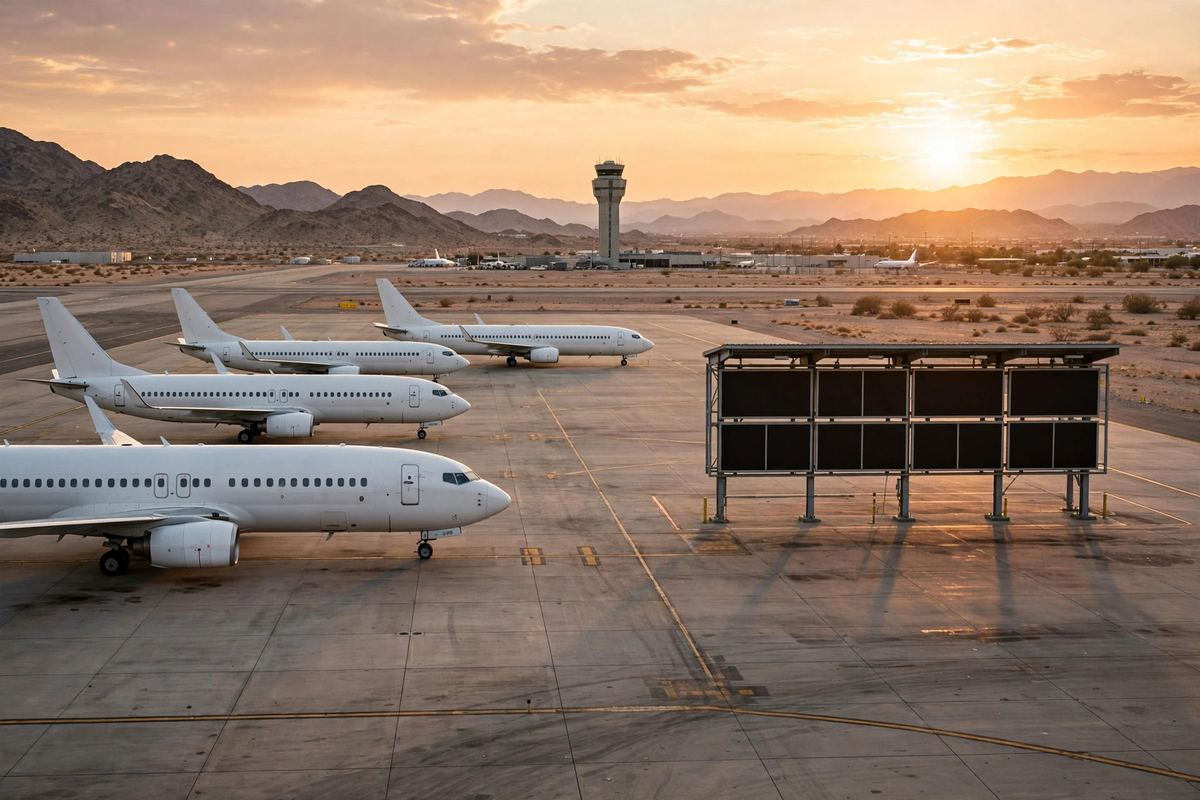
Flight disruptions widen across Saudi Arabia
Flight disruptions across Saudi Arabia widened in mid-October 2026 as airlines extended suspensions and Riyadh's King Khalid International Airport remained closed following repeated missile and drone attacks by Yemen's Houthi movement. Emirates, Etihad, flydubai and Air Arabia flights were among those disrupted, and carriers from India, the United States, Japan and Europe also cancelled services. According to aviation data from Cirium cited by Gulf Business, 3,129 of 7,705 scheduled departures from Saudi airports between 8 and 14 October were cancelled or marked as not operating, representing 40.61 per cent of services. The airport in Riyadh was scheduled to remain closed until 2100 GMT on Saturday, 17 October, although Saudi authorities had not confirmed when normal operations would resume. The disruption, now in its second week, has become one of the most serious blows to Gulf aviation in recent years.
How the crisis escalated
To understand the crisis, it helps to trace its escalation. The Houthi movement, which controls much of northern Yemen and is aligned with Iran, has been launching missile and drone attacks on Saudi targets for years, but the tempo and impact intensified sharply in October 2026. The Saudi-led coalition revealed that Riyadh airport had been targeted 20 times in October alone, killing 17 people and injuring 333. An attack on 10 October led to the suspension of airport operations, and earlier strikes killed three Saudi citizens, including Saudia pilot Captain Hamoud Ali Alkalthami. The attacks have also affected other locations, including King Fahd International Airport in Dammam. The coalition said it intercepted a cruise missile over Madinah and a drone targeting the Eastern Province. The scale of the assault on civilian aviation infrastructure, including airports, aircraft and supporting facilities, is what distinguishes the current episode from earlier rounds of cross-border attacks.
Airlines hit unevenly
The impact on airlines has been severe and uneven. Air India and Air India Express extended the suspension of flights to and from Riyadh, Dammam and Jeddah until 20 October. Akasa Air extended its suspension of flights to and from Riyadh until 24 October and Jeddah until 21 October. IndiGo extended cancellations of flights to Saudi Arabia until 24 October. The Indian carriers acted after authorities confirmed the death of an Indian national in the 10 October Riyadh airport attack. Gulf carriers, which operate some of the busiest routes in the world between the United Arab Emirates and Saudi Arabia, have also been heavily affected, with many services cancelled or rerouted. Selected flights to Saudi destinations outside Riyadh continue to appear on published schedules, but the overall picture is one of widespread disruption, with passengers facing cancellations, delays and uncertainty about when they can travel.
The human impact
The human impact extends beyond cancelled holidays. Saudi Arabia is home to millions of migrant workers, many from India, Pakistan, Bangladesh, the Philippines and other countries, who rely on flights to visit family, return home, or start new jobs. The disruption has left many stranded or uncertain about their travel plans. It has also affected religious travel. Travel agencies in Dubai reported a decline in enquiries for Umrah packages, particularly among customers planning to travel during national holidays. While some pilgrims are postponing their journeys until the security situation becomes clearer, others are proceeding with arrangements, favouring flight itineraries that avoid Riyadh. Airfares for Umrah travel have reportedly remained broadly stable, but cancellations affecting selected airline services and concerns about possible road closures have prompted travellers to examine their itineraries more closely. For pilgrims, whose journeys are often planned months in advance and carry deep religious significance, the uncertainty is particularly difficult.
Diplomatic consequences
The crisis has also had diplomatic consequences. The EU-GCC summit, which had been scheduled to take place in Riyadh on 24 October, was postponed amid the attacks. The postponement underscores how the security situation has begun to affect high-level diplomacy, not just commercial aviation. In Yemen itself, the situation deteriorated further. Houthi ballistic missiles struck the perimeter of the presidential palace complex in Aden, killing five people, hours after diplomatic negotiations mediated by Oman broke down. The Houthi military spokesman confirmed the group targeted the facility, describing it as an operational coordination centre for the Saudi-led coalition. Yemen's prime minister escaped unharmed. The collapse of the diplomatic track, with Houthi delegates rejecting proposals for an extended nationwide ceasefire and structured talks on port revenues, has broken months of relative quiet on Yemeni front lines and reignited cross-border missile launches directed at southern and central Saudi Arabia.
Aviation security implications
The aviation security implications are profound. Civil aviation depends on the principle that airports and aircraft are off-limits in armed conflict. Attacks on civilian airports are widely condemned under international humanitarian law, and they undermine confidence in air travel. The International Civil Aviation Organization and national aviation authorities will be watching the situation closely, and airlines will be conducting their own risk assessments. When an airport is targeted repeatedly, airlines cannot simply resume flights as soon as a single attack ends; they must be confident that the threat has genuinely subsided. That is why suspensions have been extended in blocks of several days, and why some carriers have cancelled services until 24 October even though the immediate threat may fluctuate. Insurers, too, will be reassessing war-risk coverage for flights to the region, which can affect the cost and availability of services.
What travellers should do
What should travellers do? The most important step is to check directly with the airline before travelling to the airport. Schedules are changing frequently, and information on booking websites may lag behind the latest operational decisions. Passengers with bookings on cancelled flights should be entitled to rebooking or refunds under the airline's conditions of carriage, although the exact terms vary by carrier and ticket type. Travellers should also check government travel advisories, which may have been updated to reflect the security situation. Those who must travel to Saudi Arabia should consider whether their destination is affected: Riyadh is the epicentre of the disruption, while some other Saudi cities have seen fewer cancellations. Travel insurance, including coverage for trip disruption due to armed conflict, should be checked carefully, as many standard policies exclude war-related events.
What happens next
What happens next will depend on the trajectory of the conflict. If a ceasefire can be negotiated, aviation could resume relatively quickly, although airlines will need time to restore schedules, reposition aircraft and crews, and rebuild passenger confidence. If attacks continue, suspensions could be extended further, and the economic impact on Saudi aviation, tourism and the wider Gulf region will grow. The postponement of the EU-GCC summit suggests that the diplomatic track is under strain, but Oman and other mediators are likely to continue efforts to revive talks. For now, the closure of Riyadh airport and the cancellation of more than 40 per cent of Saudi departures stand as a stark reminder of how quickly armed conflict can disrupt one of the world's busiest aviation markets, and how many ordinary people, from migrant workers to pilgrims to business travellers, bear the cost.
Update: Riyadh airport partially resumed operations on 25 October, with flights resuming on a limited basis at two terminals — see the limited-resumption coverage.
Related reading: Gulf stocks fall on Houthi threats