
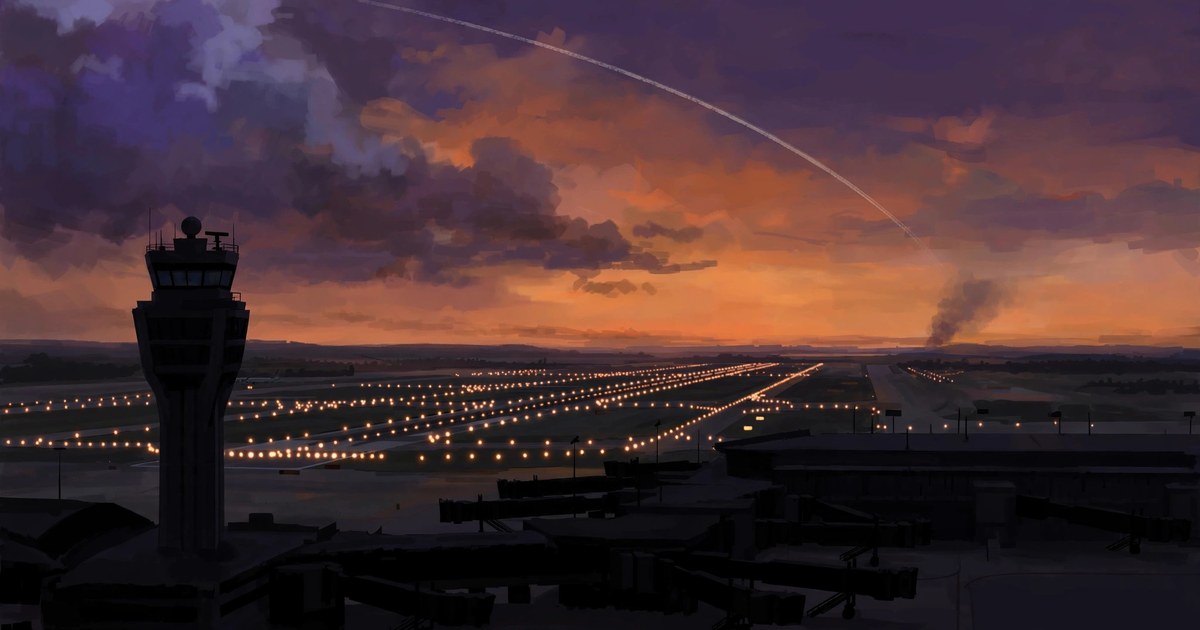
On Saturday, October 10, 2026, a missile fired by Yemen's Houthi rebels tore into King Khalid International Airport in Riyadh, killing 12 people and injuring 309 others. It was the third Houthi strike on the airport in a single week — and the deadliest attack on Saudi soil in more than a decade. The story is trending per news coverage around the world, as governments scramble to respond to a dramatic escalation in the Yemen conflict.
The attack shattered the sense of security in the Saudi capital. Riyadh's main international gateway, one of the busiest airports in the Middle East, became a scene of devastation: hospitals were overwhelmed by the wounded, and Saudi Arabia's threat alert system gave no warning before the missile struck. This explainer breaks down what happened, who was behind it, and why the fallout reaches far beyond the kingdom's borders.
What happened at King Khalid International Airport?
The missile hit the airport on Saturday, striking a crowded part of the complex. Twelve people were killed outright and 309 were injured, many seriously, according to figures released by the Saudi authorities. Emergency services rushed to the scene, and hospitals across Riyadh were placed on emergency footing as casualties poured in.
What made the attack especially alarming was the failure of Saudi Arabia's threat alert system. No public warning was issued before impact — a breakdown that has raised urgent questions about the kingdom's air defenses, which have intercepted Houthi missiles and drones many times in the past. Investigators are now examining why this projectile got through.
This was not an isolated incident. It was the third Houthi attack on King Khalid International Airport in a single week. Two earlier strikes this week killed four people and damaged a parked commercial aircraft on the tarmac — a warning sign of what was to come. The Houthis claimed responsibility for the Saturday attack, framing it as retaliation for the Saudi-led military campaign against them in Yemen.
Who were the victims?
The dead and wounded reflected Riyadh airport's role as a global crossroads. According to the Saudi civil aviation authority (GACA), the 12 people killed included 4 Saudi nationals, 2 Bangladeshis, and one citizen each from the United States, Jordan, Palestine, Syria, Sudan, and Egypt. The 309 injured came from similarly diverse backgrounds — travelers, airport staff, and workers caught in the blast.
The international makeup of the victims is one reason the attack has drawn such widespread condemnation. An airport is, by nature, a place where nationalities mix, and the strike killed and maimed citizens of at least eight countries. The US and Canadian embassies in Riyadh moved quickly after the attack, warning their citizens to avoid the airport area and to exercise heightened caution across the Saudi capital.
Who are the Houthis, and why are they striking Saudi Arabia?
The Houthis — formally known as Ansar Allah — are an Iran-backed rebel movement that controls much of northern Yemen, including the capital, Sanaa. They have been at war with a Saudi-led coalition since 2015, when Saudi Arabia intervened in Yemen's civil war to back the internationally recognized government against the Houthi takeover.
Over the years, the Houthis have repeatedly used missiles and drones to strike targets inside Saudi Arabia: oil facilities, military bases, and civilian infrastructure. Airports are a favored target because they are high-visibility symbols of normal life and economic activity. Hitting Riyadh's main airport three times in one week sends a deliberate message — that the Houthis can reach deep into Saudi territory, and that the kingdom's airspace is not as secure as it claims.
The immediate trigger, according to the Houthis themselves, is Saudi Arabia's new counteroffensive, dubbed "Operation Yemen Dawn," which began on October 5, 2026. The Houthis say the airport strikes are retaliation for that campaign. Riyadh, in turn, has called the attack a "war crime" and vowed a "decisive" response — language that suggests a major escalation is coming.
How did the Yemen truce collapse?
To understand this attack, you have to go back to April 2022, when the warring parties in Yemen agreed to a truce. That ceasefire — renewed several times — largely held for more than four years, dramatically reducing the violence and giving Yemen's shattered population a measure of relief after years of war, blockade, and humanitarian catastrophe.
The truce collapsed in July 2026, after the bombing of the runway at Sanaa's airport — an attack each side blamed on the other. Trust evaporated, and the fighting resumed with intensity. In September 2026, the Houthis seized Yemen's Red Sea coast and the Bab al-Mandab strait, one of the world's most important shipping chokepoints, through which a significant share of global trade passes.
Saudi Arabia responded on October 5, 2026, with "Operation Yemen Dawn," a counteroffensive aimed at rolling back Houthi gains. Within days, the Houthis were striking back — not just on the battlefield in Yemen, but deep inside Saudi Arabia itself. The three airport attacks in a single week, culminating in Saturday's carnage, mark the most serious spillover of the Yemen war onto Saudi soil in over a decade.
The wider regional picture
The Riyadh airport attack is not happening in isolation. It is spillover from a much wider confrontation engulfing the region — the escalating conflict involving the United States, Israel, and Iran, in which the Houthis act as one of Tehran's most capable allies. The Houthis' seizure of the Bab al-Mandab strait in September already threatened global shipping; striking the Saudi capital raises the stakes further.
Gulf states are watching nervously. The United Arab Emirates, which has also been targeted by Houthi missiles in the past, finds itself in an increasingly dangerous neighborhood. Global oil markets, always sensitive to instability in the Gulf, face fresh uncertainty. And the Red Sea — already a flashpoint — could see further disruption if the conflict widens.
For Saudi Arabia's leadership, the attack is a humiliation as well as a tragedy. The kingdom has invested enormously in air defense systems, and the failure to stop — or even warn of — Saturday's missile will prompt hard questions at the highest levels.
How the world reacted
Condemnation was swift. The Saudi-led coalition called the strike a "war crime" and promised a "decisive" military response, signaling that retaliation is a matter of when, not if. United Nations Secretary-General António Guterres condemned the attack, as did a string of governments whose citizens were among the dead and wounded.
The United States and Canada both issued security warnings to their citizens in Saudi Arabia, advising them to avoid the airport and remain vigilant. Diplomatic efforts to contain the crisis are expected to intensify in the coming days, but with the Yemen truce in ruins and both sides vowing escalation, the path back to negotiations looks steeper than ever.
What happens next?
Several things are likely in the days ahead. First, expect a forceful Saudi military response — the "decisive" retaliation already promised. That could mean intensified airstrikes on Houthi positions in Yemen, and possibly strikes on Houthi missile and drone infrastructure.
Second, aviation security across the Gulf will tighten dramatically. The failure of the threat alert system at Riyadh airport will trigger reviews of early-warning and missile-defense procedures, not just in Saudi Arabia but in neighboring states.
Third, the humanitarian picture in Yemen — already dire — is likely to worsen as fighting intensifies. And fourth, diplomats will scramble to prevent the Yemen conflict from merging fully with the wider US-Israel-Iran confrontation, a scenario that could destabilize the entire region.
For now, Riyadh mourns. Twelve people went to an airport and never came home, and more than three hundred bear the wounds of a war that has now, unmistakably, arrived in the Saudi capital.
Frequently Asked Questions
How many people were killed and injured in the Riyadh airport attack?
Twelve people were killed and 309 were injured when a Houthi missile struck King Khalid International Airport in Riyadh on Saturday, October 10, 2026. According to the Saudi civil aviation authority (GACA), the dead included 4 Saudis, 2 Bangladeshis, and one national each from the US, Jordan, Palestine, Syria, Sudan, and Egypt. It was the deadliest attack on Saudi soil in more than a decade, and the third Houthi strike on the airport in a single week.
Who are the Houthis?
The Houthis, formally known as Ansar Allah, are an Iran-backed rebel movement that controls much of northern Yemen, including the capital Sanaa. They have been fighting a Saudi-led coalition since 2015, when Saudi Arabia intervened in Yemen's civil war. Over the years they have repeatedly fired missiles and drones at targets inside Saudi Arabia, including oil facilities, military bases, and airports.
Why did the Houthis attack Riyadh's airport?
The Houthis say the airport strikes are retaliation for Saudi Arabia's counteroffensive, 'Operation Yemen Dawn,' which began on October 5, 2026, after the Houthis seized Yemen's Red Sea coast and the Bab al-Mandab strait in September. Airports are high-visibility targets: striking Riyadh's main international gateway three times in one week was meant to show that the Houthis can reach deep into Saudi territory and to pressure Riyadh over the Yemen campaign.
Is it safe to travel to Saudi Arabia right now?
Governments are urging caution. After the attack, the US and Canadian embassies in Riyadh warned their citizens to avoid the airport area and stay vigilant across the Saudi capital. Travelers should check their own government's latest travel advisory for Saudi Arabia before flying, allow extra time at airports amid tightened security, and monitor official guidance, as Saudi authorities have vowed a 'decisive' military response that could further escalate the situation.
What is Operation Yemen Dawn?
Operation Yemen Dawn is the Saudi-led counteroffensive launched on October 5, 2026, aimed at rolling back Houthi gains after the collapse of the April 2022 Yemen truce. The truce fell apart in July 2026 following the bombing of Sanaa airport's runway, and fighting intensified after the Houthis seized the Red Sea coast and Bab al-Mandab strait in September 2026. The Houthis cite this operation as the reason for their retaliatory missile strikes on Riyadh.