
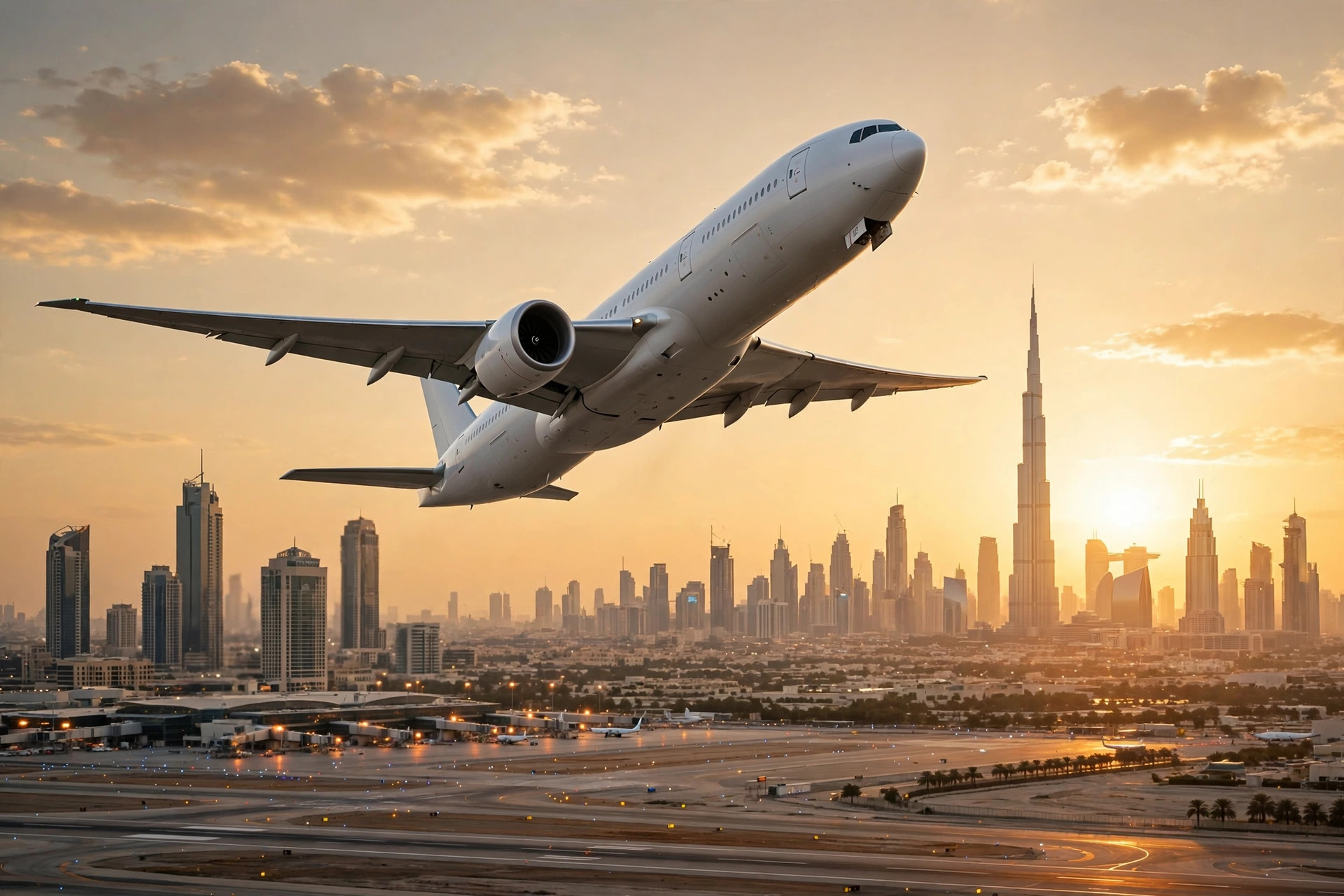
The UAE lifts air traffic restrictions imposed during the war on Iran, the country's civil aviation authority announced on Saturday 31 October 2026, declaring that all air operations in the Emirates' airspace have returned to "normal status". The announcement closes more than eight months of disruption that began when the United States and Israel went to war with Iran in late February 2026, and it is the clearest sign yet that air travel across the Gulf is returning to something like its old shape. For the millions of passengers who pass through Dubai and Abu Dhabi every year, and for the airlines that connect Europe and Asia through the region, the decision matters enormously. But the word "normal" needs careful reading: the UAE's own airspace is open again, yet several foreign airlines are still not flying to Dubai, and some will not return until 2027. This article explains what the UAE actually lifted, how the restrictions began, what the long road back looked like, and what travellers should check before they book.
UAE Lifts Air Traffic Restrictions: What Changed on 31 October
On Saturday 31 October 2026, the UAE General Civil Aviation Authority announced that it had lifted all flight restrictions put in place since the start of the United States and Israel's war on Iran. In a statement, the authority said that all air operations had returned to "normal status" in UAE airspace. The decision, it said, "came following a comprehensive assessment of operational and security conditions, in coordination with the relevant authorities", and the authority added in a post on X that it would continue monitoring the situation. The announcement is significant because the restrictions were not a minor administrative measure: they were part of a region-wide shutdown of the skies that, in its opening days, saw more than 11,000 flights in and out of the region cancelled, according to aviation data firm Cirium. At least eight states announced full or partial airspace closures at the start of the conflict, including the UAE, Iraq, Jordan, Qatar, Bahrain and Kuwait, and the disruption forced long-haul carriers flying between Europe and Asia to reroute, cancel or suspend services for months. The UAE's announcement is the latest sign of the travel sector's recovery across the Middle East, and it follows a Pakistan-brokered ceasefire last month that brought the conflict to a halt. The two hubs most affected are Dubai, home to the world's busiest airport for international passengers, and Abu Dhabi, the capital's fast-growing aviation hub. Both have been operating under restrictions since late February, and both are now formally back to normal operations under the authority's announcement.
How the Restrictions Began in February 2026
To understand why Saturday's announcement matters, it helps to go back to late February 2026, when the war began. The UAE declared a "temporary and partial" closure of its airspace at the beginning of the conflict, as Tehran's retaliatory strikes on Gulf countries forced the closure of large portions of the region's airspace. The UAE's own carriers were hit immediately: Emirates and flydubai temporarily halted all operations, while Etihad suspended all departures from Abu Dhabi. Across the region, the effect was dramatic. With at least eight states closing their skies in whole or in part, airlines flying between Europe and Asia lost the routes they had used for decades, and more than 11,000 flights in and out of the region were cancelled in the opening days of the conflict, according to Cirium. Dubai International Airport, the world's busiest airport for international passengers, had to shut down several times because of drone incidents in its vicinity, and passenger numbers collapsed: the airport reported a 66 percent drop in passenger numbers in March, dragging first-quarter traffic to 2.5 million passengers, down 21 percent from the same period a year earlier. For a country whose economy and global identity are built around aviation and tourism, the shutdown was not only a transport problem but an economic shock, and the recovery has been slow and uneven ever since.
The Long Road Back: March to October 2026
The return to normal did not happen in a single step. The UAE announced a gradual reopening in March, and during the partial resumption of air traffic between 1 and 12 March, the country's airports handled 1.4 million passengers and recorded 7,839 air traffic movements, while its national carriers saw their operations recover to 44.6 percent of normal levels. That figure, less than half of normal, shows how far there was to go. Over the following months, UAE carriers rebuilt their networks route by route, and the Gulf's airports slowly filled again, but foreign airlines returned at very different speeds, and some never came back at all during the conflict. Qatar Airways separately confirmed on Saturday that it would resume flights to three Iraqi cities from 10 May, a reminder that the recovery is region-wide rather than confined to the UAE. The turning point was the Pakistan-brokered ceasefire last month, which brought the conflict to a halt and gave aviation authorities the confidence to assess the security situation and lift the remaining restrictions. Saturday's announcement is the formal end of that process for the UAE: the restrictions imposed in February are gone, and the authority says operations are back to normal. The European Union Aviation Safety Agency, however, has extended its Conflict Zone Information Bulletin for the Persian Gulf and the Gulf of Oman until 16 November 2026, which means European regulators are still asking airlines to carry out rigorous individual risk assessments before flying in the region, even though the UAE's own restrictions have been lifted.
What "Normal" Means After the UAE Lifts Air Traffic Restrictions
The most important thing to understand about Saturday's announcement is what it does and does not mean. It means that the UAE's own airspace restrictions are gone: the General Civil Aviation Authority has lifted the measures it imposed in February, and flights can operate in UAE airspace under normal procedures. It does not mean that every airline is flying to Dubai again, because each carrier makes its own decision about whether and when to return, and those decisions have been moving in very different directions. Air France, for example, has extended the suspension of its Paris to Dubai service until 7 November 2026, with the earliest possible resumption on 8 November, and its Paris to Riyadh service remains suspended until 12 December. KLM has confirmed that its Amsterdam to Dubai service will remain suspended throughout the winter season, up to and including 27 March 2027, and it has also cancelled flights to Riyadh and Dammam through 27 November 2026. Air Canada has cancelled all flights to Dubai until the end of March 2027, United Airlines is looking at resuming its Newark to Dubai service in March 2027, and Finnair has suspended its Helsinki to Dubai route for the winter season, with a return unlikely before October 2027. Lufthansa Group has postponed the planned return of Dubai services operated by Lufthansa, SWISS and Eurowings until 25 November 2026. Air India and Air India Express have suspended India to Riyadh and Dammam services until 7 November 2026. British Airways, by contrast, has scheduled its Dubai services to resume from 3 November, initially with one daily flight. The picture, in short, is uneven: UAE carriers Emirates, flydubai and Etihad are the main way most travellers can currently reach Dubai, while foreign carriers return one by one on their own timetables.
What Travellers Must Check Before Flying
If you are planning to travel to or through the UAE, the practical advice is simple: check your own airline, not the headlines. First, confirm that your specific flight is operating, because a lifted restriction does not guarantee that your carrier has resumed the route — Air France, KLM, Air Canada and others are still suspended on Dubai routes, and their published return dates are not guarantees, since airlines have pushed restart dates back repeatedly during the conflict. Second, check whether your booking is covered by a travel waiver: Air France, for example, is allowing passengers to cancel or postpone free of charge, and other carriers have similar arrangements. Third, expect longer flight times on some routes, because airlines are still tactically avoiding specific airspace zones, and schedules are being adjusted as a result. Fourth, remember that the European Union Aviation Safety Agency's bulletin for the Gulf remains in force until 16 November 2026, so the regulatory picture can still change. And fifth, if you are flying onwards from the UAE to Saudi Arabia or Iraq, check those routes separately: suspensions on some Saudi routes run into November, while Qatar Airways' resumption of flights to three Iraqi cities from 10 May is a separate, positive development. The UAE's announcement is genuinely good news for travellers, but the recovery is still a patchwork, and the only safe assumption is the one your airline confirms for your own flight.
What Happens Next
The next few weeks will show how quickly the patchwork fills in. The first test comes on 3 November, when British Airways is scheduled to resume Dubai services, and on 8 November, the earliest date Air France could return to the Paris to Dubai route. The Lufthansa Group's planned return on 25 November will be another marker, and the European Union Aviation Safety Agency's bulletin comes up for review on 16 November, when regulators will decide whether to extend it again, adjust it or let it lapse. If the ceasefire holds and no new incidents occur, more carriers are likely to bring their return dates forward, and Dubai's passenger numbers should continue to climb back towards the levels the airport recorded before the war. If the security situation worsens, the opposite will happen, and the UAE authority has said it will keep monitoring conditions. For now, the formal position is clear: the restrictions are lifted, the airspace is open, and the UAE's aviation sector is back to normal operations. What remains is the slower, airline-by-airline work of rebuilding the schedules, and that will take weeks and months rather than days.
Related reading: Riyadh airport reopens as flights resume, UAE oil leak stopped after Gem No. 2 tanker incident, and US warns Gulf over Iran strikes after midterms.