
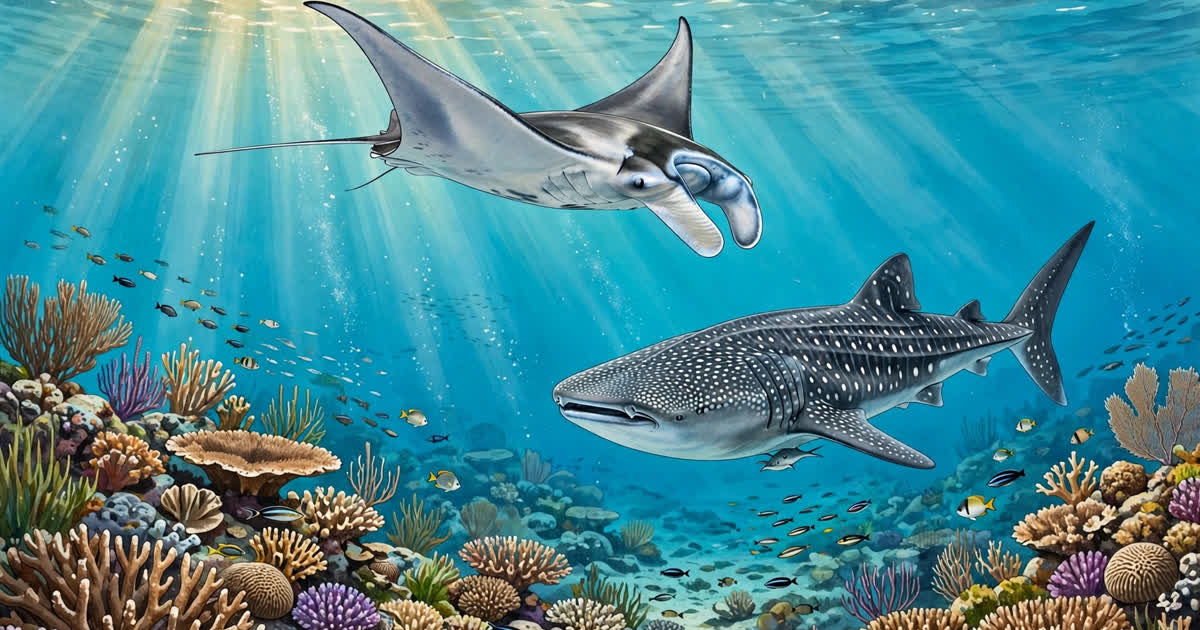
Maldives manta whale shark diving is the marine experience that draws divers and snorkellers from around the world, because few places offer such reliable encounters with two of the ocean's most graceful giants. Manta rays gather in huge feeding aggregations at Hanifaru Bay, while whale sharks patrol South Ari Atoll year-round, and both can be seen on snorkelling trips as well as dives. This guide to Maldives manta whale shark diving explains where, when and how to encounter them responsibly.
The Maldives' atolls, channels and cleaning stations create ideal conditions for mantas and whale sharks. Plankton-rich currents attract mantas to feeding sites, cleaning stations attract mantas for parasite removal by cleaner fish, and South Ari's plankton and currents support whale shark feeding throughout the year. Understanding Maldives manta whale shark diving means understanding those ecological patterns, because they determine seasons, sites and encounter quality far more than luck alone.
Maldives Manta Whale Shark Diving: Hanifaru Bay Mantas
Maldives manta whale shark diving for mantas centres on Hanifaru Bay in Baa Atoll, a UNESCO Biosphere Reserve site famous for mass manta feeding aggregations, roughly June to November, when southwest monsoon currents push plankton into the bay. On peak days, dozens or even hundreds of mantas, plus whale sharks on occasion, feed in the shallow bay, creating one of the world's great wildlife spectacles. Hanifaru Bay is a protected marine area with strict rules: only snorkelling, no diving, limited visitor numbers, licensed guides, and no touching or chasing mantas, with rangers monitoring compliance.
Visiting Hanifaru Bay requires planning: stay in Baa Atoll resorts or liveaboards, book through licensed operators, and check monsoon timing, because manta numbers vary daily with tides, currents and plankton. Manta season success rates are high in peak months, but no operator can guarantee mantas on a specific day, and ethical operators will not chase animals or guarantee sightings. For snorkellers, Hanifaru offers shallow, accessible encounters, though currents and waves require reasonable swimming ability, life jackets where provided, and following guide instructions on entry points and distances.
Maldives Manta Whale Shark Diving: South Ari Whale Sharks
Maldives manta whale shark diving for whale sharks centres on South Ari Atoll, where whale sharks are seen year-round, with no single season guaranteeing sightings but with high encounter rates across months. Whale sharks, the world's largest fish, feed on plankton near the surface, allowing snorkellers and divers to swim alongside them under guide supervision. South Ari's outer reef, channels and plankton patterns support regular sightings, though individual sharks move widely, and encounters depend on currents, plankton and boat search patterns on the day.
Whale shark trips from South Ari resorts and liveaboards typically involve boat searches, snorkelling when a shark is spotted, and strict distance rules: keep at least three metres from the body and four metres from the tail, never touch, ride or block the shark's path, and avoid flash photography at close range. Divers may encounter whale sharks on reef dives, but snorkelling often gives longer, calmer encounters, because whale sharks feed near the surface. Choose operators with marine conservation credentials, small groups, and guides who enforce distance rules, because chasing sharks stresses animals and shortens encounters for everyone.
Maldives Manta Whale Shark Diving: Other Manta Sites and Seasons
Maldives manta whale shark diving beyond Hanifaru and South Ari includes manta cleaning stations across many atolls, where mantas visit regularly for cleaning by wrasse and other cleaner fish. North Malé, Ari, Baa, Raa, Laamu and other atolls each have cleaning stations, with seasons varying by monsoon: northeast monsoon, roughly December to April, favours mantas on western atoll sides, while southwest monsoon, roughly May to November, favours eastern sides, as currents reverse. Dive guides track seasonal patterns and choose sites accordingly, so a liveaboard itinerary that follows monsoon currents offers the best manta chances across a week.
Other marine encounters in Maldives manta whale shark diving trips include reef sharks, turtles, eagle rays, dolphins, Napoleon wrasse and colourful reef fish, with night dives offering nurse sharks, rays and hunting predators. Each atoll has signature sites: channel dives with currents and pelagics, thilas, submerged pinnacles, with coral and fish, and house reefs for relaxed snorkelling. Discuss experience, current comfort and interests with dive centres before booking, because channel dives with strong currents suit advanced divers, while house reefs suit beginners and snorkellers.
Maldives Manta Whale Shark Diving: Snorkelling Versus Diving
Maldives manta whale shark diving for beginners often starts with snorkelling, which requires no certification, offers surface encounters with mantas and whale sharks, and suits families and non-divers. Snorkelling gear, life jackets and guide briefings make Hanifaru and South Ari accessible to confident swimmers, though non-swimmers should discuss options with operators, because open ocean snorkelling differs from lagoon swimming. For certified divers, scuba offers deeper encounters at cleaning stations, channels and thilas, with longer bottom times and closer, calmer manta interactions at cleaning stations where mantas hover for cleaning.
Learning to dive in the Maldives is popular, with resort dive centres offering beginner courses that combine pool training, theory and open water dives over three to four days. Certification opens channel and wreck dives, though new divers should build experience gradually, starting with calm reef dives before attempting strong current channels. Whether snorkelling or diving, Maldives manta whale shark diving rewards calm behaviour: slow movements, horizontal body position, and no sudden approaches keep mantas and whale sharks relaxed and encounters longer.
Maldives Manta Whale Shark Diving: Ethics, Safety and Conservation
Maldives manta whale shark diving ethics protect animals that are vulnerable to boat strikes, fishing, plastic pollution and climate change. Manta rays and whale sharks are protected in Maldivian waters, with rules against touching, feeding, chasing and blocking, and marine protected areas such as Hanifaru Bay enforcing visitor limits. Choose operators that follow codes of conduct, limit group sizes, use reef-safe sunscreen guidance, and support conservation through research, photo identification and donations. Report operators that chase, touch or crowd animals, because unethical practices harm wildlife and the industry's future.
Safety in Maldives manta whale shark diving includes currents, waves, boat traffic and sun exposure. Follow guide briefings, wear life jackets when advised, stay with the group, and surface if tired or uncomfortable, because open ocean conditions change quickly. Dive safety requires certification, buddy checks, depth and time limits, and dive insurance covering evacuation and hyperbaric treatment, which is essential in remote atolls. Snorkellers should also hold travel and medical insurance, carry water, and protect against sunburn with reef-safe sunscreen, hats and rash guards.
Maldives Manta Whale Shark Diving: Planning Checklist
A Maldives manta whale shark diving checklist runs: choose season by target species, Hanifaru June to November for mantas, South Ari year-round for whale sharks; choose resort or liveaboard by atoll and budget; book licensed operators early in peak season; confirm snorkelling or diving requirements, group sizes and ethics policies; and arrange dive and travel insurance. Pack mask, snorkel, fins if you own them, reef-safe sunscreen, rash guard, underwater camera without flash reliance, and motion sickness remedies for boat trips if needed.
With seasons understood, ethical operators chosen, and expectations realistic, Maldives manta whale shark diving delivers encounters that justify the Maldives' reputation as a marine wonderland. The mantas' barrel rolls, the whale shark's slow grace, and the coral reefs' colour combine into memories that last far beyond the trip. For related marine travel guidance, see how to travel on a budget, travel insurance explained, and Maldives resorts and atolls guide.