
Donald Trump warns Iran in blunt terms. In a phone interview with the Salem News Channel on Thursday 12 November 2026, the US president said he would use military force against Iran with "no hesitation" if Tehran threatened American allies or shipping, and warned that anyone responsible for killing a US official "will not exist any longer". The remarks, made to conservative radio host Hugh Hewitt, were the sharpest signal yet that Washington is ready to strike again after the US-Israeli war with Iran that began in February 2026.
Trump did not announce a new strike, and he gave no date for any further action. What he did was set out the conditions under which he would order one, and attach a personal threat to any attack on a senior American official. The warning landed in the middle of a tense week at sea, with tankers hit by projectiles around the Strait of Hormuz and Iran claiming a strike of its own against a US radar station in Bahrain.
What Trump Warns Iran About: The Exact Words
Hewitt asked Trump a direct question: would he hesitate to use military force to stop Iran from threatening US allies and American vessels? "No, without hesitation," Trump replied, according to the interview transcript published by Hewitt. He went further, adding: "If I saw things going the other way, I would do that. It's possible I would do it right now." The phrasing matters. Trump presented further strikes as a live option, not a distant threat, while stopping short of ordering anything in the interview itself.
The second warning was more personal. Asked what Washington would do if Iran killed a US official, such as Treasury Secretary Scott Bessent, Trump answered: "They will not exist any longer." The news agency ANI, reporting the exchange on 13 November, quoted the same words. The comment was conditional, not a report that any official had been harmed. Bessent had reportedly moved from his home in Washington to a US military base after alleged Iranian threats against his life, a detail reported by Indian outlet The Daily Jagran in its coverage of the interview.
Trump also used the interview to frame the war in his own terms. He said Iran's current rulers remaining in power when he leaves office would amount to a defeat for him. "Yes, that would be a defeat. Yep. I would say that would be a defeat. Absolutely," he told Hewitt, according to the National Security Journal's account of the interview. He stopped short of formally declaring regime change an American military objective, but the remark made plain that he sees the survival of Iran's government as a personal political test.
Why Trump Warns Iran Now: Tankers, Mines and a Radar Claim
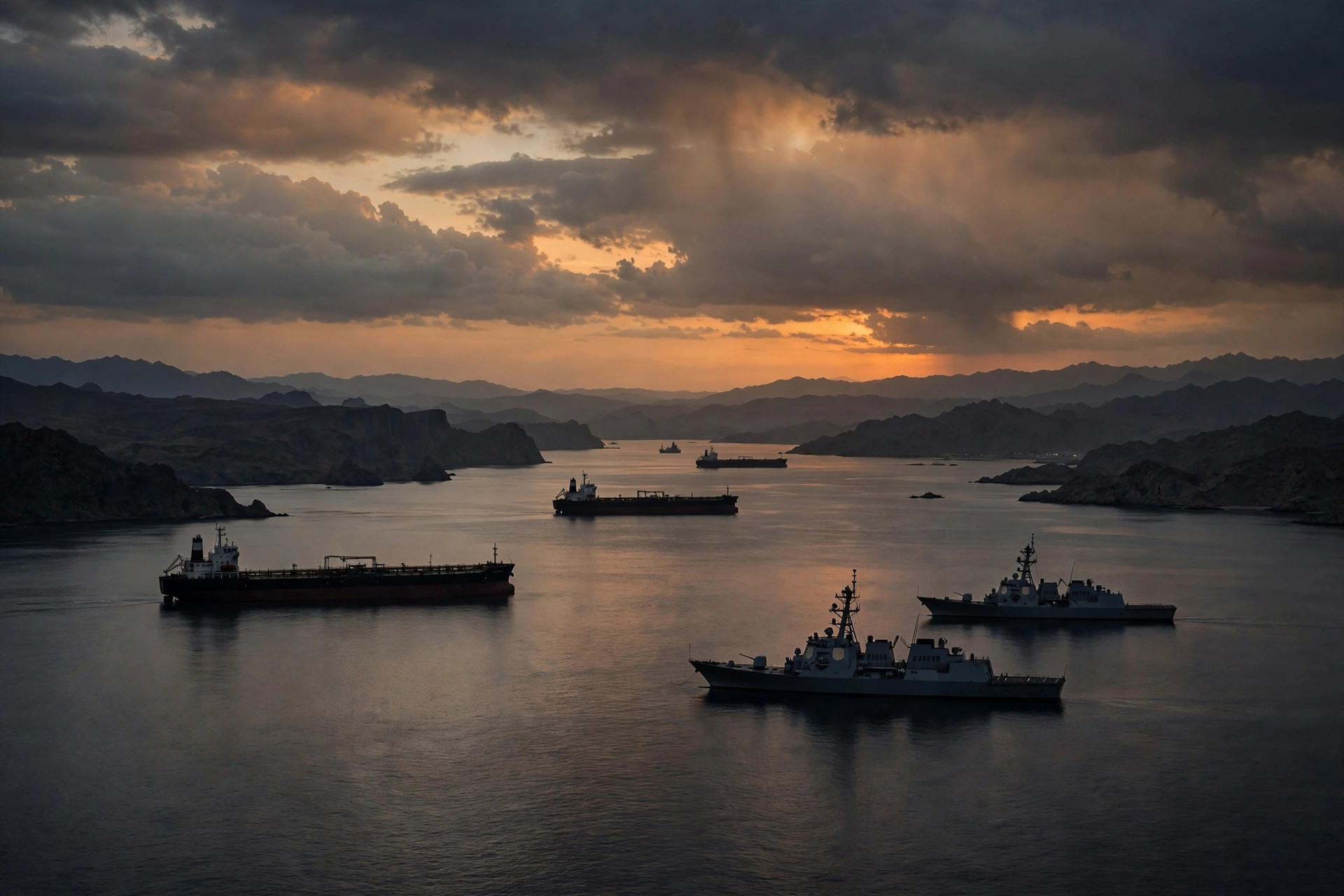
The warning did not come out of nowhere. Shipping around the Strait of Hormuz, the narrow waterway that carries a large share of the world's seaborne oil, has been under sustained attack. The United Kingdom Maritime Trade Operations centre (UKMTO) logged two separate tanker incidents over the weekend of 7-8 November 2026: one vessel caught fire about eight nautical miles off Khasab in Oman and its crew was evacuated, and a second outbound tanker reported being hit by an unknown projectile an hour later. On 11 November, UKMTO reported another tanker struck by an unknown projectile off Ras al-Khaimah in the United Arab Emirates, starting an engine-room fire. The crew was evacuated safely, and no attacker was identified in the UKMTO notice.
Then, on Friday 13 November, Iran's Islamic Revolutionary Guard Corps (IRGC) announced that it had attacked a US military early-warning radar station in Bahrain, according to Press TV and Reuters. Bahrain is a Washington ally in the Gulf and hosts American military assets. The IRGC said the attack was retaliation for what it called "the enemy's air aggression" against a telecommunications tower in Sirik, southern Iran. Iran had also claimed that its port city of Sirik, near the Strait of Hormuz, was hit by enemy fire. Iran's claim about the Bahrain radar station is covered in detail in our separate report, and the claims on both sides remain unverified by independent sources.
Iran's Foreign Ministry responded to Trump's interview with a warning of its own. Spokesman Esmaeil Baqaei said countries that gave military or logistical help to the United States for operations against Tehran would be viewed as committing a hostile act and would bear responsibility for aggression against Iran, invoking international law and the United Nations. The exchange shows how quickly public warnings are now travelling in both directions, with each side speaking to the other's allies as much as to the other government.
The Blockade and Trump's Claims About Iran's Condition
Much of the interview was Trump describing the pressure campaign against Iran in his own words. He claimed the United States controls the Persian Gulf and the Strait of Hormuz, that the maritime blockade it imposed on Iran is severely damaging the Iranian economy, and that Iran's military capabilities had been largely destroyed. He also claimed Iran's inflation had reached 301 percent and that the US had not lost a soldier in five months. These are Trump's own claims. The news reports carrying them did not provide independent verification, and this article does not present them as established facts.
What is on the record is the policy direction. Trump said on 9 November that the US-Israeli military campaign against Iran had effectively ended militarily, while Washington would keep a strict maritime blockade in place and stood ready to resume strikes if conditions changed. Secretary of State Marco Rubio said on 10 November that sanctions and the blockade were achieving US objectives without initiating new combat operations. The 12 November interview pulled in the other direction, with Trump stressing that new strikes could begin immediately. The two messages can both be true: the blockade is the current policy, and force remains the fallback Trump says he will use without hesitation.
The economic backdrop is real even where the figures are disputed. Oil prices jumped as Gulf tensions escalated, and shipping insurers and tanker operators have been pricing in the risk of further attacks around Hormuz for weeks. Any interruption to traffic through the strait pushes up fuel costs worldwide, which is why Trump's warning about protecting allies and ships matters to countries far from the Gulf, including India, Japan and European importers.
What Happens Next After Trump Warns Iran
Four things are worth watching. First, whether any further tanker incident or Iranian claim draws a US response, and how quickly. Trump has said he could act "right now", which shortens the warning time for any escalation. Second, whether Gulf allies ask Washington publicly or privately to hold back, as they have at earlier moments in the crisis. Third, whether the blockade tightens further or whether any channel for talks reopens. Trump said in the same interview that the US does not need an agreement with Iran, which suggests diplomacy is not his priority at present. Fourth, the safety of US officials named in Iranian threats, above all Bessent, whose reported move to a military base shows the threat is being taken seriously inside the administration.
For now, the position is a standoff with a tripwire. Trump warns Iran that force is available immediately, Iran warns that helping the US will be treated as a hostile act, and commercial shipping keeps moving through a strait where tankers have been hit repeatedly in November. Iran's claim that a gas tanker hit a mine in the strait is one more reminder that the danger at sea is not hypothetical. The next move belongs to events, not to interviews, and the gap between a warning and a strike is exactly what Trump chose to leave unclear.