
Hakeem Jeffries is one step from history. On Wednesday 18 November 2026, House Democrats made the Hakeem Jeffries Speaker of the House bid official, voting 251-11 in a closed-door secret ballot to nominate the 56-year-old Brooklyn congressman as their candidate for the top job in the next Congress. If the full House elects him when it convenes on 3 January 2027, Jeffries will become the first Black Speaker in American history, a milestone more than 150 years in the making. The result was never really in doubt after Democrats swept to a House majority in the midterm elections on 3 November, but its scale settled the one open question: whether the party's restive left flank would try to stop him. Only 11 Democrats voted no. What the vote did not do is hand Jeffries the gavel. That still requires a vote of the whole House in January, and until then the current Speaker, Republican Mike Johnson of Louisiana, stays in the chair.
Hakeem Jeffries Speaker of the House vote: how the 251-11 nomination worked
The vote took place behind closed doors on Wednesday morning, and Jeffries ran unopposed. When the secret ballots were counted, 262 had been cast: 251 for Jeffries and 11 against, according to multiple people in the room who spoke to CNN, the Associated Press and the Wall Street Journal. Applause broke out as the result was read. Jeffries had been nominated by five Democrats drawn from across the caucus, including Representative James Clyburn of South Carolina, one of the most senior members of the Congressional Black Caucus. Clyburn gave what one person in the room described as a powerful speech, telling colleagues: "Hakeem is interested in headways and not headlines." Jeffries himself called it "a high honor and a distinct privilege to stand before the American people today as the Democratic nominee to be the next Speaker of the United States House of Representatives."
The 11 votes against him came from the party's left. A small bloc of newly elected Democratic socialists had refused to commit to Jeffries before the vote, pressing for concessions including votes on Medicare for All and a ban on arms sales to Israel. Afterward, seven ultra-progressive new members said in a statement that they had voted no because they were still seeking commitments from Jeffries on those priorities, including votes on Medicare for All and ending arms sales to Israel. Jeffries moved toward them in the days before the vote, announcing that he backs major tenets of a universal healthcare system, including lowering the eligibility age for Medicare, creating a new program that guarantees universal coverage for children, and adding hearing, dental and vision coverage to the program.
Is Hakeem Jeffries Speaker of the House now?
No. Winning the nomination made Jeffries the Speaker-designate, the Democrats' candidate for the job. It did not make him Speaker. The current Speaker, Mike Johnson, a Republican from Louisiana, remains in the post until the new Congress is sworn in. The formal election happens on the floor of the House on 3 January 2027, the first act of the 120th Congress, and Jeffries will need 218 votes, a simple majority of the 435-member chamber if every member votes for a candidate. He is expected to face the incoming Republican leader, Jim Jordan of Ohio, whom House Republicans nominated last week. The arithmetic is heavily in Jeffries' favour: Democrats will hold at least 257 seats, according to Reuters, and the Wall Street Journal puts the figure at about 260, the party's largest House majority since the 1990s. On those numbers it would take the defection of more than 40 House Democrats to block him. The speakership is second in line to the presidency, which is one reason the nomination drew such attention, and why the confusion about the timing is understandable.
Who is Hakeem Jeffries?
Jeffries, 56, grew up in Crown Heights, Brooklyn, and still represents a Brooklyn district that takes in large parts of Bedford-Stuyvesant and Williamsburg. He attended Midwood High School, then Binghamton University, earned a master's degree in public policy at Georgetown University and a law degree at New York University. He was elected to Congress in 2012 and has served since 2013. In 2023 he succeeded Nancy Pelosi as the Democrats' leader in the House, becoming the first Black party leader in Congress. He was one of the seven managers of Donald Trump's first impeachment in 2020, and last year he held the House floor for eight hours and 44 minutes speaking against the One Big Beautiful Bill Act, President Trump's signature tax-cutting legislation. He is known for sprinkling scripture and old-school hip-hop lyrics into his remarks, quoting Biggie Smalls as readily as the Bible, and for the line he used after the nomination vote, recalling that during the first 12 years of his life his congresswoman, though he never met her, was Shirley Chisholm, the trailblazer who became the first Black woman elected to Congress. He won re-election this month with 78.9 percent of the vote.
A leadership team of firsts: Clark, Aguilar and Underwood
Jeffries will not take the gavel alone. The leadership team elected alongside him is itself a set of firsts. Representative Katherine Clark of Massachusetts is set to become majority leader, the first woman to hold that job. Representative Pete Aguilar of California will be the first Latino to serve as whip, the House's No. 3 post. Representative Lauren Underwood of Illinois becomes the highest-ranking Black woman in Congress. Joe Neguse was chosen as assistant speaker and Ted Lieu as caucus chair. Jeffries told reporters that the 120th Congress "is going to be the most diverse in America's history", and Nancy Pelosi, the leader he succeeded, congratulated him on X as "Speaker-designate Hakeem Jeffries."
What Hakeem Jeffries plans to do first as Speaker
Jeffries has made tackling high costs his main focus. According to the Wall Street Journal, he plans to move quickly on legislation to reverse cuts to Medicaid and Supplemental Nutrition Assistance Program benefits, and to extend the enhanced Affordable Care Act tax credits that lapsed last year. The healthcare agenda he outlined before the vote points the same way: a lower Medicare eligibility age, guaranteed universal coverage for children, and hearing, dental and vision benefits added to Medicare. At the press conference after the nomination, he said House Democrats were "committed to delivering the change that the American people deserve." He will be leading the House through the final two years of President Trump's term, with Democrats aiming to use the majority as a check on the White House, and with a progressive wing that has already shown it will press him for firmer commitments in return for its votes.
Why the first Black Speaker matters — and what happens next
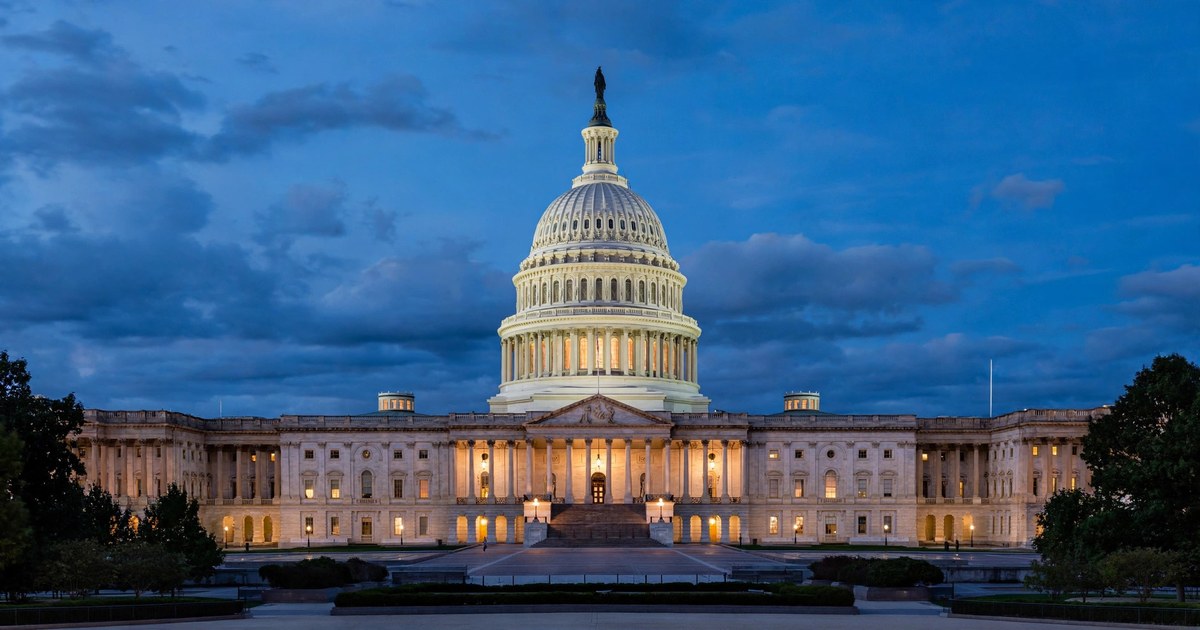
The history is the point. The first Black lawmaker was elected to the House more than 150 years ago, and the Capitol whose dome Jeffries would preside over was built in part by enslaved African Americans. The speakership is also the only leadership post in Congress mandated by the Constitution, and the second in line to the presidency. Jeffries would be the first Speaker from New York City: only two New Yorkers have held the job before him, John W. Taylor in the 1820s and Theodore Pomeroy, for a single day, in 1869. What happens next is procedural but decisive: the full House votes on 3 January 2027, and if Jeffries wins the 218 votes he needs, the gavel passes to him that day. Watch whether every Democrat holds the line, what the first bills are — costs and healthcare are the stated priorities — and how the seven progressives who voted no in the caucus handle the floor vote. For the broader picture of what a Democratic House means, see what happens next after the 2026 midterms.
Sources: CNN, Associated Press, Reuters, The Wall Street Journal, USA Today, NPR, The Times, House of Representatives (jeffries.house.gov), November 2026.