
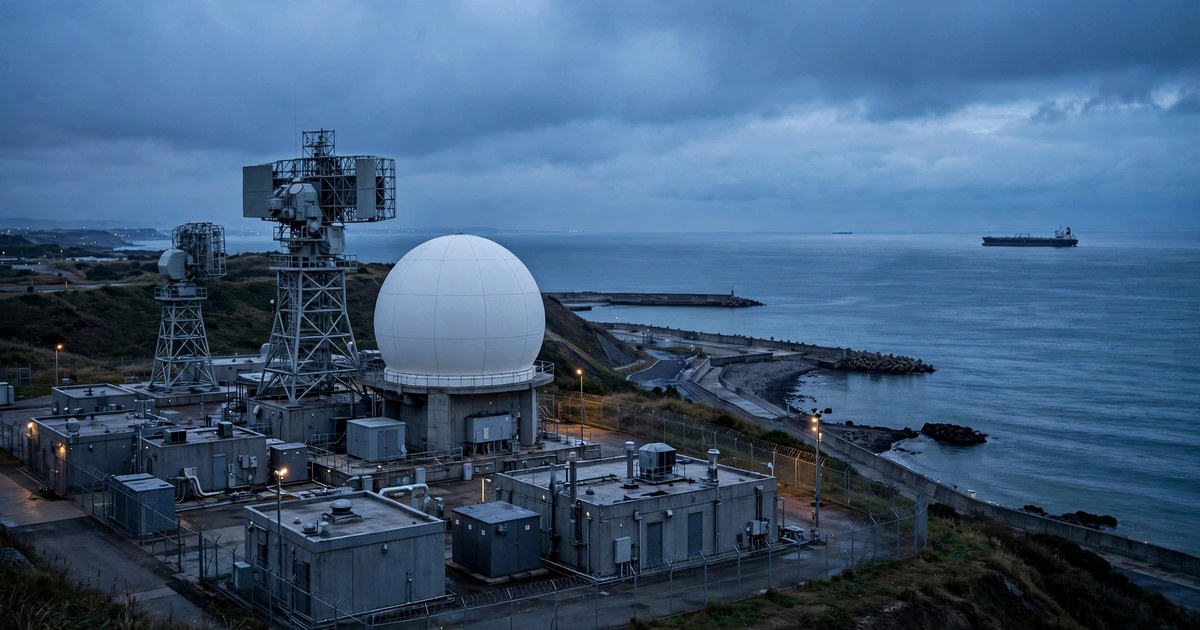
Iran's Revolutionary Guard said on Friday, 13 November 2026, that it had destroyed a United States early-warning radar in Bahrain, in what it described as retaliation for an air attack on a telecommunications tower in the southern Iranian port of Sirik. The Iran Bahrain radar claim is the latest turn in a confrontation that has been running all year — but it is, for now, only a claim. The Associated Press and Reuters both reported that they could not independently verify it, and neither the United States nor Bahrain had commented on it by Friday afternoon. If it is confirmed, it would be the first Iranian strike on American military assets in a Gulf country since early September, and it arrived alongside a fresh round of tanker incidents in the Strait of Hormuz.
The Iran Bahrain radar claim: what was actually said
Iran's official IRNA news agency carried a statement from the Islamic Revolutionary Guard Corps saying its Aerospace Force had "targeted and destroyed" the American radar system a few hours earlier. The semi-official Tasnim news agency carried the same warning, and the IRGC-affiliated Fars news agency said the Aerospace Force had destroyed the radar equipment. The statement called the strike a serious warning to the United States to cease its strikes, and the Guard warned that any repeated attacks would trigger an unlimited confrontation.
What the statement did not do is provide anything that would let an outsider check it. It gave no precise location for the radar, no weapon used, no damage assessment and no casualties. Al Jazeera reported the claim while noting that neither Washington nor Manama had confirmed it, and the Associated Press reported that US Central Command and Bahrain's Information Ministry did not immediately respond to requests for comment.
The Guard also widened the warning beyond the military. It said companies working with the United States over oil shipments through the Strait of Hormuz would face tougher penalties, a threat aimed at the tanker operators, charterers and insurers who keep Gulf oil moving.
The Sirik strike that came first
The claim only makes sense in sequence. Late on Thursday, 12 November, IRNA reported that Sirik, a port city in Hormozgan province near the Strait of Hormuz, had come under what it called an "enemy attack". The target, according to the Guard's statement, was a telecommunications tower — some reports describe it as a pole — at the port. IRNA did not identify the attacker, specify the damage, or report casualties.
The United States has not claimed the Sirik strike. That silence fits the pattern of recent weeks: President Donald Trump has confirmed that some of the strikes hitting Iran in recent weeks were launched by the United States, and the Axios correspondent Barak Ravid, who is close to the president, has confirmed the same. When US forces struck Qeshm Island, also in Hormozgan province, on 2 November, officials confirmed it only anonymously, calling it self-defence.
Trump added a separate warning on Thursday, telling the Salem News Channel host Hugh Hewitt that Iran would face severe consequences if it killed a senior US official. The warning followed reported threats that led to the Treasury Secretary, Scott Bessent, being moved to a military base.
Why Bahrain and the US Fifth Fleet matter
Bahrain is not a random target. The island kingdom hosts the headquarters of the US Navy's Fifth Fleet in Manama, at Naval Support Activity Bahrain, the hub from which American naval operations across the Middle East are directed. Any strike there is a direct hit on American military infrastructure in the Gulf, not a proxy fight.
It has happened before. During the air war that began in February 2026, Iran targeted US bases in neighbouring Arab nations, including Bahrain, in retaliation for American strikes. The enclosures protecting US radar systems at Naval Support Activity Bahrain were destroyed within the first two days of that war. The difference now is that the February war has given way to months of shadow strikes, and this is the first time since early September that Iran has claimed a direct hit on American military assets in a Gulf country.
Four tankers hit in the Strait of Hormuz
The radar claim did not arrive alone. Iran's military said four oil tankers had been hit by explosions in the Strait of Hormuz on Wednesday and Thursday, after the vessels ignored warnings and used a route Tehran calls unauthorised. Iranian state media said two supertankers had struck naval mines and were carrying more than four million barrels of oil between them. Reuters reported that it could not independently verify the Iranian account.
The Guard added a separate claim on Friday: a liquefied petroleum gas tanker struck a mine while trying to sail through the strait, causing an explosion. That claim, too, could not be independently verified, and the United Kingdom Maritime Trade Operations agency, which monitors incidents at sea, had no immediate report of it.
One incident from the same week is confirmed. UKMTO said a commercial vessel was struck by an unidentified projectile about 14 nautical miles northwest of Ras Al Khaimah in the United Arab Emirates on Wednesday, while leaving the strait. The hit caused a fire in the ship's engine room and the crew was evacuated.
The pattern behind these incidents is now months long. Tankers were hit by mines in the strait earlier in November, and four tankers were reported hit in October — part of a run that included an Iranian claim of seven tankers struck in October. A joint UKMTO update put confirmed maritime incidents at 177 since 1 March, with five recorded since the previous report through 8 November. Independent monitoring groups counted 37 ship attacks in October and at least 10 in the first 10 days of November. Talks in Doha earlier in November aimed at reopening the strait have not stopped the incidents.
What is verified and what is only a claim
The distinction matters more than the headlines. Verified: the Revolutionary Guard made the claim, and Iranian state media carried it. Sirik was reported hit late on Thursday. A vessel was hit by a projectile near Ras Al Khaimah on Wednesday, with its crew evacuated. Bahrain hosts the Fifth Fleet. Maritime incidents in the region now number 177 confirmed since March.
Claimed, but not verified: that a US radar in Bahrain was destroyed; that a gas tanker struck a mine on Friday; that four oil tankers were hit by explosions on Wednesday and Thursday; and that the United States carried out the Sirik strike. Until the United States, Bahrain or an independent monitor confirms the radar damage, the reported destruction remains an Iranian military claim rather than an established fact.
Why the Iran Bahrain radar claim matters for oil and shipping
The warning to companies matters most for oil. Any hint that tanker operators, charterers or insurers will step back from Hormuz could tighten flows that are still below pre-war levels and push freight and war-risk insurance costs higher. Brent and WTI crude fell about 7% this week, but a confirmed strike on a US installation in a Gulf state would reprice the risk in the world's most important oil chokepoint overnight.
For shipping, the week has already been bad: the confirmed projectile strike off Ras Al Khaimah, the claimed mine strikes, and now a claimed attack on the base that is supposed to protect the lane. The Fifth Fleet's job is to keep that lane open. A radar that watches it is part of that job, which is why the claim, verified or not, is designed to be noticed.
What happens next
Three things will settle how serious this is. First, whether the United States or Bahrain confirms or denies any damage — silence so far is not confirmation either way. Second, whether UKMTO or another independent monitor reports the claimed tanker incidents. And third, whether the tit-for-tat stops at statements or produces another strike. The Guard has said repeated attacks will bring an unlimited confrontation. The next update from US Central Command, or the next incident report from the strait, will show whether that was rhetoric or a timetable.