
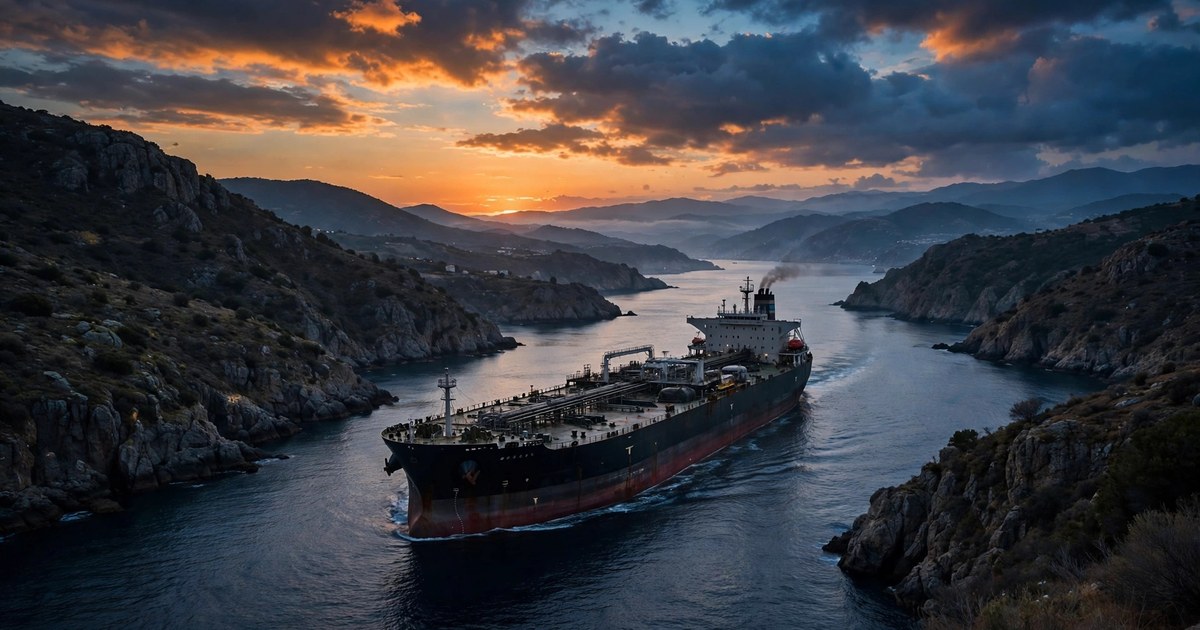
Oil prices jumped $3 a barrel on Thursday 12 November 2026, with Brent crude settling at $95.82 — up $3.06, or 3.3% — after a day in which Yemen's Houthis claimed attacks on three Saudi energy sites and Iran said four oil tankers had been hit by explosions in the Strait of Hormuz. The oil prices jump reversed an early sell-off and came despite a bigger-than-expected rise in US crude stockpiles, a sign that traders were pricing in the risk of supply disruption rather than the barrels already sitting in storage. US West Texas Intermediate crude closed at $88.74, up $2.21, or 2.6%. Here is what moved the market, what is confirmed and what is only claimed, and what the jump means for fuel prices in the weeks ahead.
Why Did Oil Prices Jump on 12 November 2026?
Three things landed on the same trading day, and together they put a war premium back into the price of a barrel. First, Yemen's Iran-aligned Houthis said they had attacked a pumping station on Saudi Arabia's East-West oil pipeline, an oil facility in the Red Sea city of Yanbu, and a Saudi Aramco building in the capital, Riyadh. Second, Iran's military said four oil tankers had been hit by explosions in the Strait of Hormuz after ignoring its warnings — an account that could not be immediately verified. Third, US President Donald Trump said on Truth Social that the United States does not need a deal with Iran, a marked shift from his earlier push for a diplomatic resolution. Reuters, which reported the day's trading, said crude had sold off early and then rebounded sharply as each of these developments reached the market.
The scale of the move stood out even against a volatile year. Brent's $3.06 gain was the kind of single-day jump that usually needs a confirmed supply outage, yet no confirmed outage was reported on Thursday: Saudi Arabia confirmed no damage at any of the three sites the Houthis named, and Iran disclosed no names, flags, owners or casualty figures for the tankers. What traders bought was the risk that the next attack would not miss — and the knowledge that the waterway at the centre of it all, the Strait of Hormuz, normally carries about a fifth of the world's crude oil.
What the Houthis Claimed in Saudi Arabia
The Houthi claims marked a sharp escalation in a campaign that has been running for weeks. The group said it had hit three targets in one day: a pumping station serving the East-West pipeline, which carries Saudi crude to Red Sea ports and bypasses the Strait of Hormuz; an oil facility at Yanbu, a key Red Sea export hub; and an Aramco building in Riyadh. There was no immediate Saudi confirmation of damage or disruption at any of the three sites, and the Saudi-led coalition fighting the Houthis said it had intercepted and destroyed two drones launched by the group — one in the Riyadh region and another in the kingdom's oil-rich Eastern Province.
The claims did not come out of nowhere. The East-West pipeline had already been hit in the Medina region on Monday 9 November, when the Saudi energy ministry confirmed an attack had caused a limited fire. Aramco has been pumping about 4 million barrels a day of exports through the pipeline in recent months to replace volumes unable to exit the Strait of Hormuz, so any threat to it matters directly to global supply. Debris from two intercepted Houthi ballistic missiles had also fallen in the Mecca region the previous day, Saudi state media said, citing the Saudi Civil Defense authority. Saudi Arabia is now pressing the European Union to label the Houthi movement a terrorist organisation, Reuters reported. Our earlier report on the Houthi attack on the Aramco tower in Riyadh sets out how the campaign against Saudi energy targets began.
Four Tankers Hit in the Strait of Hormuz, Iran Says
The tanker incidents came in two waves, according to Iranian statements carried by the country's state media. The Islamic Revolutionary Guard Corps Navy said two supertankers, carrying a combined total of more than 4 million barrels of oil, suffered massive explosions on Wednesday night and were disabled after ignoring repeated warnings against using what Tehran calls an unauthorised southern shipping route through the strait. The Iranian Army Navy then said two more tankers caught fire on Thursday afternoon after striking a naval mine in a prohibited area east of the strait, having entered it despite warnings and after switching off their radar systems. Both statements said the vessels were left burning, and neither named the ships, their flags, their owners, or their crews.
Reuters, which carried the Iranian accounts, stressed that it could not independently verify them — and that caveat matters, because Tehran has made a series of similar announcements in recent weeks. On 5 November the Revolutionary Guards reported that two oil tankers and a tugboat had caught fire in separate incidents in the strait, and on 8 November it reported further vessels hit by mines. What is independently documented is the scale of the campaign: the International Maritime Organization said on Wednesday that it had verified more than 130 attacks on commercial vessels in the Strait of Hormuz since the war began on 28 February, when the United States and Israel began strikes on Iran. Iranian forces have maintained that only transit routes they authorise — confined to designated northern corridors — are safe, while the United States has imposed a naval blockade on Iranian ports and helped tankers travel the strait. Our report on the Strait of Hormuz tankers hit by mines covers the previous incident in this series.
Why Did Oil Prices Jump When US Stockpiles Grew?
On the face of it, Thursday's numbers pointed the other way. The US Energy Information Administration reported an unexpected 4.7 million barrel increase in US crude stockpiles last week, against market expectations of a small draw, and OPEC+ data showed production rose in October, with Saudi output up sharply. Early in the session, that bearish data did push oil prices down. But traders shrugged it off once the attacks and the tanker reports landed, and the rally held into the close — a reminder that oil prices are set by the barrels that might not arrive, not only by the barrels already stored. The Brent oil price picture at the start of November shows how far the market has moved since OPEC+ met on 1 November.
Trump's remark added to the premium. Saying the United States does not need a deal with Iran, and that Washington already holds "hundreds of billions of dollars" of Iranian money and "their Strait", he signalled that the confrontation — and with it the disruption to Gulf shipping — could run on. The market's verdict was still measured: for the week, both Brent and WTI were still down about 2.5% despite Thursday's jump, and OCBC maintained its year-end Brent forecast at $100 a barrel, citing tanker attacks, longer shipping routes and limited vessel availability as factors keeping delivered crude costs elevated.
What the Oil Price Jump Means for Petrol and Diesel
A $3 rise in Brent does not reach the petrol pump overnight, but it sets the direction. Crude is the largest single cost in a litre of fuel, and sustained prices near $96 a barrel feed through to wholesale petrol and diesel within days, then to retail prices over the following one to two weeks — sooner where taxes are low and the pass-through is direct. For big importers the effect is immediate in a different way: India, which imports most of its crude, saw its equity benchmarks open flat on Friday as the oil surge countered strong foreign inflows, Reuters reported, with Brent trading around $95.23 in early Asian trade. Airlines, hauliers and shipping lines face the same arithmetic, and their fuel surcharges are where households eventually feel it.
The wider risk is that the premium keeps building. The Strait of Hormuz carried nearly a fifth of the world's crude before the conflict, and every tanker that burns or diverts adds days and dollars to the journey for the oil that still moves. If the attacks stay at the level of claims and interceptions, the $3 jump may fade as quickly as it came; if a strike disables a major facility or closes a shipping lane for days, the next move could be larger. That is why traders watch the Saudi damage reports and the tanker casualty lists more closely than the daily price itself.
What Happens Next
Two releases land on Friday 13 November that will shape the next move: the International Energy Agency publishes its monthly oil-market report, and the United States releases October producer price data. Both will be read for signs of whether the oil prices jump is feeding into broader inflation. Beyond the data, four questions decide where oil goes from here. First, will Saudi Arabia confirm or deny damage at the East-West pipeline, Yanbu or the Aramco building in Riyadh? Second, will the names, flags and crews of the four tankers emerge, and with them any casualty figures? Third, will the Houthis follow Thursday's three claims with more strikes, and will the coalition's interceptions keep holding? And fourth, does Trump's "no deal needed" line harden into policy, or does diplomacy reopen? The answers will show up in oil prices before they show up anywhere else.
Sources: Reuters (via Euronext); The Wall Street Journal; Press TV; AGBI; FXEmpire; US Energy Information Administration.