
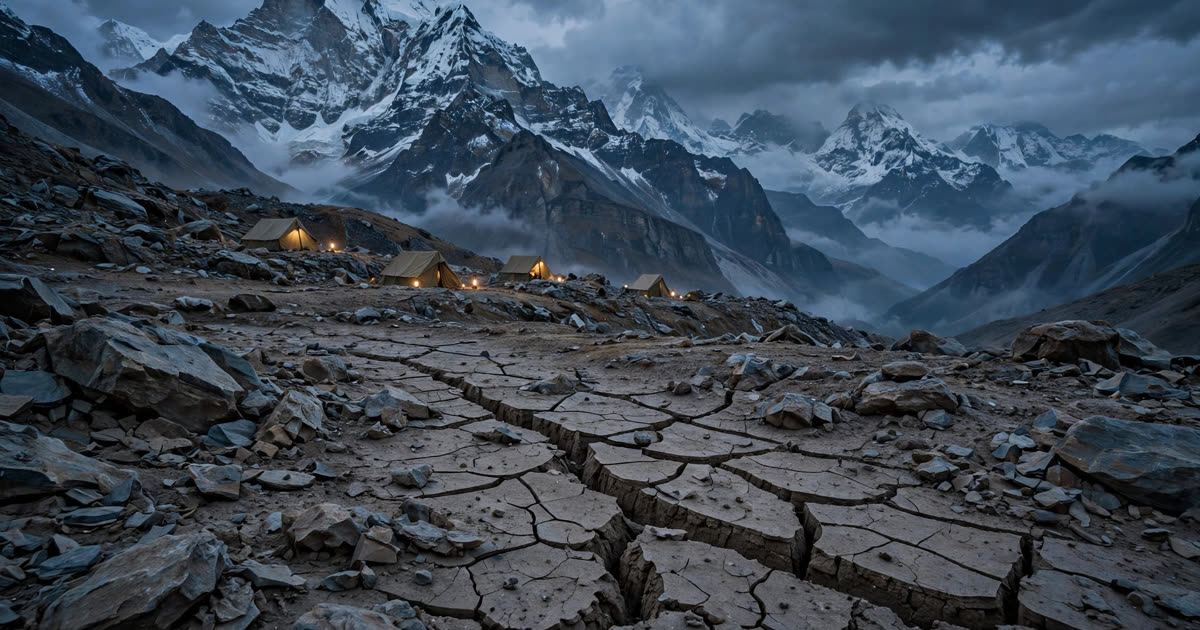
A powerful magnitude 7 earthquake struck a remote, high-altitude county in Tibet's Nagqu region late on Thursday, October 22, 2026, killing at least 16 people and injuring 32 others, according to Chinese state media citing the Nagqu City emergency management bureau. The tremor, which hit at around 10:33 p.m. local time, is the strongest earthquake to hit China since January 2024, and has triggered a massive rescue and relief operation at nearly 5,000 metres above sea level.
What happened in Tibet
The earthquake struck at about 10:33 p.m. on Thursday (1433 GMT), with its epicentre in a sparsely populated, high-altitude county in Nagqu, northern Tibet, at a depth of just 10 kilometres (6.2 miles), the China Earthquake Networks Center (CENC) reported. State news agency Xinhua, citing the Nagqu City emergency management bureau, said 16 people were killed and 32 injured — of whom 11 were in serious condition and 21 sustained minor injuries as of 2:25 a.m. on Friday. Casualty figures may evolve as search operations continue in villages closest to the epicentre.
Local authorities found at least two injured people in a village near the epicentre, and some houses in the villages closest to the tremor showed cracks, the state broadcaster said. Videos released by local officially run media showed people leaving their homes and seeking shelter outside or in their cars parked on the street. One resident reported being awakened by the strong quake and hearing the house "squeaking" in the tremor.
Data from CENC showed the average elevation within 5 kilometres of the epicentre is about 4,864 metres (15,960 feet) — high enough that freezing overnight temperatures are compounding the danger for survivors and rescuers alike. The quake was clearly felt in the local area, and the epicentre was around 400 kilometres from the Tibetan capital of Lhasa. A string of smaller tremors of around magnitude 3 and 4 have been recorded in surrounding regions following the main shock.
Overnight rescue operation at 4,864 metres
Rescue forces mobilised through the night. The Western Theater Command's joint command centre activated its emergency mechanism immediately after the quake, verified damage, assessed terrain and weather, and directed air power to begin reconnaissance, according to the command's own account published by China News Service. A Western Theater Command Air Force unit launched an unmanned aircraft at about midnight to survey the quake zone and send back live imagery, while the Tibet Military District and the Armed Police Tibet Corps moved more than 300 officers and soldiers with over 20 vehicles overnight by road.
By about 3 a.m., troops from the Nagqu Military Sub-district had reached Zharuogai village in Maru township, surveyed the collapsed houses, set up tents on the spot and opened a temporary meal point, the command's account said. The Armed Police Nagqu Detachment arrived carrying breaking, search-and-rescue, medical and cold-weather equipment, and began clearing access routes. Local county authorities put more than 1,600 people into the effort, and 347 personnel from the regional fire and rescue corps were deployed, with an advance team from the Lhasa fire and rescue mobile detachment carrying life-detection equipment.
The relief manifest released by Nagqu's publicity department on Friday morning underlines how unforgiving the conditions are: as of 4:30 a.m., supplies allocated at national, regional, city and county level had arrived in the disaster area, including 1,000 prefabricated housing units, 3,239 tents, 2,821 folding beds, 4,280 quilts, 200 stoves, 100 mattresses, 2,000 sets of cotton clothing, 1,760 military overcoats, four generators, 1,000 hand-crank and solar-powered flashlights and 1,000 head-mounted outdoor lights.
Why Tibet is so earthquake-prone
The Tibetan Plateau sits at the collision zone between the Indian and Eurasian tectonic plates — one of the most seismically active regions on Earth. The Indian plate is driving northward into Eurasia at roughly 5 centimetres a year, crumpling the crust upward into the Himalayas and the world's highest plateau. That constant tectonic stress makes large, shallow earthquakes like this one a recurring hazard across Tibet and the wider Himalayan region. The shallow 10-kilometre depth of Thursday's quake helps explain why it caused significant damage despite striking a sparsely populated area: shallower quakes transmit more of their energy to the surface.
Thursday's tremor is the strongest to hit China since January 2024, and it follows a history of devastating quakes in the region. In 2010, a magnitude 7.1 tremor struck Yushu in neighbouring Qinghai province, killing at least 2,698 people and leaving nearly 300 missing, Reuters reported — a reminder of the destructive potential of plateau earthquakes. The remoteness that kept this week's toll lower is the same remoteness that makes rescue work so difficult: high altitude, freezing temperatures, poor roads and thin air for both responders and survivors.
Scientists will now watch the aftershock sequence closely. CENC has already recorded tremors around magnitude 3 and 4 in surrounding regions, and aftershocks can continue for days or weeks — and can themselves topple buildings weakened by the main shock. For context on how recent major quakes have played out elsewhere, see our coverage of the magnitude 7 Kamchatka earthquake and the Panama earthquake earlier this year.
What happens next
With freezing late-October nights at nearly 5,000 metres, the coming 72 hours are critical: survivors in collapsed homes must be found quickly, and the displaced need warm shelter before exposure takes its toll. The supplies already flowing into the quake zone — tents, stoves, quilts and overcoats — suggest authorities are prioritising keeping people warm as the search continues. Disaster-response teams will now assess structural damage across villages in the epicentre county, while seismologists monitor the aftershock sequence for any larger follow-on tremors.
The quake, trending per news coverage across international outlets including Reuters and the BBC, is the latest reminder of the compounding risks in high-altitude disaster zones — where altitude, cold and remoteness turn a single night's tremor into a multi-day survival operation. See how extreme conditions complicate other recent disaster responses in our report on the Storm Austen floods in southern France. The toll remains preliminary, and we will update this story as official figures are revised.
Sources: Reuters, Xinhua, BBC, China News Service, Nagqu City publicity department.