
A US Army major who survived the deadliest attack on American troops in the war with Iran has told Congress that his commanders ignored warnings about the base's defences before the strike. The Stephen Ramsbottom whistleblower complaint, filed on Friday 13 November 2026 with the House and Senate Armed Services Committees, says the operations centre at Port Shuaiba in Kuwait had no protection against drones, no doctor, no fixed aid station and only one ambulance when an Iranian drone hit it on 1 March 2026 and killed six soldiers. Ramsbottom, who was wounded in the attack, also filed a confidential complaint with the Department of Defense Office of Inspector General, and his lawyers are calling for an independent investigation. The case was first reported by CBS News and examined in an eight-month investigation by its programme 60 Minutes. It directly challenges what the Pentagon said about the base the day after the attack — and it arrives as Congress prepares to investigate the Trump administration's handling of the war.
Here is what the complaint alleges, what happened at Port Shuaiba that morning, who the six soldiers were, and what happens next.
What the Stephen Ramsbottom whistleblower complaint alleges
Ramsbottom says he raised the lack of protection from aerial attacks with his superiors in various meetings before the strike, and was told: "We don't have to worry about protection." That account comes from CNN, which obtained a copy of the disclosure. Military leaders later said they would try to get a counter-drone system sent to the site, but Ramsbottom told CBS: "It never arrived at Shuaiba and we don't know if it was ever even ordered to or requested."
The complaint describes a post that was prepared for the wrong kind of attack. Concrete barriers ringed the site, and a source familiar with it told CNN those walls would stop a car bomb but offered nothing against drones or missiles. The strike itself came with no warning. CNN reported that there were no sirens to alert troops to evacuate or get into a bunker. Ramsbottom told 60 Minutes that some people at the post described the operations centre as a "trailer park."
Medical cover was just as thin. According to the complaint, the site "had no physician, no fixed aid station, and only one ambulance" when the drone hit. Ramsbottom had raised these concerns in the months before the war, and he was not the only one worried. 60 Minutes reported that six soldiers told the programme they had seen US intelligence before the war started that put Port Shuaiba on an Iranian list of targets. "I saw those reports, there was definitely an X where we were," Ramsbottom said.
Ramsbottom does not spare himself. He was the 103rd's deputy chief of operations and a combat veteran, and he told 60 Minutes the attack was "a tactical failure by the Army, our leadership, and myself." He added: "We just did not plan this well, and this needs to be a lesson that we learn." His counsel, Andrew P. Bakaj of Compass Rose Legal Group, said Ramsbottom is prepared to meet investigators and committee staff in a classified setting, and called on the Defense Department's Inspector General to open an independent investigation into the decisions around the attack and the Army's reviews since. The Pentagon has declined to comment on the allegations, according to CBS, and CNN said it had reached out to the congressional committees and the Pentagon for comment.
What happened at Port Shuaiba on 1 March 2026
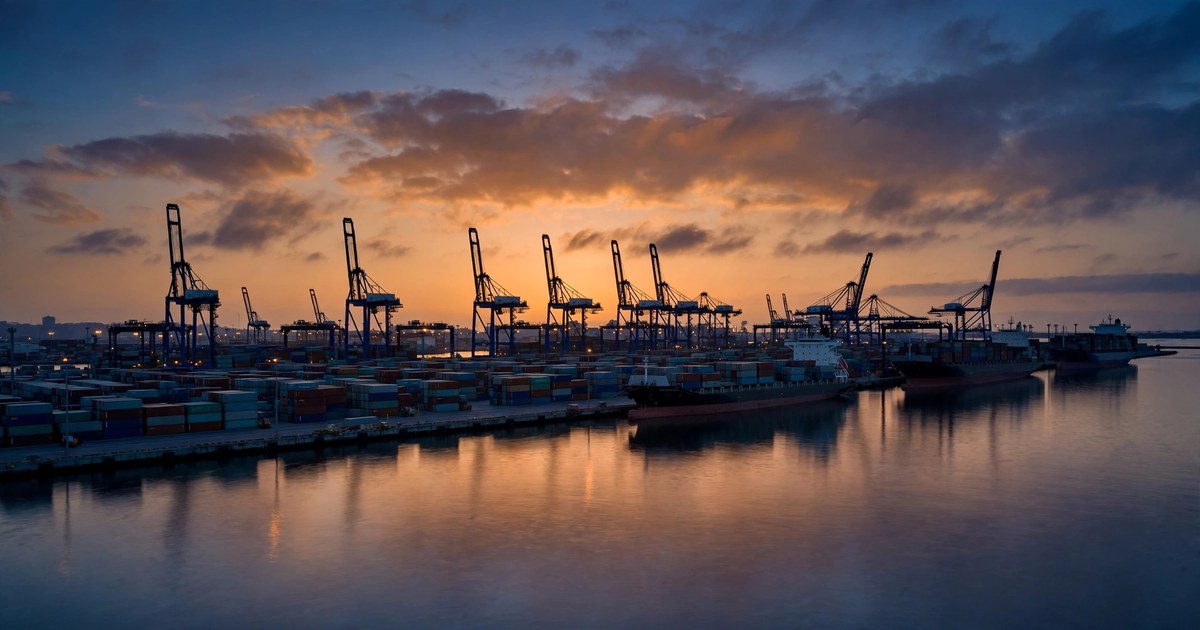
Port Shuaiba is a commercial port about 45 kilometres south of Kuwait City that the US Army uses to move cargo for its forces in the region. 60 Minutes put it about 65 miles from Iran. At about 9 a.m. local time on 1 March 2026, in the first 24 hours of the war with Iran, a single Iranian one-way attack drone flew low and slow past the air defences and struck the roof of the operations centre.
The strike killed six US Army Reserve soldiers of the 103rd Expeditionary Sustainment Command, an Army Reserve unit based in Des Moines, Iowa. At least 30 more were wounded, including Ramsbottom. The six were the first US service members killed in the conflict, and the attack remains the deadliest single strike on American troops in the war. As of 13 November 2026, Pentagon casualty records listed 23 US service members dead in the Iran war and more than 800 wounded, with the Pentagon putting the war's price tag at $47 billion, according to 60 Minutes.
The attack came at a moment of maximum exposure. 60 Minutes reported that in the weeks leading up to the war, the Pentagon moved 90 percent of its ground forces out of Kuwait and away from Iran, fearing retaliatory strikes — but about 70 members of the 103rd, which handles logistics, were sent closer to the threat, to the small outpost at Port Shuaiba. The night the United States and Israel killed Iran's supreme leader in a joint strike, Iranian quadcopter drones could be seen circling above the port.
The day after the attack, Defense Secretary Pete Hegseth insisted the troops there were well protected. At a press conference on 2 March, he acknowledged that "one" projectile had made it through, calling it a "squirter" that happened to hit "a tactical operation center that was, that was fortified." US Army Central investigated the attack and briefed the families of the dead on its findings, but the report has not been made public. 60 Minutes reported that the Army finished its investigation in June. Iran has since struck US positions elsewhere in the Gulf, including a drone attack on a US base in Bahrain.
The six soldiers killed at Port Shuaiba
All six belonged to the 103rd Expeditionary Sustainment Command and were serving abroad with the 1st Theater Sustainment Command. They were:
Major Jeffrey R. O'Brien, 45, of Indianola, Iowa; Chief Warrant Officer 3 Robert Marzan, 54, of Sacramento, California; Captain Cody A. Khork, 35, of Winter Haven, Florida; Sergeant First Class Nicole M. Amor, 39, of White Bear Lake, Minnesota; Sergeant First Class Noah L. Tietjens, 42, of Bellevue, Nebraska, who was promoted after his death to master sergeant; and Sergeant Declan J. Coady, 20, of West Des Moines, Iowa, who was promoted after his death from specialist to sergeant.
The six were brought home through Dover Air Force Base in Delaware, where President Donald Trump attended the dignified transfer ceremony. Their families have been pressing for answers ever since. Tietjens' widow Michelle and Marzan's widow Tina both spoke to 60 Minutes. Joey Amor, the husband of Nicole Amor, told the programme: "There are soldiers that are signing up now that are going to go. And they have to trust that what happened to my wife isn't gonna happen to them."
Why the Stephen Ramsbottom whistleblower case matters now
The Stephen Ramsbottom whistleblower complaint has been trending per news coverage since the 60 Minutes broadcast on Sunday 15 November, with CNN, CBS News and other outlets carrying the story — and it matters because it contradicts, in specific detail, what the Pentagon said in public at the time. Hegseth told reporters on 2 March that the troops were well protected. The complaint says the post had no defence against the one weapon that killed them, no doctor, and one ambulance. One of those two accounts is wrong, and the documents now in Congress will decide which.
Congress is already moving. Senator Richard Blumenthal, the top Democrat on the Senate's Permanent Subcommittee on Investigations, sent Hegseth a letter dated Sunday 15 November demanding that he appear at a classified briefing and provide "all force protection assessments" for the Shuaiba facility. CNN reported that Democrats are poised to launch wide-ranging investigations into the Trump administration and its handling of the Iran war when they take control of Congress in January — and the Shuaiba complaint, with a named witness and a paper trail, is the kind of case those investigations are built on.
There is also the question of the unpublished Army investigation. It was finished in June, the families have been briefed on its findings, and the public has seen none of it. Ramsbottom's complaint now puts the same questions to two bodies that cannot be ignored in the same way: the armed services committees of both houses of Congress and the Defense Department's own Inspector General.
What happens next
Three things are worth watching. First, whether Hegseth accepts Blumenthal's demand for a classified briefing and hands over the force protection assessments — and whether the Pentagon answers the substance of the complaint, having so far declined to comment. Second, whether the Inspector General opens the independent investigation Ramsbottom's lawyers have asked for, and whether the armed services committees call hearings while the complaint is fresh. Third, whether the Army's June investigation report is finally released, and what it says about who knew the post was on an Iranian target list.
The January change of control in Congress gives all of it a deadline. Until then, the facts on the record are these: six soldiers died at a post their own major says was left exposed, the warnings were raised and set aside, the promised counter-drone system never arrived, and the man making those claims is willing to say so to investigators under oath. That is why the Stephen Ramsbottom whistleblower complaint will not stay a one-day story.
Sources: CNN; CBS News and 60 Minutes; Compass Rose Legal Group; Wikipedia (2026 Port Shuaiba drone attack).