
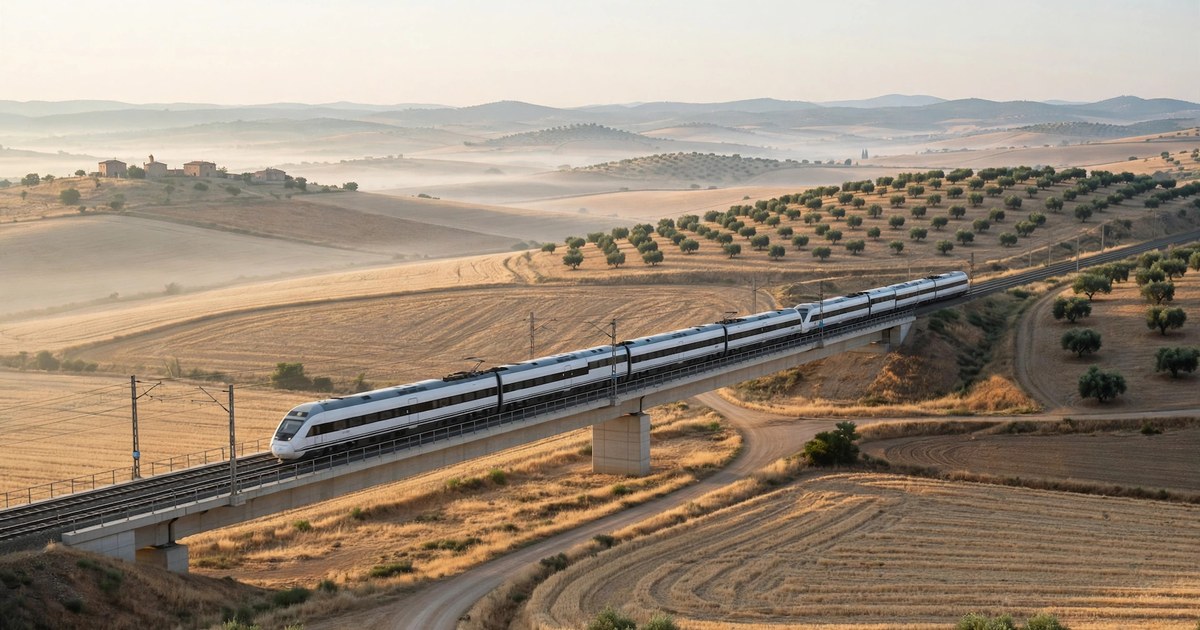
At least 68 people died in the Spain train crash 2026 on Wednesday morning, 28 October 2026, when a high-speed train ran into the rear of another high-speed train that had stopped on the line between Madrid and Seville. Two carriages derailed near the town of Urda in the province of Toledo, in the Castilla-La Mancha region south of Madrid. The Castilla-La Mancha regional government put the toll at no fewer than 68 and said the figure could still rise as rescuers searched the wreckage; dozens more were injured.
Update, 29 October 2026: Transport Minister Oscar Puente said a computer failure halted trains on the stretch, issuing a red signal, and that the control centre then allowed the Renfe train to resume without speed restrictions despite the signal — a decision he called 'inexplicable' and an erroneous breach of protocol. Prime Minister Pedro Sanchez declared three days of national mourning starting Thursday. The cause is still under investigation, and this account is the minister's explanation, not a final finding.
The crash, trending per news coverage across major international outlets on Wednesday morning, involved trains operated by Spain's state-owned Renfe and the private operator Iryo. Together the two trains were carrying 544 passengers. Spain's rail infrastructure manager, Adif, suspended high-speed traffic between Madrid, Ciudad Real and Andalusia, leaving travellers facing cancellations and long delays while the rescue operation continued.
The cause of the collision was not known in the first hours after the crash. Regional officials described a rear-end collision on a high-speed line in the same corridor where two trains operated by the same companies collided in January 2026, killing 45 people near Adamuz in Cordoba province. That earlier disaster is now an unavoidable part of the context for Wednesday's crash, and investigators will face immediate questions about what happened on this line, and why, nine months later, another serious collision occurred.
What Happened in the Spain Train Crash 2026 Near Urda?
According to the Castilla-La Mancha regional government, a Renfe AVE high-speed train travelling from Madrid towards Seville ran into the tail of an Iryo train that had stopped on the same track. Esther Padilla, spokeswoman for the regional government, told state broadcaster TVE that one train ran into the rear of the other while it was stopped, knocking two of its cars off the track. Adif, the state-owned infrastructure manager, described the incident in a message on X as a rear-end collision between two trains, and said traffic on the Madrid-Andalusia high-speed rail line had been suspended.
Emiliano Garcia-Page, president of the Castilla-La Mancha regional government, said the death toll had risen to 68. Esther Padilla, spokeswoman for the regional government, had confirmed 10 deaths in her first public account of the crash, adding that 'that number will surely rise'. Readers should treat any higher figure circulating in early social-media posts with caution unless it is confirmed by the regional government, Adif, Renfe or Iryo. The confirmed figure is now at least 68, and officials have warned it could rise further as rescue teams reach each carriage.
Footage broadcast by regional television in Castilla-La Mancha showed a derailed train with at least one carriage remaining on an elevated section of track, while twisted metal, broken panels and wreckage lay strewn across an embankment below the line. A passenger in one of the final carriages of the AVE service told Capital Radio that the train's body was "blown into the air" after a "very strong collision", according to reporting of the broadcast. Those first accounts underline how violent the impact was, even though the full sequence of events, including the speed of the Renfe train at the moment of impact, had not been officially established.
Spain Train Crash Today: Time, Place and the Madrid-Seville Line
The Spain train crash today happened shortly before 9am local time on Wednesday, 28 October 2026, at kilometre point 118 of the Madrid-Seville high-speed line, according to Adif. The collision occurred between the towns of Los Yébenes and Urda in Toledo province, an area of dry, open countryside in Castilla-La Mancha, south of Madrid. Adif put the time at 8.54am. Other early reports placed the crash at just after 9am local time, or 0800 GMT, a difference of minutes that reflects how quickly the first reports emerged rather than any dispute about the morning itself.
The Madrid-Seville line is one of Spain's busiest high-speed corridors, linking the capital with Andalusia in the south. It carries Renfe AVE services and Iryo services, the private operator majority-owned by Italy's Ferrovie dello Stato, on the same infrastructure managed by Adif. The crash site, between Mora, Orgaz and Urda according to Adif's account, is in a rural stretch of the line, which mattered for the rescue operation: emergency vehicles had to reach a remote location, and local mayors were asked to prepare facilities in nearby towns for survivors and the injured.
Urda is a small town in Toledo province, and its mayor, Manuel Galán, told TVE that passengers had been injured and that civil protection authorities had asked his town hall to prepare a sports pavilion to attend to passengers. Jesús Pérez, the mayor of neighbouring Los Yébenes, told the same broadcaster he had been told it was "something serious". The regional government raised its territorial emergency plan, known as Platecam, and its president, Emiliano García-Page, wrote on X that he was on his way to the crash site and requested assistance from the Military Emergencies Unit, according to early reporting.
The Two Trains: Renfe AVE and Iryo, and 544 Passengers on Board
The two trains in the Urda train crash were a Renfe service and an Iryo service, both heading in the same direction from Madrid towards Seville, according to the regional government's account to TVE. Renfe confirmed that its Madrid Puerta de Atocha to Seville Santa Justa service, scheduled to depart at 8am, was involved in the crash. The Iryo train was the train that had stopped on the track ahead of it when the Renfe train ran into its rear.
Padilla said 397 passengers were in the Renfe train and 147 passengers were in the Iryo train, a total of 544 people. That figure is important for understanding both the scale of the rescue operation and why officials expected the casualty toll to change. With two carriages derailed and wreckage down an embankment, emergency crews had to work carriage by carriage, checking for trapped passengers, while other passengers were moved to safety and treated at the scene or taken to hospital.
Renfe and Iryo are the two operators at the centre of this crash, and they were also the two operators involved in the January 2026 Adamuz crash. That does not, on its own, establish a cause for Wednesday's collision. The operators, Adif and the investigators will need to establish separately what happened near Urda: whether the Iryo train stopped because of a fault or a traffic problem on the line, what signalling and safety systems showed, and what the Renfe driver could see and do in the time available. El Pais reported that the Renfe train had stopped and slowed minutes earlier because of a traffic problem on the line, but the cause of the collision itself had not been established, and that report should be read as an early account, not a finding.
Emergency Response in Toledo: Helicopters, Firefighters and a Sports Hall
The emergency response to the Spain high-speed train crash brought firefighters from Alcázar de San Juan and Orgaz, Guardia Civil units, Red Cross teams and civil protection volunteers to the scene, along with three medical helicopters and two mobile intensive care units. The scale of the deployment reflected both the number of people involved and the difficulty of reaching and evacuating the derailed carriages, two of which fell down an embankment, according to the regional 112 emergency service.
Prime Minister Pedro Sánchez said on X that he was shocked by the serious train accident in Toledo, that he remained in constant contact with Transport Minister Óscar Puente and with García-Page, and that emergency services were working on the ground to assist those affected and ensure their safety, in coordination with all the administrations involved. He added: "My affection, solidarity, and support to all the victims and their families." Puente left an event in Madrid after learning of the crash, according to El Pais, and Sanchez's published agenda for the day was cleared. The opposition People's Party also cancelled all campaign events, a spokesperson said, as Spain absorbed news of a second major rail disaster in less than a year. For wider context on Spain's political calendar, the crash landed in the middle of an election period in which the main parties had been campaigning.
For families, the first hours after the crash were dominated by uncertainty. No official list of the dead or injured had been published in the first hours, and relatives faced the familiar, painful wait for news about individual passengers. In major rail disasters, identification and notification take time, particularly where carriages have derailed and passengers must be accounted for one by one. Anyone worried about a relative on either train should use the official channels published by Renfe, Iryo, Adif and the Castilla-La Mancha government, rather than relying on names or lists circulating on social media, which are frequently wrong in the early hours.
Madrid-Seville Rail Suspension: What Travellers Need to Know
Adif suspended traffic on the Madrid-Andalusia high-speed line after the rear-end collision, and the suspension affected services between Madrid, Ciudad Real and Andalusia. Renfe offered free changes and cancellations to passengers on the affected services, according to early reporting. Travellers due to travel between Madrid and Seville, Malaga, Cordoba, Ciudad Real or other stations on the line on Wednesday should check with Renfe or Iryo before travelling, and should expect cancellations, delays and replacement arrangements to change through the day as the line remains closed for rescue and investigation work.
The suspension matters beyond the two trains involved because the Madrid-Seville line is a trunk route. When a high-speed line closes, the effects spread to connecting services and to stations far from the crash site, as trains are held, turned back or cancelled and passengers are rebooked. Wednesday's closure came in the morning peak for intercity travel, when the 8am Madrid to Seville service and other morning departures would have been carrying commuters, business travellers and tourists. Passengers with tickets for Wednesday should keep their booking details, keep receipts for any alternative travel or accommodation they are forced to arrange, and follow the operator's instructions on refunds and rebooking, since the exact terms can differ between Renfe and Iryo.
The line will not reopen until rescue work is complete, the wreckage has been examined and cleared, and Adif is satisfied the track, signalling and overhead equipment are safe. That process cannot be rushed, and no reopening time had been announced in the first hours. Travellers should not assume an afternoon or evening resumption. The safest approach on Wednesday was to treat the Madrid-Andalusia high-speed line as closed until Adif or the operators announced otherwise, and to check official service updates rather than unofficial social-media claims about reopening.
The Spain High-Speed Train Crash and the January Adamuz Disaster
Wednesday's crash is the second high-speed rail disaster on the same corridor in ten months, and the comparison with January will shape public debate in the days ahead. On 18 January 2026, an Iryo service running from Malaga to Madrid derailed near Adamuz in Cordoba province and collided with a Renfe Alvia service travelling from Madrid to Huelva. The Associated Press reported that 45 people died in that crash, which it described as the deadliest in Spain since a 2013 crash that killed 80 people. Reuters, in its reporting of Wednesday's crash, put the January toll at 46. The small difference in the reported January toll reflects the way casualty figures were revised as that rescue continued, and it is a reminder to rely on the final official toll for Adamuz rather than the first reports of either crash.
The January crash was the first crash with deaths on Spain's high-speed network since the first line opened in 1992, according to reporting of the Adamuz investigation. Spain's rail accident investigation body, the CIAF, found afterwards that a fracture in the rail had been present before the train left the track, according to reporting of its findings. That finding, and the debate that followed about investment in railway maintenance, triggered a wider argument about the condition of the network, and government sources told El Pais they feared Wednesday's accident could be worse than Adamuz. That fear, reported early on Wednesday, was a government source's concern, not a confirmed casualty figure, and it should not be quoted as a toll.
The fact that both crashes involved the same two operators, on the same Madrid-Andalusia corridor, will inevitably raise questions about maintenance, signalling, safety systems and oversight. Those questions are legitimate, but they cannot be answered from the first hours of reporting alone. The Adamuz investigation took months and rested on technical evidence about the track, the trains and the sequence of events. The Urda investigation will need the same care. What can be said now is that Spain's high-speed network, long regarded as one of the most extensive in Europe, has suffered two fatal disasters in less than a year, after decades without a fatal high-speed crash, and that record will be central to the political and technical debate that follows. For context on how Spain has handled other recent emergencies, see reporting of the deadly storm in eastern Spain in October 2026, which also tested regional emergency services.
What Caused the Urda Train Crash? What Investigators Will Examine
The honest answer, in the first hours after the Spain train crash 2026, is that the cause was not known. Padilla told TVE the cause was not known, and Adif's first statement described what happened, a rear-end collision, without explaining why. Investigators will need to establish a chain of facts: why the Iryo train was stopped on the track, what the signalling system showed, whether any fault, obstruction or traffic problem had been reported on the line, what speed the Renfe train was travelling at, when its driver became aware of the stopped train ahead, and whether automatic safety systems intervened.
Three lines of inquiry are likely, based on how rail investigations normally proceed, but none should be treated as a finding until the investigators report. First, the condition of the trains themselves, including brakes, onboard safety systems and any fault reported by either driver before the crash. Second, the condition of the infrastructure, including the track, signalling and overhead power equipment on that stretch of the Madrid-Seville line, and any maintenance or inspection history for kilometre point 118. Third, the operational picture: the timetable, the spacing between the two trains, the instructions given to both drivers, and the communications between the drivers and the control centre. Each line of inquiry requires data from the trains, the signalling system and the control centre, and each will be examined by the CIAF and, where relevant, by the judicial authorities.
Speculation about a single cause in the first hours, whether about a driver, a fault or a maintenance failure, would be unfair and unreliable. Rail crashes of this kind rarely have a single, simple cause, and the January Adamuz investigation showed how technical evidence can change the picture over time. What matters in the first days is that the wreckage is preserved, the data recorders are recovered, and the investigation is allowed to work without political pressure to produce an instant explanation. The Transport Ministry, Adif, Renfe and Iryo will all face questions in the Spanish parliament and in the media, and the families of the dead and injured will be entitled to a full, public account.
What Happens Next After the Spain Train Crash 2026?
In the immediate term, the rescue operation comes first. Firefighters and emergency crews will continue working through the wreckage, hospitals in Castilla-La Mancha and neighbouring regions will treat the injured, and the regional government will coordinate support for survivors and families, including the reception centre prepared in Urda. The death toll will be updated only as bodies are recovered and identified, which is why the confirmed figure of at least 68 dead could still change, and why early reports should be checked against official updates.
Next, the line will remain closed while investigators examine the scene. Adif, Renfe and Iryo will publish service updates, and passengers will be rebooked or refunded under the operators' arrangements. The Spanish government will face questions about rail safety, maintenance spending and oversight, and about whether lessons from Adamuz were acted on in full. A period of national mourning, a parliamentary debate and an independent investigation are all possible in the coming days, depending on the final toll and the first findings, but none had been announced in the first hours after the crash.
For readers following the story, the most reliable updates will come from the Castilla-La Mancha government, Adif, Renfe, Iryo and the Transport Ministry, and from the wire agencies and broadcasters reporting their statements. This article will be superseded by official updates as the toll, the injured figures and the investigation develop. The key facts established on Wednesday morning remain: at least 68 people died near Urda, Toledo, when a Renfe high-speed train hit a stopped Iryo train on the Madrid-Seville line, 544 passengers were on board the two trains, and the transport minister's account of the cause is under investigation. The Spain weather and travel guidance published on this site is not a substitute for live rail service updates, which travellers should check directly with the operators before any journey on the affected line.
Sources: Associated Press reporting via NPR/WESA, 28 October 2026; Reuters reporting of the Adif statement and casualty figures, 28 October 2026; BBC News live reporting, 28 October 2026; El Pais reporting via The Times live coverage, 28 October 2026; statements by Esther Padilla, spokeswoman for the Castilla-La Mancha regional government, to TVE, 28 October 2026; Adif statement on X, 28 October 2026; statements by Prime Minister Pedro Sánchez and the mayors of Urda and Los Yébenes, 28 October 2026. The confirmed death toll of at least 68 is the Castilla-La Mancha regional government's figure as reported on 29 October 2026; at least 10 was the first official figure reported on 28 October 2026. The January Adamuz figures are as reported by the Associated Press and Reuters in their coverage of the 28 October crash.