
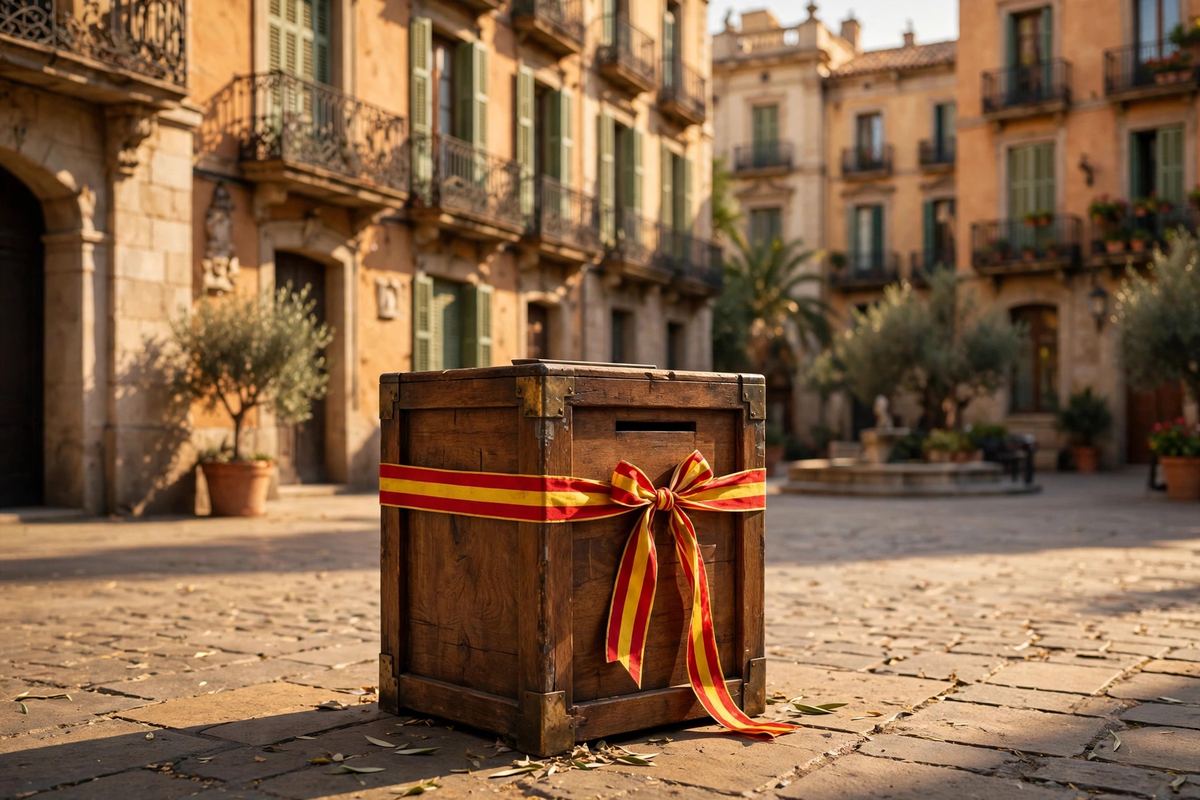
In October 2026, Spain's prime minister called a snap election — sending voters back to the polls earlier than scheduled — amid a deepening housing crisis and protests in Barcelona. The decision plunges one of Europe's largest democracies into a high-stakes campaign where the cost and availability of housing is expected to dominate the debate. What is a snap election, why does housing have such political power in Spain, and what could the vote change?
What triggered the vote: the snap election followed the eviction of 87-year-old Maricarmen Abascal from the Madrid apartment where she had lived for more than 70 years, after her rent rose from €500 to €2,650 a month. She was removed from the flat on a stretcher on 23 September and died in hospital on 7 October. Her eviction became the symbol of the housing crisis, protests spread across the country, and Congress rejected the government's emergency housing decrees. Prime Minister Pedro Sánchez then called a snap general election for 29 November 2026, saying he needed a broader progressive majority to pass housing reform. The Bank of Spain estimates the country is short about 700,000 homes.
What Is a Snap Election?
A snap election is an election called earlier than the legally required schedule. In parliamentary systems like Spain's, the prime minister typically has the power to dissolve parliament and call fresh elections before the end of the normal term. Leaders do this for strategic reasons: to capitalise on favourable polling, to seek a fresh mandate on a major issue, or because governing has become impossible — for example, when a minority government cannot pass its budget.
Snap elections are a gamble. They reset the political board, but they can also backfire spectacularly if voters punish the leader who forced them to the polls. For citizens, they mean an unexpected campaign season: manifestos rewritten in a hurry, debates focused on the crisis of the moment, and a result that can reshape the country's direction for years. If you want the basics of how elections actually work, our guide on how voting works explains the mechanics from ballot box to government formation.
Spain's Political System in Brief
Spain is a parliamentary constitutional monarchy. Voters elect the 350 members of the Congress of Deputies (the lower house), and the leader who can command a majority — or at least enough support to survive a confidence vote — becomes prime minister. In recent years, Spanish politics has been fragmented: no single party has won an outright majority, so governments have relied on fragile coalitions or support agreements with smaller regional parties.
This fragmentation is part of why snap elections happen. When a minority government cannot hold its coalition together, calling an election can look like the only way forward — a chance to win a stronger mandate or, at minimum, to let voters decide who should break the deadlock. The risk is that the new parliament is just as divided as the old one, and the country ends up back where it started.
The Housing Crisis Behind the Vote
The backdrop to the snap election call is a housing crisis that has been building for years. Across Spain — and especially in Barcelona, Madrid and other major cities — rents and house prices have risen far faster than wages. Young people face a brutal arithmetic: even with full-time work, affording a first home or even a modest rental in the city where the jobs are has become extraordinarily difficult.
Several forces have combined to create the crunch. Tourism — Spain's economic lifeblood — has fuelled a boom in short-term holiday rentals, taking long-term homes off the market in cities like Barcelona. Investors, domestic and foreign, have poured money into property. Construction of new affordable housing has lagged behind demand. And broader inflation in living costs has left households with less room to absorb rising rents.
Barcelona has become the symbolic centre of the crisis. The city has seen street protests over housing — residents marching against mass tourism, short-let apartments and the sense that their neighbourhoods are being hollowed out. When housing protests erupt in Spain's second city, the political class pays attention: housing is not an abstract policy debate but a daily emergency for millions of voters.
Why Housing Decides Elections
Housing has a unique power in electoral politics. Unlike many policy issues, it touches almost everyone, every day. Renters feel it in their monthly budget; young adults feel it in the decision to stay with their parents into their thirties; homeowners feel it in the value of their largest asset. Few issues generate as much anger — or as much gratitude — as a government's record on housing.
In Spain, the politics of housing also intersects with the politics of tourism and regional identity. Barcelona's protests are not just about prices; they are about who the city is for. Measures like restricting short-term rentals, building public housing or capping rents are technically complex and politically explosive — they pit tenants against landlords, cities against the tourism industry, and regional governments against Madrid. A snap election fought on housing will force every party to take a position on these fault lines.
What the Campaign Will Likely Be About
While the full campaign agendas will emerge in the coming weeks, the housing crisis is expected to dominate, alongside the usual pillars of Spanish electoral debate:
- Housing policy: Expect competing plans on rent controls, public housing construction, limits on tourist apartments and tax incentives for landlords.
- The economy: Jobs, wages and the cost of living will frame the housing debate — a home is unaffordable relative to what people earn.
- Territorial politics: Spain's regional tensions, particularly around Catalonia and Barcelona, never fully leave the stage.
- Coalition arithmetic: With polls likely to show another fragmented parliament, the real question may be not who wins but who can govern — which alliances are possible after the vote.
Why It Matters Beyond Spain
Spain is the eurozone's fourth-largest economy, and its political stability matters to Europe. A decisive result could strengthen the government's hand in EU negotiations on everything from fiscal rules to migration; a messy, inconclusive result could add to the sense of political fragmentation across the continent. Investors and EU partners will be watching closely.
There is also a wider European resonance to the housing story. From Lisbon to Berlin to Amsterdam, cities across Europe are grappling with the same toxic mix of tourist pressure, investor demand and unaffordable rents. Spain's election may become a test case: can democratic politics deliver answers to the housing crisis, or will voters conclude that the system cannot fix it? The health of democracy itself is partly measured by whether it can solve the problems citizens care about most.
What Happens Next?
The coming weeks will follow a familiar rhythm. Parties will publish manifestos, leaders will debate on television, and pollsters will try to read a volatile electorate. Key moments to watch:
- The campaign: How centrally housing features — and whether any party offers a plan concrete enough to convince sceptical voters.
- Election day — 29 November 2026: Turnout will be a crucial signal; housing anger could drive young voters to the polls in unusual numbers.
- Coalition talks: If no party wins a majority, weeks of negotiation will follow, with smaller and regional parties holding the balance of power.
- Policy delivery: Whoever governs will inherit the housing crisis — and voters will judge them on whether rents and prices actually start to move.
Snap elections are moments when a country's frustrations get distilled into a single question. In Spain in 2026, that question is brutally simple: who can make housing affordable again? The answer, whatever voters decide, will shape Spanish politics long after the ballots are counted.