
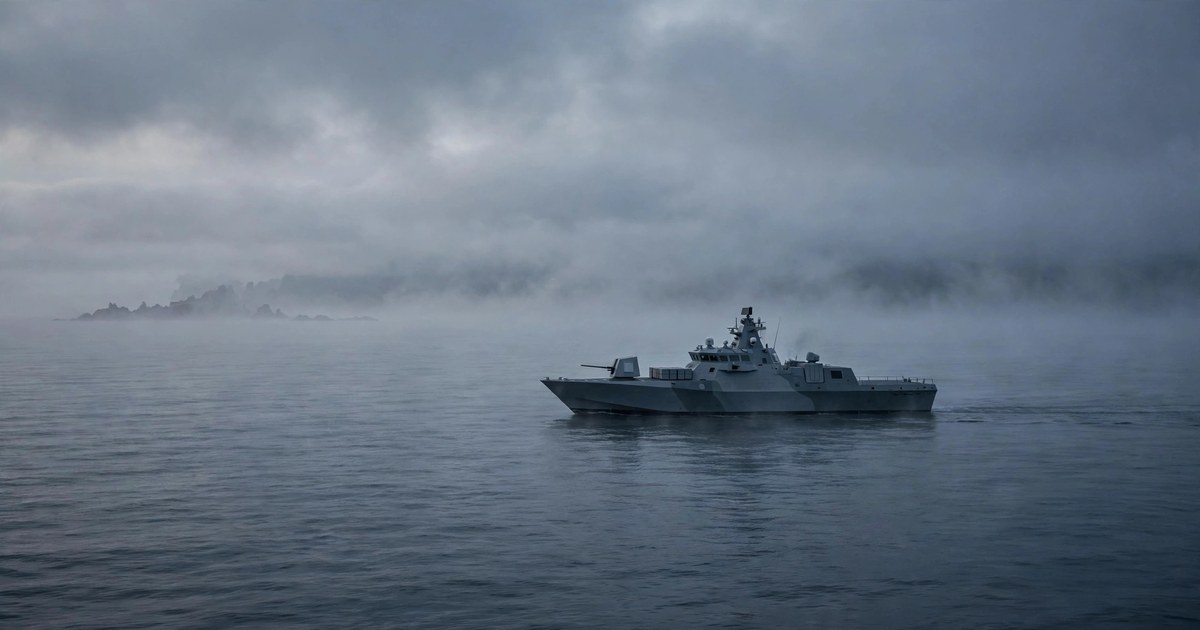
Ukraine says its drones struck a Russian warship in the Gulf of Finland early on Wednesday, 11 November 2026, in what is thought to be the first Ukrainian drone attack on a Russian ship in the Baltic Sea. Finland's armed forces confirmed they detected a strike on a Russian warship in the gulf, and Estonia's defence minister said an explosion hit a Russian Baltic Fleet vessel at about 05:30 local time. The ship, the missile corvette Naro-Fominsk, was later seen heading back towards St Petersburg. How badly it was damaged, and whether anyone was hurt, is still unknown — and Russia has said nothing about it.
What happened to the Russian warship in the Gulf of Finland
The strike happened in the early hours of Wednesday, 11 November, during a wider Ukrainian drone operation against Russia's north-west. Ukraine's Security Service, the SBU, said it had “planned and carried out” a drone strike on the Naro-Fominsk as part of the same raid that hit the Ust-Luga oil export port on the Russian Baltic coast. The SBU did not say what weapon was used, give a position or a time for the hit, or provide any photo or video of the damage. The BBC reported the SBU claim and noted that the attack is thought to be the first time Ukrainian drones have hit a Russian ship in a part of the Baltic Sea open to civilian shipping.
What is confirmed independently is narrower — and that matters. A senior Finnish official told Yle, Finland's public broadcaster, that Finland detected an attack near Gogland, the Russian-held island in the eastern Gulf of Finland about 40 kilometres from the Finnish coast near Kotka and about 110 kilometres from Helsinki. Brigadier General Markku Viitasaari of Finland's defence ministry told the newspaper Helsingin Sanomat that Finnish sensors recorded flashes and smoke coming from the ship while it was in international waters. Finland has not named the ship or said who carried out the attack.
Estonia's defence minister, Martin Herem, told the public broadcaster ERR that an explosion occurred aboard a Russian Baltic Fleet vessel at about 05:30 local time (03:30 GMT), followed by smoke. “The ship itself went back towards St Petersburg,” Herem said, adding that Estonia could not confirm whether the Ukrainians were behind the attack or whether it was some kind of accident.
Ukraine's general staff said five oil storage tanks were damaged at Ust-Luga in the same operation. The governor of Russia's Leningrad region, Alexander Drozdenko, confirmed a fire in the Ust-Luga port area after a drone attack, said three workers were injured, and said 150 drones had been shot down over the region that night. Russia's defence ministry has not commented on the warship at all.
What is the Naro-Fominsk?
The Naro-Fominsk is a Project 21631 Buyan-M class small missile ship — a corvette — in Russia's Baltic Fleet. It is 74 metres (243 feet) long, about 11 metres wide, and displaces roughly 1,050 tons fully loaded. Its keel was laid on 23 February 2018 at the Zelenodolsk shipyard in Tatarstan, and it was commissioned on 25 December 2023.
Small as it is, the ship carries outsized firepower. Its single eight-cell 3S14 vertical launcher can fire Kalibr land-attack cruise missiles — whose range the US Department of Defense estimates at around 1,400 kilometres — or Oniks anti-ship missiles. That is why the vessel matters beyond its size: Buyan-M corvettes are built for coastal waters and inland seas, yet they carry the same long-range strike weapons as much larger warships.
The SBU described the Naro-Fominsk as a Kalibr carrier, and damage to the ship would be a visible blow to the Baltic Fleet. But no evidence has been published showing the extent of the damage. Some Telegram channels have claimed crew casualties and even that Russian helicopters were destroyed in the operation. Neither claim has been verified by any official source, and they should be treated as rumours until confirmed.
The NATO airspace question
The raid also set off alarms across the Baltic states. Emergency alerts sounded on phones in the early hours of Wednesday as Ukrainian drones crossed NATO airspace during the overnight attack on Russia. One drone was reported to have travelled through the airspace of four NATO countries — Poland, Lithuania, Latvia and Estonia — and NATO fighter jets tried to intercept it.
Estonia's defence minister later confirmed that Ukrainian drones had briefly violated Estonian airspace from both the south-east and the north-east during the overnight attacks. Finland restricted air and sea traffic after a drone was suspected in its airspace for about five minutes. Whether the drone tracked through the Baltic states was the one that struck the warship remains unconfirmed — its suspected flight path points towards the Gulf of Finland, but no official has drawn that link.
The airspace crossings are a separate problem from the strike itself. The Gulf of Finland is narrow and crowded, with Finnish, Estonian and Russian waters close together and civilian shipping passing through daily. A drone that strays, or is misread, in that corridor can trigger a response from three countries at once. Finnish Foreign Minister Elina Valtonen said the situation in the Baltic Sea remained stable and safe, and that there was no threat to maritime traffic. Helsinki has been in direct contact with Moscow about the war this year, as covered in Finland and Norway's call with Putin about Ukraine in 2026.
Why the strike on the Russian warship in the Gulf of Finland matters
Until now, Ukraine's campaign against Russian warships has been fought in the Black Sea and the Sea of Azov, where Kyiv's naval drones sank or damaged a string of Russian vessels. The Baltic Sea was different: Russia's Baltic Fleet operated behind a screen of distance and NATO geography, and no Ukrainian drone had struck a Russian ship in waters open to civilian traffic there. The Times described the Naro-Fominsk strike as the first such attack of the war in the Baltic area — a new front in a campaign that had been confined to the south.
The timing adds weight. The strike came during a two-day Russia-Ukraine meeting in Abu Dhabi that began on Tuesday, 10 November, with US envoys holding talks with President Putin in Moscow before heading on to meet Ukraine's president. No source has linked the attack to the talks, and the two should not be read as cause and effect — but the overlap shows how the war and the diplomacy around it are now running in parallel, each shaping the other's stakes. Attacks on ships and energy infrastructure have meanwhile spread across several theatres this year, including the Strait of Hormuz tanker incidents.
What happens next
Three questions will decide how big this incident becomes. First, the damage: until Russia acknowledges the strike or images of the Naro-Fominsk emerge, nobody outside the SBU knows whether the corvette is out of action or already back in service. Second, the attribution: Finland and Estonia have confirmed an explosion and a strike, but neither has said Ukraine did it — and Moscow's silence leaves the official record blank. Third, the Baltic pattern: if Ukraine can reach the Baltic Fleet, the question for NATO's Baltic members is whether this was a one-off or the start of a new theatre — and how their air defences handle drones crossing their skies on the way.
For now, the verified picture is this: a Russian missile corvette was hit in the Gulf of Finland in the early hours of 11 November; Ukraine's security service says its drones did it; Finland and Estonia confirm a strike and an explosion; the ship sailed back to St Petersburg; and the damage, the casualties and Russia's response are all still unknown.