
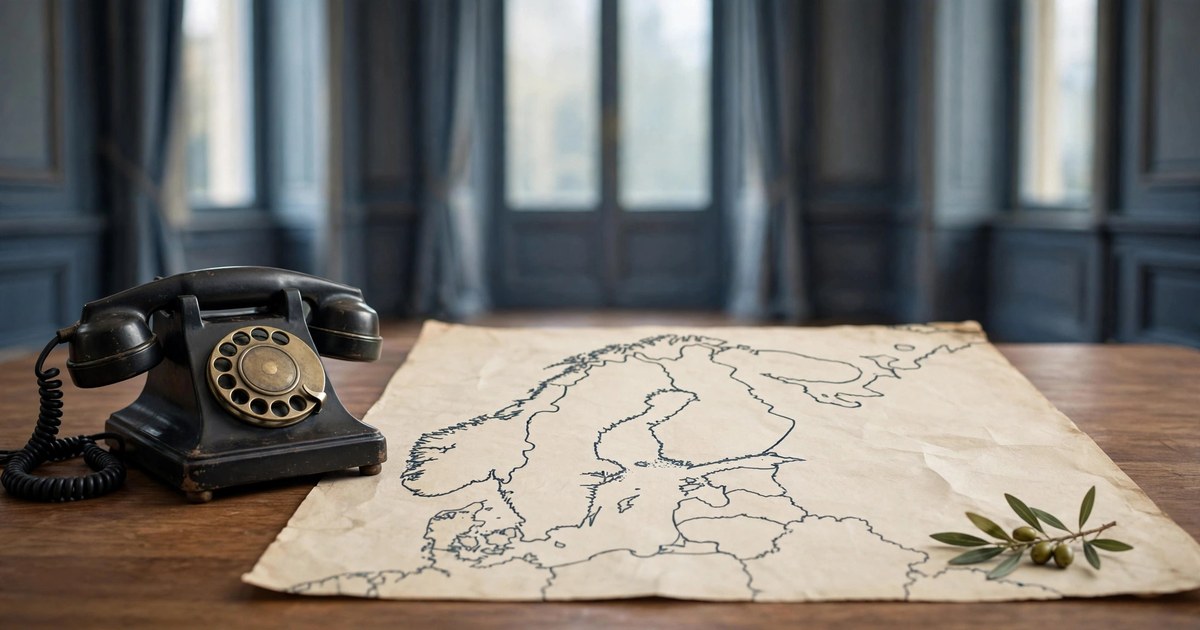
The Finland Norway Putin call on 27 October 2026 was a rare moment of direct diplomacy in a war that has mostly been fought, and talked about, at a distance. Finnish President Alexander Stubb and Norwegian Prime Minister Jonas Gahr Støre telephoned Russian President Vladimir Putin to urge him to end the war in Ukraine, in a move reported by Reuters as breaking with a longstanding practice among Western European leaders of shunning direct contact with the Kremlin. The story travelled fast, trending per news coverage on Tuesday, because of what the call was, who made it, and what it came just before: United States-mediated talks between Ukraine and Russia planned for Abu Dhabi in early November.
Neither leader presented the call as a breakthrough. Their joint statement called the discussion frank and substantive, stressed de-escalation, and underlined that both countries would keep supporting Ukraine. The Kremlin's account gave no sign of compromise. That gap, between a direct message delivered and a position unchanged, is the story of the call, and it is why the phone call matters even though it changed nothing on the ground on Tuesday. The same day, Russian strikes hit Kyiv and other Ukrainian cities, a reminder that diplomacy and the fighting are running side by side.
What happened in the Finland Norway Putin call?
Stubb and Støre initiated the call to discuss Russia's war in Ukraine and diplomatic efforts to end it, according to the joint statement issued by Finland and Norway. The aim, the statement said, was to convey a message directly to President Putin about future negotiations to end the war, ahead of the planned meeting in Abu Dhabi. The two leaders acted in consultation with Ukrainian President Volodymyr Zelenskyy, and spoke to him afterwards about how the conversation had gone.
Stubb put the reason for picking up the phone in geographical terms. "We are neighbouring countries to Russia. The outcome of this war will have a direct impact on our and the broader European security. Ending the war requires direct discussions," he said in the joint statement. Finland shares a long border with Russia and joined NATO in 2023; Norway, a founding NATO member, shares a far shorter Arctic border with Russia. For both governments, the war is not a distant conflict. It is a security question on their own borders, and that is the argument Stubb used for direct contact rather than silence.
Støre, quoted in the same statement, stressed the human cost. "The war comes with enormous human and material costs. The suffering and destruction will impact generations. In the call we stressed the importance of de-escalation," he said. Both leaders also stressed, in the statement and in the reporting that followed, that their support for Ukraine would continue. The call was presented as an addition to that support, not a substitute for it: a direct channel used to press for an end to the fighting, while backing for Kyiv stayed in place.
Why Finland and Norway called Putin now
Timing explains much of the decision. Kyiv and Moscow agreed last week to hold United States-mediated technical meetings in Abu Dhabi in early November, and the Nordic leaders wanted their message delivered before those meetings, not after. A message sent ahead of a negotiation can shape what is discussed; the same message sent afterwards can only react to it. The call was therefore best understood as preparation, an attempt to influence the diplomatic process at a moment when the format of future talks is still being formed.
The wider diplomatic context also mattered. Reuters reported that the phone call was a bid to influence the diplomatic process at a time when US President Donald Trump had shifted his position in favour of Russia and US ties with Ukraine had hit their lowest point in 18 months. Germany's Chancellor Friedrich Merz, speaking in Singapore on Tuesday, said attempts by the United States and Russia to end the war could never find solutions without Ukraine and European countries at the table, and said Germany and other European countries were trying to establish a format to speak with the Russian government. Merz described Norway and Finland as playing what he called a very constructive role in that effort. In that light, the call looks less like two small neighbours acting alone and more like part of a European effort to make sure Europe is in the room, through direct contact as well as through Kyiv and Washington.
There is also the simple fact of the break itself. The BBC reported the call as the first direct communication of its kind by European leaders with the Russian president in more than a year. For years, most Western European leaders have avoided direct contact with Putin since the full-scale invasion of Ukraine, preferring to communicate through intermediaries, public statements and sanctions. A call from two sitting leaders therefore carried a signal beyond its words: that at least some European governments now believe the cost of not talking directly has become greater than the cost of talking. Whether other leaders follow will be one of the questions to watch in the coming weeks.
What Putin said back: the Kremlin's answer
The Kremlin's readout of the call did not suggest that Putin had signalled any compromise from previously stated positions, Reuters reported. Instead, it repeated Moscow's established conditions. "It was emphasized that achieving a just and long-term peace is possible only if the legitimate interests of the Russian Federation are fully and unconditionally taken into account," the Kremlin said. It also drew attention, in its account, to what it called the confrontational policies of EU and NATO countries, which it said were contributing to the prolongation of the hostilities.
Readers should be careful with both readouts. A joint statement from Helsinki and Oslo and a readout from Moscow are each written for their own audiences, and neither is a transcript. What can fairly be said is that the two accounts agree on one thing: the call happened, and the two sides restated their positions. The Nordic leaders pressed de-escalation and a negotiated end to the war. The Kremlin restated that peace, in its terms, requires Russia's interests to be taken into account fully and unconditionally. No new proposal, concession or follow-up meeting was announced by either side on Tuesday.
That does not make the call meaningless. Direct contact lets each side hear, without intermediaries, how the other frames the same war, and it tests whether there is any movement at all. On the evidence published on Tuesday, there was none from Moscow. But the test itself, conducted openly and in consultation with Kyiv, is different from a backchannel message that can later be denied. It puts a position on the record, and it gives the Abu Dhabi negotiators a clearer sense of where each side stands before they sit down.
What Zelenskyy said after the Finland Norway Putin call
Zelenskyy spoke to Stubb and Støre after their call with Putin, according to an aide cited by Reuters, and then set out his own account on X. He said they had told Putin that real steps were needed to de-escalate attacks on Ukraine's energy facilities and infrastructure, and that they had also discussed preparations for the November talks. "There must be peace, de-escalation is needed, and Russia must stop dragging out the war," he said.
The emphasis on energy facilities was not abstract. Russian attacks on Ukraine's energy infrastructure have been a central feature of the war, and European states have pledged to boost air defence support for Ukraine. The United Nations has described Russian attacks on Ukraine's energy infrastructure as a war crime, in reporting on Tuesday's developments. Zelenskyy's account of the call therefore tied the diplomacy directly to the civilian experience of the war: fewer attacks on the systems that keep homes warm and lit, as a first, concrete form of de-escalation, rather than a ceasefire promised only in principle.
Zelenskyy's role in the sequence matters for how the call should be read. This was not a European initiative conducted over Kyiv's head. The Nordic leaders acted in consultation with him, reported back to him, and framed their message around the preparations for talks in which Ukraine itself will take part. That consultation is the answer to the most obvious criticism of any direct contact with Moscow: that it might sideline the country being attacked. On the published record, Kyiv was consulted before, and informed after.
What else happened on Tuesday: strikes on Kyiv as talks approach
The call did not pause the war. On the same day, Russia targeted Kyiv, Al Jazeera reported, with Russian forces striking transport infrastructure in the capital and a logistics hub in the Kharkiv region, along with industrial sites and cargo vessels it said were serving military purposes. Russian attacks also caused deaths and injuries in the cities of Kharkiv and Pavlohrad, according to the same reporting. Officials in the Russian-controlled part of Ukraine's southeastern Zaporizhzhia region said a drone strike on a bus killed one person and injured 30 others, and one person was also killed and six others wounded in a drone attack on the Russian city of Bryansk, near the Ukrainian border.
There was also a counterpoint in the south. A truce in Oleshky, in the Kherson region, which the White House said was secured through US First Lady Melania Trump, was meant to allow aid to get in and civilians to get out, the BBC reported. The contrast between a local truce taking effect and strikes continuing elsewhere captures the uneven reality of the war in late October 2026: local pauses and high-level phone calls alongside continued attacks. Readers should treat casualty figures from a single day's reporting with care, as they are early accounts and may be revised, but the pattern is clear enough. Diplomacy is moving, and so is the fighting.
What happens next: Abu Dhabi talks and what to watch
The next test is Abu Dhabi. The Ukraine-Russia-US Abu Dhabi talks planned for November 2026 are described as technical meetings mediated by the United States, and the Nordic call was explicitly aimed at the negotiations that will follow there. Technical meetings rarely produce a peace settlement on their own. They can, however, establish whether the two sides can agree on practical steps, such as limits on attacks on energy infrastructure, prisoner exchanges, or arrangements for civilians, that build towards something larger. Watch for any statement after Abu Dhabi about concrete measures, not just about the atmosphere of the talks.
Three other things are worth watching. The first is whether any other European leader follows Stubb and Støre in calling Putin directly, and whether the European Council appoints an envoy to future peace negotiations, a decision its president, Antonio Costa, has said would depend on the nature of the talks. The second is what the United States does next, given the reported shift in Washington's position and the strain in US-Ukraine ties. The third is the battlefield and energy picture: whether attacks on energy infrastructure ease, stay the same, or intensify as the talks approach. A fall in such attacks would be the first real evidence of de-escalation. On Tuesday, the evidence pointed the other way.
The resumption of trilateral Ukraine talks in November, agreed after earlier diplomatic contacts including Steve Witkoff's meeting with Putin in Moscow, shows that several channels are now open at once: American, Nordic and European. That is a change from the long period in which direct contact was largely avoided. It does not guarantee progress. It does mean that when the Abu Dhabi meetings begin, the negotiators will arrive with a clearer, more recent picture of what each side says it wants, including a message delivered directly from Helsinki and Oslo to Moscow on Tuesday. Whether that picture contains any room for agreement is what the talks will have to find out.
Sources: Reuters, "Leaders of Norway and Finland call Putin in break with previous European stance", 27 October 2026; Al Jazeera, "Russia targets Kyiv as Finnish, Norwegian leaders hold rare call with Putin", 27 October 2026; BBC News live coverage, 27 October 2026, including reporting on the Oleshky truce and the Norway-Finland call; joint Finland-Norway statement quoted in Reuters and Al Jazeera reporting, 27 October 2026; Reuters report on Chancellor Friedrich Merz's remarks in Singapore, 27 October 2026.