
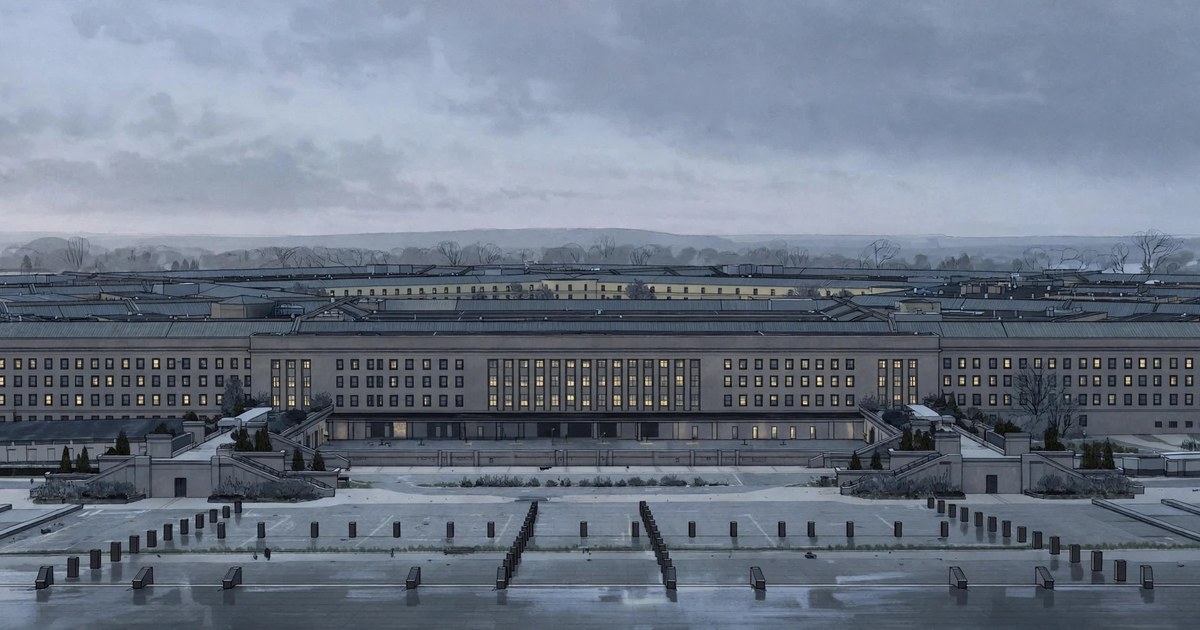
When Hegseth fires Pentagon planner Brett Sylvia, the removal reaches far beyond one personnel change. Army Lt. Gen. Brett Sylvia, the director for strategy, plans and policy on the Joint Staff, was removed from the post known in military circles as the J5 on Wednesday, 28 October 2026, with no reason given and no immediate successor named. The story is trending per news coverage from the Associated Press and CNN, because the Pentagon's chief planner left the job just days before the midterm elections on 3 November 2026, while President Donald Trump is weighing renewed strikes on Iran. This article explains what happened, who Brett Sylvia is, what the J5 job actually does, why the timing has drawn attention, and what remains unknown.
Hegseth Fires Pentagon Planner: What Happened on 28 October 2026
The Associated Press reported that Defense Secretary Pete Hegseth had fired the Pentagon's top military planner, citing a defense official who spoke on condition of anonymity to discuss sensitive personnel matters. The official said there was no immediate replacement for Sylvia and no reason had been given for the firing. The Associated Press also reported that the move had been reported earlier by The Atlantic. CNN reported separately that Hegseth had pushed out the Pentagon's top planning officer, citing a source familiar with the situation, and said a spokesman for Joint Chiefs Chairman Gen. Dan Caine had confirmed that Sylvia was abruptly leaving the position. CNN said it had reached out to Hegseth's office for comment.
The Joint Staff did not explain the decision in the statements reported by the Associated Press and CNN. A Joint Staff spokesperson said: "The Chairman, the Joint Staff, and the Joint Force extend our deepest gratitude to Lt. Gen. Brett Sylvia and his family for their 32 years of distinguished service to our nation," and wished him and his family the best. The Washington Examiner reported the same statement with an additional phrase, that the Joint Staff wished Sylvia and his family well as they moved to "new opportunities and the next chapters of their lives." No official statement reported by the Associated Press or CNN gave a reason for the removal, named a successor, or set out what role, if any, Sylvia would take next. CNN also reported that, by Wednesday evening, Sylvia's biography had been removed from the Joint Chiefs of Staff website. That removal of a biography page is a visible administrative step, but it does not, on its own, explain why the decision was taken.
Three points in the reporting therefore need to be kept separate. First, the fact of the removal is confirmed: the Associated Press defense official and the Joint Chiefs spokesman cited by CNN both confirm that Sylvia left the J5 post. Second, the timing is confirmed: the confirmation came on Wednesday, 28 October 2026, days before the midterm elections. Third, the reason is not confirmed: no reason was given in the official statements reported, and this article does not present any unofficial explanation as established fact. Readers should be cautious about any social media claim that fills that gap, because the outlets that confirmed the removal were explicit that no reason had been given.
Who Is Brett Sylvia? 32 Years, the 101st Airborne and the J5 Post
Brett Sylvia is an Army lieutenant general with 32 years of distinguished service, according to the Joint Staff statement quoted by the Associated Press. Before taking the Joint Staff planning post, he commanded the Army's 101st Airborne Division, based at Fort Campbell in Kentucky, until May 2025, according to the Associated Press. He had earlier served as the vice director of the same strategy, plans and policy directorate he later led, which means he arrived in the top planning job with direct experience of how the directorate worked. CNN reported that he was nominated for the J5 position by former Defense Secretary Lloyd Austin near the end of the Biden administration. That nomination history matters for understanding the sequence, but it is not evidence about the reason for his removal, and this article does not draw that connection.
Sylvia's career therefore combined two different kinds of experience. Command of the 101st Airborne Division is a large operational command, responsible for soldiers, training and readiness in a major Army formation. The J5 post is different: it is a staff role at the highest level of the United States military, concerned with strategy and planning rather than direct command of troops in the field. The move from a division command to the Joint Staff is a move from leading a formation to shaping the plans and policy advice that reach the Chairman of the Joint Chiefs of Staff and, through the Chairman, the President. Understanding that distinction helps explain why the loss of a J5 director is treated as more significant than a routine change of post, even though the Joint Staff statement thanked Sylvia in warm terms and gave no hint of controversy.
What Is the J5, and Why Does the Pentagon Planner Job Matter?
The J5 is the Joint Staff directorate for strategy, plans and policy. The director and the directorate's staff are responsible for generating and coordinating military plans with both the Chairman of the Joint Chiefs of Staff and the President, according to the Associated Press. The Joint Chiefs of Staff website describes the role in broader terms, saying the J5 "proposes strategies, plans, and policy recommendations to the Chairman of the Joint Chiefs of Staff to support his provision of military advice across the full spectrum of national security concerns to the President and other national leaders." The same description says the recommendations should be informed by a larger strategic context, coordinated with interagency and alliance partners, account for the views and requirements of combatant commanders, and assess risk in carrying out the National Military Strategy, according to CNN's reporting of the website.
In plain terms, the J5 turns political direction and military objectives into workable plans, tests those plans against risk and resources, and keeps the planning work aligned between the operational forces, Pentagon policy staff and the White House. A former Joint Chiefs official, quoted by The Atlantic, put the point bluntly about this removal: "This is not the moment when you would want to lose the J5." The same official described the officer in the post as "a crucial connection between military operations, Pentagon policy and the White House." That is an opinion from a former official, not an official Pentagon statement, but it explains why news coverage treated the timing, rather than only the personnel change, as the central question. A planning directorate can continue its daily work without a confirmed director, but a vacancy at the top removes the confirmed officer who would normally carry the planning advice into the most senior discussions.
Hegseth Fires Pentagon Planner: Why the Timing Matters Before the Midterms
The timing matters because President Donald Trump is weighing renewed strikes on Iran after the midterm elections, and no final decision has been made, according to the Associated Press. Trump has vowed to "finish the job" in Iran after launching the war with Israel eight months ago, the Associated Press reported, and has said new strikes are an option after the midterm elections next week. United States officials have told several Middle East countries and regional allies to be prepared for potential renewed military action after Tuesday's elections, as well as for the possibility that Iran will attempt to retaliate against them, according to two diplomats briefed on the matter and cited by the Associated Press. Those warnings are preparation for a possibility, not confirmation that strikes will happen. The same reporting is clear that Trump has not made a final decision on new strikes.
That context is why the removal of the chief planner drew attention on the day it was confirmed. If a decision about renewed strikes is taken after the elections, the J5 directorate would be central to turning that decision into detailed military options, coordinating the work with the Chairman and the President, and assessing the risks. A change at the top of that directorate days before such a decision window does not prove that the change was connected to the Iran question, and no reporting cited here establishes that connection. It does, however, explain why former officials and news outlets focused on the vacancy: the planning function would be led, for the moment, without a confirmed director at a time when major planning questions are open. Readers can follow the separate warning to regional allies in Worldlession's earlier report on United States warnings to Gulf allies about possible Iran strikes after the midterms, and the wider post-midterm planning reported in United States and Israel post-midterm Iran strike plans.
Hegseth's own role in the wider story also forms part of the background. Hegseth visited Israel for an unannounced meeting with Prime Minister Benjamin Netanyahu shortly before the Israeli election, as reported in Worldlession's earlier article on Hegseth's unannounced Israel visit and Netanyahu meeting. That visit is a separate event from the Sylvia removal, and it should not be read as evidence about why Sylvia was removed. It is included here only because it shows that Hegseth has been directly involved in the region's security discussions in the same period. The Sylvia removal, the Israel visit and the Iran warnings are three distinct developments that share a common backdrop of heightened tension, not a single confirmed chain of cause and effect.
The Second J5 Removal and the Wider Pattern of Senior Departures
Sylvia is the second general to be ousted from the J5 post under Hegseth, according to the Associated Press. His predecessor, Lt. Gen. Joseph McGee, was forced to retire last October, the Associated Press reported, meaning October 2025. The fact that the same post has changed hands twice in about a year under the same Defense Secretary is a verified pattern in the reporting, and it is distinct from the wider pattern of senior departures. CNN described Sylvia's dismissal as the latest in a long line of senior officers who have left the Pentagon under the Trump administration and since Hegseth assumed the role, while enacting significant cuts to the top of military ranks. The Associated Press described the firing in the same terms, as the latest in a series of generals to be ousted.
This article does not add a precise total for those wider departures, because the reporting available at publication described the tally in general terms rather than with a single verified count that could be checked letter for letter. What can be said with confidence is that the J5 post itself has now seen two removals in about a year, that no reason was given for the second removal, and that the pattern has been noted by both the Associated Press and CNN. Any claim that goes further, including claims about the reasons for other departures or about internal disagreements, would need separate reporting and separate confirmation. The absence of an official reason for Sylvia's removal means that the wider pattern should be described as context, not as an explanation.
What Happens Next, and What Is Still Not Known
As of Wednesday, 28 October 2026, no successor had been named and no immediate replacement was in place, according to the Associated Press. Reporting on who would cover the duties in the meantime was limited. The Washington Examiner reported that Maj. Gen. Mark Slocum serves as the vice director for strategy, plans and policy, J5. That report identifies the vice director; it does not, on its own, confirm that Slocum has been appointed acting director or that he will be nominated for the post. The usual route to a permanent J5 director involves a presidential nomination and Senate confirmation, according to reporting on how the post is normally filled, but no nomination had been reported at publication. Until a successor is named, the key practical questions are who is carrying the director's responsibilities day to day, whether a nomination follows quickly, and whether the vacancy affects the pace of planning work in the run-up to any post-election decision on Iran. None of those questions had a confirmed answer in the reporting available for this article.
Five questions therefore remain open. First, why was Sylvia removed, when no reason was given in the official statements? Second, who will be nominated as the next J5 director, and when? Third, will the vacancy be filled, even on an acting basis, before any decision on renewed Iran strikes? Fourth, what role, if any, will Sylvia take next, given the Joint Staff's reference to new opportunities? Fifth, will Hegseth's office or the Joint Staff give any further explanation beyond the gratitude statement already issued? Until those questions are answered by named officials or official statements, the verified position is narrow but clear: a 32-year Army general who led the 101st Airborne Division and then the Joint Staff's planning directorate was removed from the J5 post on 28 October 2026, as the second holder of that post to leave under Hegseth, with no reason given and no successor named, at a moment when the United States is weighing possible renewed strikes on Iran after the midterm elections. This article will need updating if an official reason, a successor, or a further Joint Staff statement is published.
Sources: Associated Press reporting, via syndicated coverage, on the firing, the anonymous defense official, the absence of a reason or immediate replacement, Sylvia's 101st Airborne command and vice-director role, the McGee precedent, the 32 years of service, and the Iran warnings from two diplomats; CNN reporting on the ouster, the confirmation by the spokesman for Gen. Dan Caine, the Joint Chiefs website description of the J5, the Lloyd Austin nomination, and the removal of Sylvia's biography; The Atlantic, as the first outlet to report the move and the source of the former Joint Chiefs official's comment on losing the J5; and the Washington Examiner for the Joint Staff gratitude statement wording and the identification of Maj. Gen. Mark Slocum as vice director. Where reports differed in wording, this article follows the Associated Press and CNN on the confirmed facts and labels opinion and typical practice as such.