
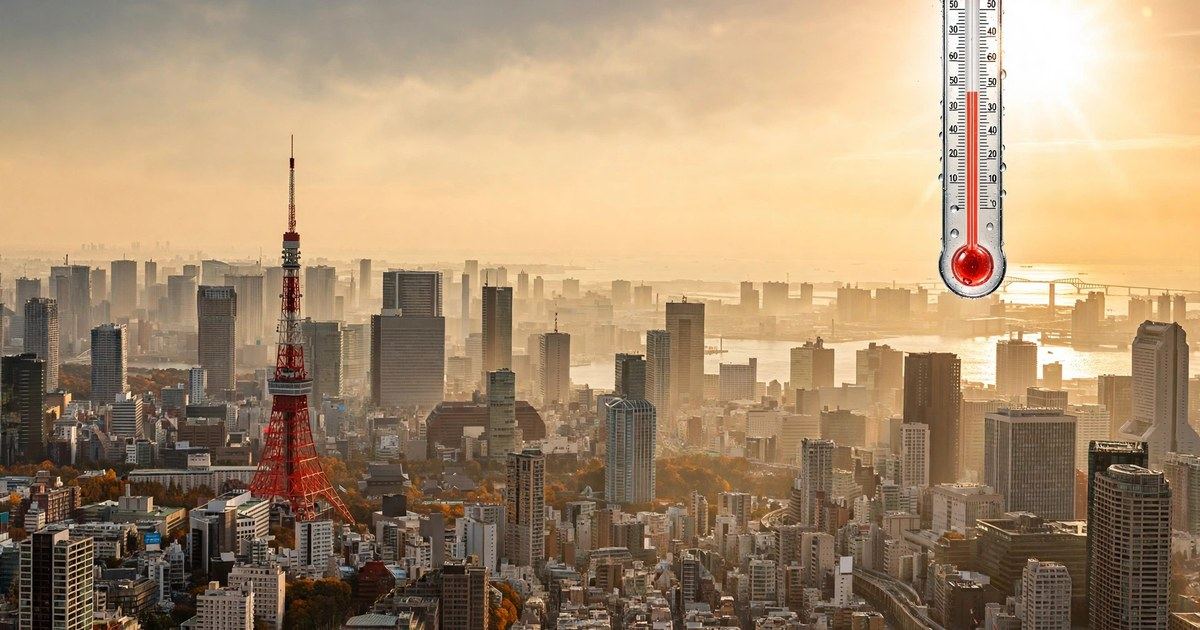
Tokyo and Osaka both topped 30°C on October 21, 2026 — the latest date in the year that either city has ever recorded such heat, according to Japan's meteorological agency. The milestone, reported by Jiji Press, Kyodo News and other Japanese outlets, is the latest sign of an autumn that has refused to behave like autumn across the country.
Warm, humid air flowing north from the south, combined with a high-pressure system parked over the archipelago, pushed temperatures along the Pacific coast to levels more typical of midsummer. For two of Japan's largest cities to breach 30°C this late in October has no precedent in the observational record.
What happened
A representative of the Japan Meteorological Agency confirmed that temperatures in Tokyo and Osaka exceeded 30 degrees Celsius on Wednesday, marking the latest calendar date on which both cities have simultaneously recorded such readings. The previous records for "latest 30°C day" in each city have now been broken.
The heat was not confined to the two metropolises. Warm air associated with the high-pressure system spread across eastern and western Japan, with particularly elevated temperatures along the Pacific coast. The Mainichi Shimbun photographed pedestrians in Osaka's Kita Ward seeking shade in conditions more reminiscent of August than late October.
The same weather system brought contrasting extremes elsewhere: the JMA issued a special flood warning — the highest level of its kind — for the Koyoshi River in northeastern Japan, as heavy rain lashed parts of the Tohoku region. Record heat in the south, flood emergency in the north: a single day's illustration of the volatility that has defined Japan's 2026 weather.
Why it matters
A single hot day does not make a climate trend — but this record sits inside a pattern that is becoming hard to ignore. Japan has recorded its 30th typhoon of the year, a milestone not seen since 2013, according to the nation's weather authorities. Summers have grown longer and hotter; the boundary between seasons is blurring.
The public-health implications are real. Heat that arrives outside the expected season catches people unprepared: air conditioners switched off, schools and workplaces operating on autumn schedules, and vulnerable elderly residents — Japan has the world's oldest population — without the precautions they take in summer. October heat waves carry a disproportionate health risk precisely because they are unexpected.
There are economic ripples too. Energy demand spikes when temperatures soar unexpectedly; agriculture faces disrupted growing calendars; and the tourism industry's autumn foliage season — a major domestic draw — depends on the crisp temperature drops that trigger the colour change.
The bigger climate picture
Japan's record comes in a year of extraordinary heat worldwide. Europe endured a summer of record-breaking temperatures that fed directly into political debates — including Britain's decision this week to approve the Jackdaw gas field partly on energy-security grounds. The World Meteorological Organization has warned that the developing El Niño could be among the strongest on record, which typically adds a global warming increment on top of the long-term trend.
Scientists are careful to distinguish weather from climate: any given record is the product of both natural variability and the background warming trend. But the direction of travel is unambiguous. As the baseline warms, records that once seemed unbreakable — like a 30°C day in late October in Tokyo — become the new edge of normal.
Japan's own climate assessments have projected longer summers, more intense rainfall events, and greater typhoon risks for the archipelago. October 21 delivered all three storylines in a single news cycle: unprecedented late heat in the great Pacific cities, a flood emergency in the northeast, and the year's 30th typhoon churning somewhere in the western Pacific.
A season of extremes
October 21 was not an isolated anomaly but the latest entry in a remarkable year for Japanese weather. The country has recorded its 30th typhoon of 2026 — a tally not seen since 2013 — keeping emergency agencies in a near-constant state of alert through the autumn storm season. Typhoon Champi, the season's most powerful storm, drew global attention earlier in the month as it churned through the western Pacific.
The same day's special flood warning for the Koyoshi River underscores how heat and water extremes now arrive together. High-pressure systems that deliver record warmth in one region can stall weather patterns elsewhere, dumping extraordinary rainfall on river basins in the northeast. Japan's steep, short rivers respond violently to such downpours — the Koyoshi warning, the JMA's highest alert level, means a risk of flooding serious enough to threaten lives, and residents in affected areas were urged to take immediate protective action.
This volatility is itself the story. Climate scientists have long projected that a warming atmosphere — which holds more moisture — would intensify both ends of the hydrological cycle: longer dry, hot spells punctuated by heavier downpours. A 30°C day in Tokyo in late October, simultaneous with a flood emergency 500 kilometres to the north, is that projection rendered as a single news day.
What the records tell us
Japan's meteorological records stretch back well over a century in major cities, which is what makes "latest ever" records so significant — they are not artifacts of short datasets. Each time a record like this falls, it represents conditions outside everything previously observed in the instrumental era.
The pace at which such records are falling is accelerating. Across the Northern Hemisphere, autumn heat records have become almost routine in recent years, from Europe's searing Septembers to North America's extended summers. Japan's October milestone fits a global pattern in which the warm season expands at both ends, compressing the cooler months.
For Japan specifically, the implications compound. An aging society is more vulnerable to heat stress; a mountainous archipelago is more exposed to flood and landslide risk; and an economy built around precise seasonal rhythms — from rice planting to autumn tourism — faces disruption when the seasons themselves shift. Adaptation planning that assumed the climate of the 20th century is being rewritten in real time, one broken record at a time.
What to watch
Meteorologists will be watching whether the high-pressure system persists and whether November brings any return to seasonal norms. Longer term, the question is adaptation: how Japanese cities, built for a climate with four distinct seasons, adjust to summers that now bleed deep into autumn.
Cooling centres, heat-health warning systems, and revised school and workplace guidelines were designed around a July-August danger window. If 30°C days can now arrive in late October, that window needs rethinking — in Japan and everywhere else the seasons are shifting. Related reading: the WMO warning on a record-strong El Niño, Storm Adam's deadly flooding in eastern Spain, and Istanbul's record floods.