
What the UK Weather Forecast Actually Tells You
The UK weather forecast is more than a single temperature for the day. A good local forecast gives you rain timing, wind speed and gusts, feels-like temperature, and any warnings in force for your exact area, because conditions in Cornwall, the Scottish Highlands and London can be completely different on the same afternoon. Learning to read those details, rather than just glancing at a sunny or cloudy symbol, is what turns a forecast into a useful plan for commuting, walking, gardening or travelling.
Start with your location, not the national picture. Enter your town or postcode on the Met Office site or app, then check the hourly view for the hours that matter to you, such as the school run or a train journey. The UK weather forecast for your street can change quickly when showers are scattered, so the hourly rain chance and wind gusts matter more than a daily average. If you are travelling, check both ends of the journey, and remember that a forecast made yesterday may have shifted by morning.
UK Weather Forecast Warnings: Yellow, Amber and Red Explained
The Met Office issues weather warnings in three colours, and the UK weather forecast warning level tells you how likely disruption is and how severe it could be. Yellow means be aware: weather may cause some travel delays or disruption, so check before you go. Amber means be prepared: there is an increased likelihood of significant impacts such as road closures, power cuts or damage. Red is rare and means take action: dangerous weather is expected and you should change plans and follow official advice.
Warnings are issued for specific regions and time windows, so a yellow warning for wind in the north-west does not mean the whole country is affected. Read the warning text itself, which explains what is expected, where, and when, rather than relying on a headline colour alone. For floods, check the separate flood warnings from the Environment Agency, Scottish Environment Protection Agency or Natural Resources Wales, because a rain warning and a flood warning are different things.
Regional Differences in the UK Weather Forecast
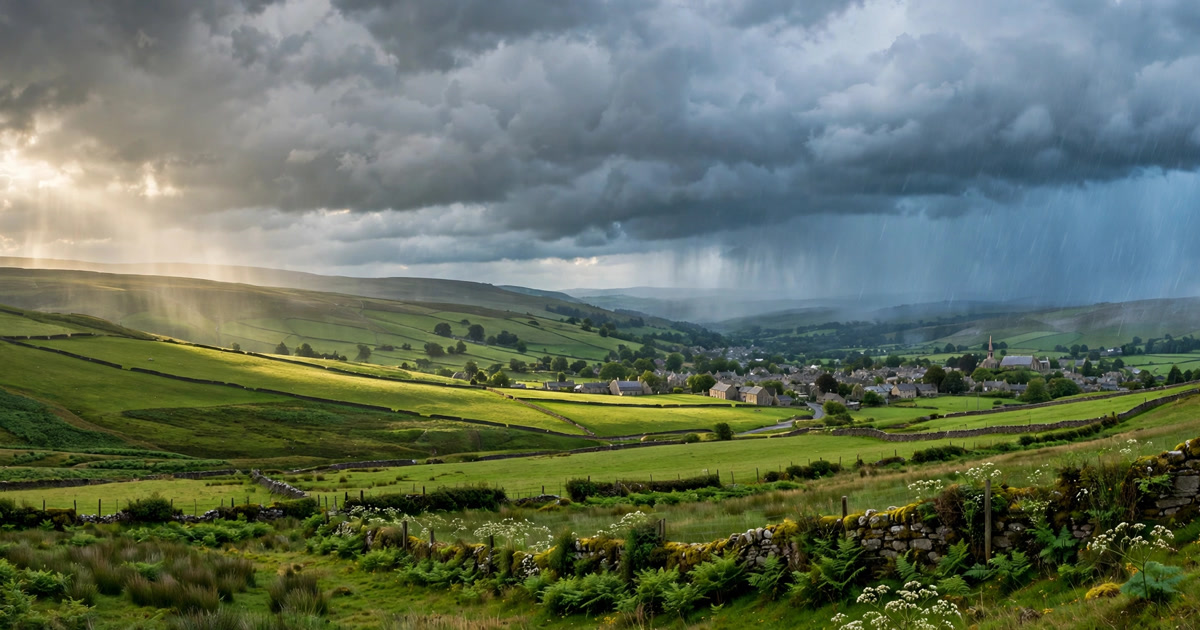
Britain's geography creates sharp regional contrasts that every UK weather forecast has to capture. The west of the country, especially Wales, south-west England and western Scotland, tends to be wetter and windier because Atlantic weather systems arrive there first. The east, including East Anglia and the south-east, is often drier but can be colder in winter when winds come from the continent, and hotter during summer heatwaves.
Altitude matters too: hill and mountain areas can be several degrees colder, with snow lingering long after lowland rain has cleared, and coastal areas feel wind chill more strongly than sheltered inland towns. If you are heading to the hills, use a mountain-specific forecast rather than the nearest town forecast, and pack layers whatever the lowland outlook says. For a weekend away, compare forecasts for your home and destination side by side before deciding what to pack, and our guide to travelling on a budget can help you plan the trip itself around the weather you expect.
Reading Rain, Wind and Temperature Like a Forecaster
Rain forecasts are given as a chance of precipitation and an expected amount, and both matter. A 60 percent chance of light drizzle is a very different day from a 60 percent chance of heavy showers, so look at the rain amount and the hourly breakdown. Radar maps show where rain actually is right now, which helps you decide whether to wait twenty minutes for a shower to pass or to set off in waterproofs.
Wind is reported as a sustained speed plus gusts, and gusts are what knock over bins, delay trains and make cycling hard. A forecast of 30 mph winds with 55 mph gusts needs more caution than a steady 30 mph breeze. Temperature alone can also mislead: the feels-like figure accounts for wind chill in winter and humidity in summer, so dress for that number rather than the headline figure. In winter, check frost and ice warnings for early-morning driving, and in summer, check UV and heat-health advice during hot spells.
Planning Work, Travel and Weekends Around the UK Weather Forecast
The most practical use of the UK weather forecast is the day-before check: look at tomorrow's hourly forecast in the evening, then re-check in the morning for anything that changed overnight. Commuters should allow extra time when wind or snow warnings are in force, and check train and road operators before leaving, since disruption often builds during the morning peak rather than appearing all at once.
For outdoor plans, build a simple fallback: a walk with a sheltered cafe stop, an indoor alternative for a picnic, or a later start that avoids the heaviest rain band. Gardeners and builders should watch soil and ground conditions as well as rain, since a dry-looking day after heavy rain can still mean waterlogged ground. Used this way, the forecast stops being background noise and becomes a planning tool, and checking it alongside what travel insurance covers is sensible before any weather-exposed trip.
UK weather forecast: What to Remember
When you put this guide into practice, start with the official sources named above and check them again before acting, since UK weather forecast rules, schedules and services change over time. In United Kingdom, the details that matter most are usually the ones tied to your own situation, your location, your eligibility, and your timing, so compare the general advice here with your specific case before making a decision about weather: local forecasts.
Keep the key documents, links and dates from this guide in one place, revisit UK weather forecast whenever your plans change, and ask an official adviser or service when a detail is unclear. With that habit, UK weather forecast becomes a routine you can manage confidently, rather than a topic you have to relearn from scratch each time you need it.
A final practical point is worth repeating: the most reliable information about UK weather forecast always comes from the official source for your country, region or institution, not from a summary alone, however careful. Summaries help you understand the shape of a topic, but applications, deadlines and eligibility are decided by official rules, so verify the specific rule that applies to you before you act, and keep a copy of what you were told.
Finally, share what you learn where it helps others: a friend, colleague or family member facing the same question about weather: local forecasts in United Kingdom will benefit from the same official links and the same habit of checking early. Good information, passed on accurately, is part of what makes UK weather forecast easier for everyone, and returning to this guide whenever you need a refresher will keep your understanding current as rules and services evolve.