
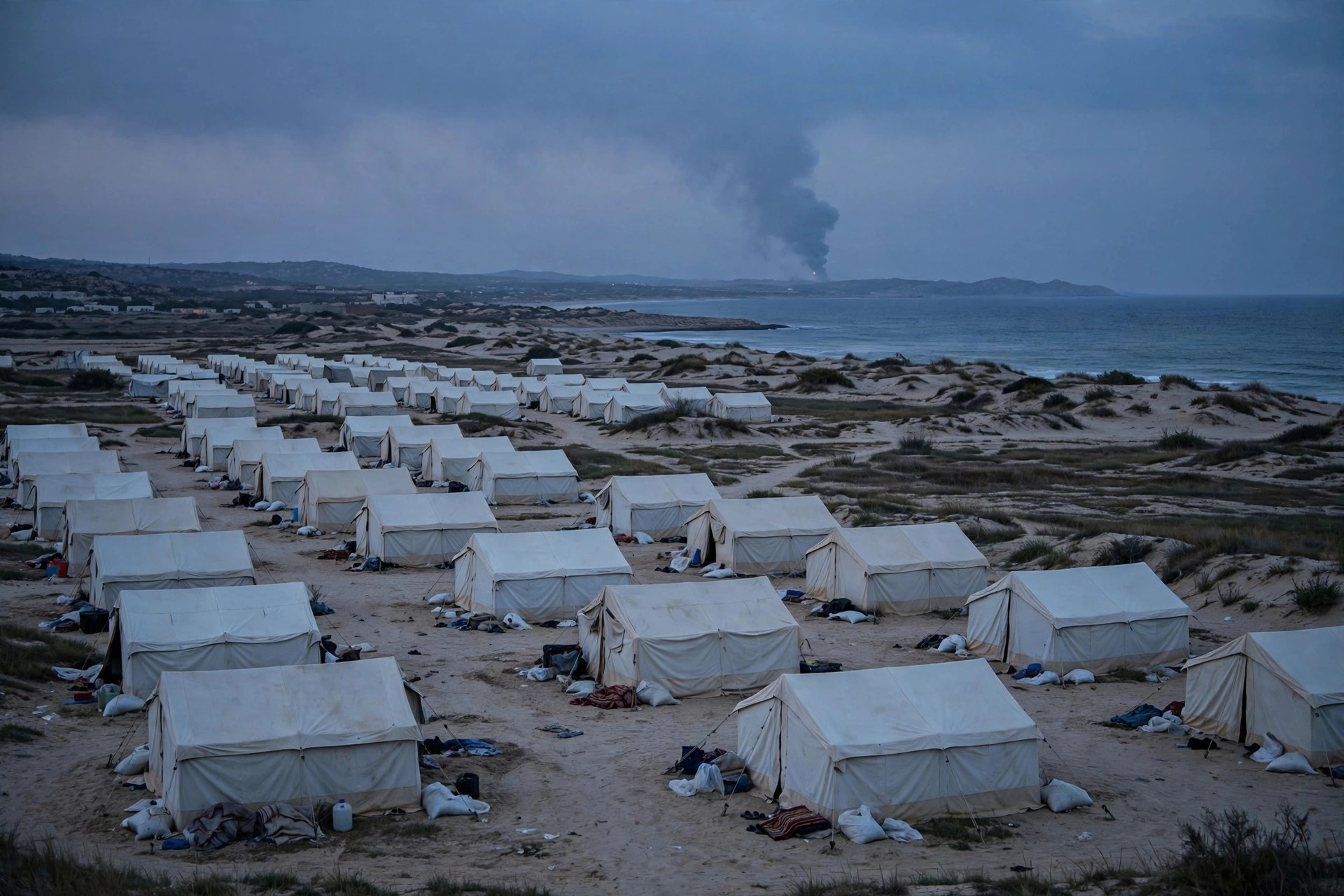
Hamas commander Samir Abu Younis was killed in an Israeli strike in southern Gaza overnight on Saturday 14–15 November, and both sides confirmed his death. The Israel Defense Forces, known as the IDF, killed Samir Mahmoud Abu Younis, commander of Hamas' Rafah Brigade, in the strike, according to the IDF and to Hamas. Younis was 53. He had held the post since 15 September, after replacing Nael Abu Obeid, who was killed in September. The strike hit a tent at Al-Waha camp in Al-Mawasi, Khan Younis. Witnesses said four missiles hit the tent, and two other people were wounded. The Al-Qassam Brigades, the military wing of Hamas, said Younis had helped plan the 7 October 2023 attack. The killing came more than a year after an October 2025 ceasefire halted major fighting in Gaza, and it came in the same days as new casualty figures from the Gaza Health Ministry, which said 16 people had been killed and 68 injured in Israeli attacks over the past 48 hours.
The facts, as confirmed by both sides, are narrow and specific: a named commander, a named brigade, a named place, and a date. The wider meaning is harder to fix, because the strike sits inside a ceasefire that stopped the largest fighting without stopping strikes. This article sets out what happened, who Younis was, how the death was confirmed, and what the casualty figures reported since the ceasefire say — with every casualty figure attributed to the body that reported it, and with the claims of each side reported as claims rather than as settled fact where the sources differ.
Who was Hamas commander Samir Abu Younis?
Samir Mahmoud Abu Younis was the commander of Hamas' Rafah Brigade, the Hamas unit organised around Rafah in southern Gaza. He was 53 years old. He had been in the post since 15 September, when he replaced Nael Abu Obeid, the previous commander of the Rafah Brigade, who was killed in September. That means Younis had held the command for about two months when he was killed overnight on 14–15 November. The short length of his time in the post is itself part of the story: the brigade lost one commander in September and its replacement in November, and the two deaths, two months apart, show how quickly the leadership of the unit has turned over.
The Al-Qassam Brigades, Hamas' military wing, said Younis had helped plan the 7 October 2023 attack. That statement is the source for the claim about his role in the attack, and it is reported here as the Brigades' statement rather than as an independent finding. The IDF, for its part, described Younis as a senior Hamas commander, and the killing was reported by CNN as the killing of a senior Hamas commander involved in planning the 7 October attacks. Readers should note the difference in wording between the two sides' descriptions: the Al-Qassam Brigades spoke of planning and overseeing the attack, while the IDF's announcement, as reported, focused on the strike itself and on Younis's command of the Rafah Brigade. Both sides agreed on the central fact — that Younis was dead — and they agreed on his identity and his post. They did not agree, in the material reported, on every detail of how the strike was carried out.
What happened in the strike on 14–15 November
The strike took place overnight on Saturday 14–15 November in southern Gaza. It hit a tent at Al-Waha camp in Al-Mawasi, Khan Younis. Al-Mawasi is an area of southern Gaza where displaced people have been sheltering, and Al-Waha camp is a camp within it. Witnesses said four missiles hit the tent. Two other people were wounded in the strike, according to the reporting of the incident. The casualties were taken to Nasser Medical Complex in Khan Younis, according to medical personnel cited by Al Jazeera. The IDF said it had killed Abu Younis in a strike in the southern Gaza Strip overnight, and Hamas' Al-Qassam Brigades confirmed his death.
The detail that the strike hit a tent matters to how the incident is understood, because a tent in a camp for displaced people is not a military building, and the reporting of the strike therefore includes both the intended target — a named commander — and the place where he was found, among displaced people sheltering in tents. Witnesses said four missiles hit the tent, and the same reporting said two others were wounded. Those two facts — the number of missiles, as described by witnesses, and the number of other wounded people — are attributed to witnesses and to medical reporting, not to either military side. The IDF's own statement, as reported, said it had targeted Younis. The difference between a statement that a person was targeted and a witness account of missiles hitting a tent is the difference between an account of intent and an account of impact, and both are included here so readers can see what each source actually said.
How both sides confirmed the death
Confirmation came from both sides, and that matters because it removes the usual uncertainty about whether a reported killing actually happened. Hamas said on Sunday that a senior commander who helped plan and oversee the 7 October 2023 attack had been killed in an Israeli airstrike, and the Israeli military confirmed his death, according to Reuters. The Al-Qassam Brigades confirmed the death of Samir Abu Younis, 53, commander of the Rafah Brigade, and said he had been killed on Saturday. The Israeli military said it had killed Abu Younis in a strike in the southern Gaza Strip overnight, adding that he had led the Rafah brigade since his predecessor, Nael Abu Obeid, was killed on 15 September. CNN reported the same confirmation: the IDF killed Samir Mahmoud Abu Younis in a strike in southern Gaza overnight on Saturday, and both Hamas and the IDF said so.
The sequence of the announcements is also worth recording. The Israeli military and the Shin Bet security agency issued a joint statement saying they had targeted a senior Hamas military commander, and Hamas then announced the death. In some reporting, the IDF statement came first and named no one, and the name arrived afterwards from Hamas. In other reporting, the two confirmations are presented together. Either way, the outcome is the same: the two sides that are fighting each other agree that Younis is dead, agree on his name and his post, and agree that he was killed in a strike in southern Gaza overnight on 14–15 November. That agreement on the central facts is what makes this killing different from the many reported strikes where only one side speaks.
What the death of Hamas commander Samir Abu Younis means for the ceasefire
The October 2025 ceasefire halted major fighting in the Israel-Gaza war, but it has not stopped Israeli attacks or secured Hamas' disarmament, according to Reuters. That sentence, as reported, captures the position in which this strike sits. A ceasefire that halts major fighting is not the same as a peace agreement, and it is not the same as a complete halt to all military action. The killing of a brigade commander two months after the killing of his predecessor shows that targeted strikes have continued under the ceasefire, and it shows that the ceasefire has not prevented Israel from striking senior Hamas figures in Gaza. Whether that is a breach of the ceasefire, a permitted action under its terms, or a sign that the ceasefire is failing depends on the terms of the agreement and on the interpretation each side puts on them, and neither interpretation is settled by the facts reported here.
What can be said, on the reported facts, is that the pattern is now visible. A commander was killed in September. His replacement was killed in November. Both killings were confirmed by both sides. Both took place in southern Gaza. The second killing came more than a year after the October 2025 ceasefire took effect, and it came at a moment when the Gaza Health Ministry was reporting further deaths and injuries from Israeli attacks in the same period. The question the strike raises, therefore, is not only who commanded the Rafah Brigade, but what the ceasefire now covers in practice. If a ceasefire halts major fighting while targeted killings continue, then the word "ceasefire" describes a reduction in the scale of fighting rather than an end to it, and readers who follow the story should watch for whether the next weeks bring more strikes of the same kind, a pause, or a formal statement from either side about the status of the agreement.
The casualty figures since the ceasefire
The Gaza Health Ministry said 16 people had been killed and 68 injured in Israeli attacks over the past 48 hours, in its latest casualty update released on Saturday. Those figures — 16 killed and 68 injured — are attributed to the Gaza Health Ministry, and they cover the 48 hours before the update. The same ministry said at least 1,643 Palestinians have been killed since the ceasefire took effect on 11 October 2025. That figure — at least 1,643 killed since 11 October 2025 — is also attributed to the Gaza Health Ministry. It is a cumulative figure, and it counts deaths reported by the ministry since the ceasefire began. It does not, by itself, say how many of those deaths were fighters and how many were civilians, because the ministry's figure as reported does not make that distinction, and this article does not add one.
Two other people were wounded in the strike that killed Younis, according to the reporting of the incident. That figure is separate from the Health Ministry's 48-hour figures, and it should not be added to them or confused with them. The 16 killed and 68 injured cover Israeli attacks over 48 hours across Gaza, as reported by the ministry; the two wounded cover the single strike on the tent at Al-Waha camp. Keeping those two sets of figures apart matters, because the 48-hour figures describe a period and a place — Gaza over two days — while the two wounded describe a single incident at a single place. Both sets of figures are attributed to their sources, and both should be read with the attribution attached: the ministry for the 48-hour and cumulative figures, and witnesses and medical personnel for the two wounded in the tent strike.
What happens next
Hamas said Younis's funeral would be held on Sunday afternoon in Khan Younis, according to Reuters. That is the only next step that has been reported as a scheduled event. Beyond the funeral, the questions are open. One is who will command the Rafah Brigade next, and whether the next commander will last longer than the two months Younis held the post. Another is whether the strike will be followed by further strikes on senior Hamas figures, or by a period in which the ceasefire holds more firmly. A third is whether either side will make a formal statement about the ceasefire itself — whether Israel will describe the strike as consistent with the agreement, and whether Hamas will describe it as a breach. None of those questions has been answered in the reporting available, and this article does not answer them by speculation.
Readers who follow the region can place this strike alongside other recent reporting on the conflict, including Iran's reported attacks on Bahrain and the tankers hit by mines in the Strait of Hormuz, while the Europe–Ukraine peace talks in Dublin show a different negotiation in which a ceasefire is also the central question. In Gaza, the record after 14–15 November stands as follows: a named commander, killed in a named place, confirmed by both sides, two months after his predecessor was killed in the same role, under a ceasefire that has now been in place for more than a year and that has not stopped strikes of this kind. That record is the starting point for whatever comes next, and it will be updated when the next commander is named, when either side speaks about the ceasefire, or when the Health Ministry issues its next update.