
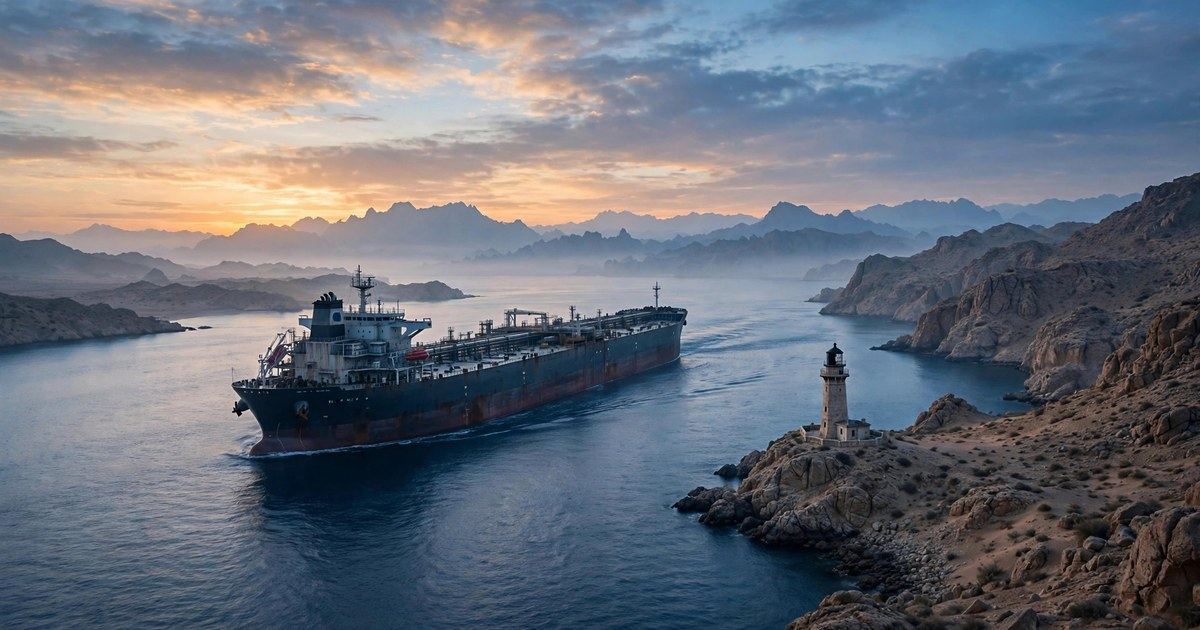
Iran is publicly pressing the United States to accept a seven-day roadmap that would reopen the Strait of Hormuz — the narrow waterway at the heart of an eight-month war and the world's most critical oil chokepoint — warning that the proposal remains on the table only while Washington shows good faith. The story is trending per news coverage across international outlets, with wire services and regional media all leading on Tehran's latest diplomatic push.
Speaking on Sunday, October 18, 2026, while in Baghdad for a meeting of the Organisation of Islamic Cooperation, Iranian Foreign Minister Abbas Araqchi told Iranian media outlets that Tehran's offer still stands. Iran presented the proposal in mid-September, after an interim ceasefire collapsed, and later acknowledged receiving a US response that it is now reviewing.
"Our situation is clear and based on the seven-days proposal presented to the US. They shared comments which we are reviewing, but our proposal is still on the table, and if there is any honesty on the US part, which there isn't, the way to reopening the Strait of Hormuz is obvious," Araqchi said.
The seven-day plan, explained
Under the formula Iran first laid out in September, the sequencing would be tight and deliberate. According to details reported by Reuters, Al Jazeera and other outlets, the initial implementation steps would take four to five days: Washington would move first on Tehran's conditions. The Strait of Hormuz would then reopen on the sixth day — and on day seven, the United States and Iran would begin talks on a final deal covering "mutually agreed subjects," including, by Tehran's own acknowledgment, Iran's nuclear programme.
Tehran's core argument is about sequencing: first restore maritime security and end the fighting, then negotiate the harder questions. Araqchi put it bluntly — "The choice now rests with the United States" — and added that Iran would not accept coercion or surrender sovereign rights under pressure.
What Iran is demanding from Washington
Iran's conditions for reopening the strait are sweeping, and they explain why the proposal has sat unanswered for weeks. Tehran's demands include:
1. Lifting the US naval blockade of Iranian ports. The American blockade is, in Tehran's telling, doing deep damage to the country's economy, and its removal is a non-negotiable precondition.
2. Waiving US sanctions on Iranian oil sales. Before the war, crude exports were Iran's economic lifeline; Tehran wants them restored as part of any deal.
3. Releasing frozen Iranian assets. Reports of the plan put the figure at an estimated $12 billion in frozen funds that would be released to Tehran.
4. A region-wide ceasefire. Iran wants hostilities ended on all regional fronts — including Lebanon and Yemen, where fighting has escalated alongside the Gulf confrontation.
5. Nuclear talks on Tehran's terms. Iran says the nuclear question should be addressed in the day-seven talks as one of the "mutually agreed subjects" — not as a precondition for reopening the strait.
Why the talks stalled
The central point of disagreement is sequencing. Washington has insisted that Iran's nuclear programme be addressed from the outset, not parked until day seven. US Vice President JD Vance said earlier this month that Tehran must make a "meaningful" reduction in its uranium enrichment capacity to satisfy US demands and end the eight-month war.
Iran's security chief said last week that negotiations had stalled because Washington failed to address all seven of Tehran's conditions for reopening the strait. Tehran says negotiations should initially focus on reopening the waterway — which before the war carried about a fifth of the world's traded oil and liquefied natural gas — and on restoring security in the Gulf, with the nuclear file to follow.
Araqchi acknowledged that the US had shared comments on the proposal and that Tehran is reviewing them. But his public assessment of American sincerity was bleak, and his remarks in Baghdad read as much as an ultimatum as an invitation.
Trump's position: diplomacy, bombs, or both
The Wall Street Journal reported last month that President Trump had rejected the seven-day proposal and told aides he privately expected to resume bombing Iran after the November US midterm elections — telling staff he was skeptical Tehran would ever meet his demands. When asked about the offer on Saturday, Trump said bluntly: "I'm rejecting their deal."
Yet the Journal's officials also described a president oscillating between three instincts: pursuing diplomacy, ordering airstrikes, and tightening sanctions. They noted Trump is reluctant to resume major combat operations, partly because the US wants to reserve dwindling munitions for other contingencies — but that he has repeatedly announced massive attacks to break diplomatic deadlocks, sometimes following through and sometimes stepping back from his most dramatic threats.
Trump's posture matters beyond the region: he told the United Nations recently that politics do not enter his mind when aiming to pry nuclear fuel from Iran. With midterm elections approaching, every move in the Gulf is being read in Washington as both strategy and signal.
Why Hormuz matters: oil, prices, and the global economy
The Strait of Hormuz is the chokepoint through which roughly one-fifth of global oil and LNG trade flowed before the war. Its closure — and the attacks on shipping around it — have sent shockwaves through energy markets.
The toll on commercial shipping has been severe: a supertanker carrying 2 million barrels of oil exploded after hitting a mine in the strait, and multiple cargo vessels have been sunk or disabled in recent weeks. India condemned repeated attacks on commercial ships carrying Indian seafarers earlier this month, and Japan has approved emergency energy legislation to bypass the strait entirely.
American consumers are paying the price directly. According to the Oil Price Information Service, US drivers are paying 38% more per gallon of gasoline than they were at the start of Trump's second term, while diesel has risen 71% to $6.25 a gallon. Moody's Analytics chief economist Mark Zandi estimates the war has cost the average American household more than $2,000. The administration has also weighed deploying the "Mother of All Bombs" in new Iran strike plans, a signal of how far military planning has gone.
What could happen next
Three paths now lie ahead. First, Washington could accept the sequencing — blockade and sanctions relief first, nuclear talks on day seven — and the strait could reopen within a week, instantly calming energy markets. Second, the US could counter with its own terms, demanding nuclear concessions upfront, keeping diplomacy alive but the waterway closed. Third, if neither side moves, the WSJ's reporting suggests the likeliest outcome is a return to bombing after the midterms, with the strait staying shut and oil prices climbing further.
The regional picture adds urgency. Fighting has spread across fronts — Israel has pounded southern Lebanon while Iran vowed to stand by Beirut — and Tehran's ceasefire demand explicitly covers Lebanon and Yemen. Any deal on Hormuz would therefore have to function as a broader regional de-escalation, or risk collapsing at the first flare-up elsewhere.
For now, the ball is in Washington's court. Tehran's message, delivered in Baghdad on Sunday, was clear: the seven-day road to reopening the world's most important oil strait exists — and the United States simply has to decide whether to take it.
Sources: Reuters (Dubai Newsroom, October 18, 2026); The Wall Street Journal; Al Jazeera; gCaptain; Devdiscourse.