
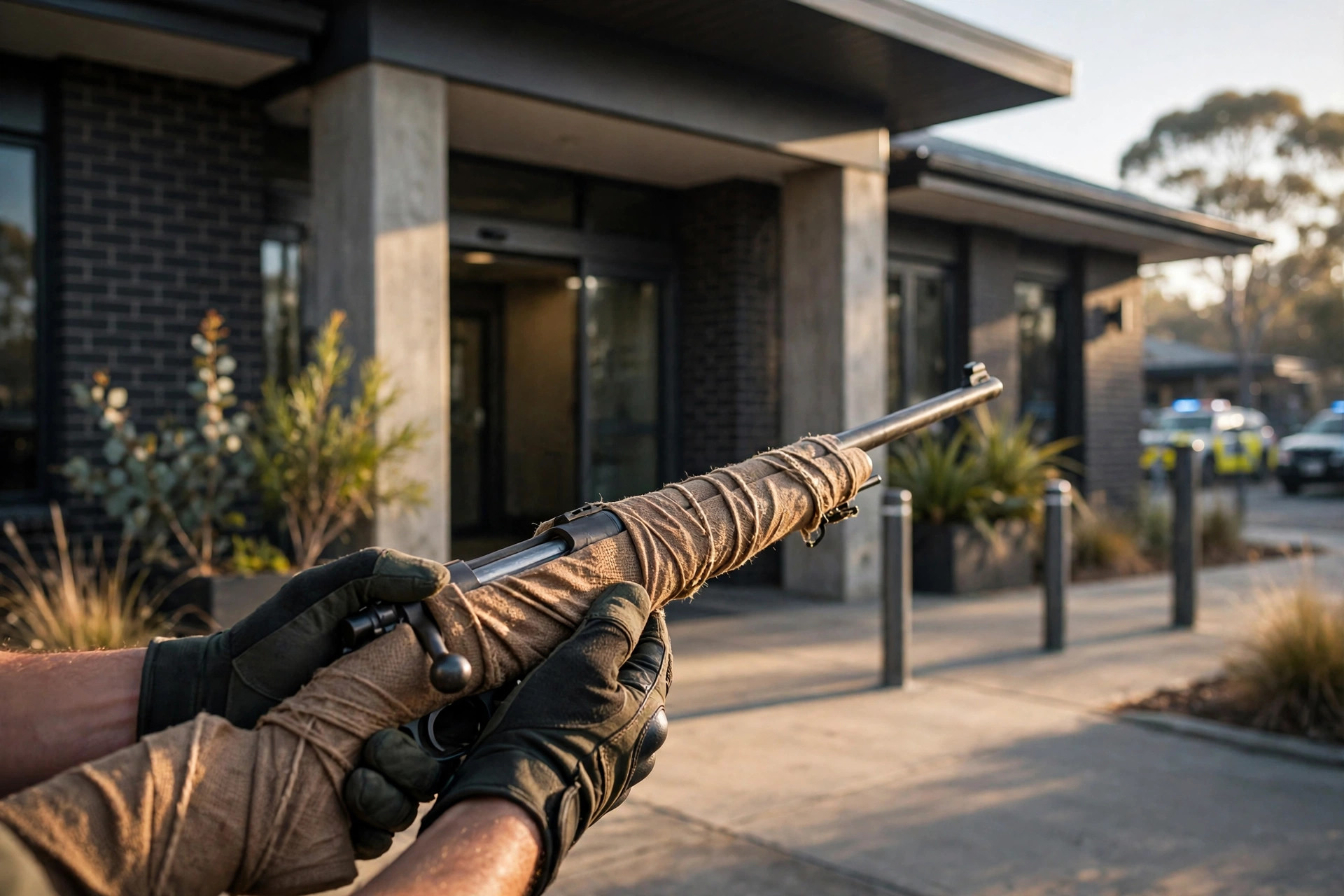
The Australia gun buyback November 2026 begins in New South Wales on Monday 2 November 2026, when the state's police stations start accepting surrendered firearms under the largest buyback Australia has run since the Port Arthur scheme of 1996. In its first phase, the scheme pays between $450 and $1,000 per gun, depending on the type of firearm, with payment made within 10 days. More than 2,400 guns have already been pre-registered for surrender, and six stations will take the first hand-ins. The scheme runs for 12 months, is not compulsory at this stage, and arrives alongside new limits on how many guns a person may own — limits that have been announced but, according to police advice to stakeholders, have not yet commenced.
The Australia gun buyback November 2026 is the New South Wales arm of a national response to the Bondi Beach attack of 14 December 2025, in which 15 people were killed at a Hanukkah celebration. The scheme was announced on 19 December 2025 by Prime Minister Anthony Albanese, with New South Wales Premier Chris Minns, and federal laws underpinning it were passed in January 2026. The cost is shared equally between the state and the Commonwealth, and has been described as running into the hundreds of millions of dollars. It is the first buyback on this scale in three decades, and it is also, from the start, politically contested — the opposition and One Nation have promised to scrap it, some shooters' groups are urging a boycott, and some owners have described the payments as too low. This article explains who can hand in a gun, what each type pays, where to go, and why the scheme exists — and reports the criticism without taking a side.
How the Australia Gun Buyback November 2026 Works
The Australia gun buyback November 2026 is open to licensed firearm owners in New South Wales who wish to surrender a gun. It is voluntary: nobody is being ordered to hand in a firearm at this stage, and the scheme is not a confiscation. Owners who want to take part should first register or book an appointment, then bring the firearm to a participating police station. According to AAP, 2,430 guns had been pre-registered for surrender by 1 November, along with 194 ammunition items, and 331 appointments had already been made at the six stations opening first. The figure of 2,430 is the latest reported total; earlier reports gave 2,420, and the higher number reflects registrations made closer to the start date.
The scale of what the Australia gun buyback November 2026 could eventually collect is large. AAP has reported that up to about 274,000 firearms could be surrendered in New South Wales over the life of the scheme. That is a ceiling, not a forecast — it reflects the number of firearms that fall within the scheme's scope, not a prediction of how many owners will choose to take part. The scheme runs for 12 months from its start, so owners are not required to act in the first week. The Sporting Shooters' Association of Australia (New South Wales) has stressed that 2 November is the start of the scheme, not a deadline, and owners who are unsure about their firearm or their eligibility should seek advice before attending a station.
Once a firearm is handed in under the Australia gun buyback November 2026, it is checked, recorded and destroyed. Payment is made within 10 days of surrender, according to AAP's reporting of the scheme's terms. Owners should keep the receipt and any paperwork they are given at the station, and should not transport a firearm to a station without following the safe-transport rules that apply in New South Wales — unloaded, secured, and in accordance with the conditions of their licence. Anyone unsure about the rules should contact police or their shooting association first rather than turning up unannounced with a loaded firearm.
Australia Gun Buyback November 2026: What Each Gun Pays
Payment in the first phase of the Australia gun buyback November 2026 depends on the type of firearm, and the range is $450 to $1,000 per gun. The per-type maxima, as reported by Sporting Shooter and New South Wales Police sources, are: revolvers $1,000; centrefire rifles $1,000; semi-automatic handguns $850; double-barrel shotguns $850; single-barrel shotguns $650; and air rifles $450. Those are maximum payments for the first phase of the Australia gun buyback November 2026, not a flat rate — the often-repeated figure of "$1,000 a gun" is the top of the range, and most firearms will attract less. Reuters has confirmed the maximum in Australian dollars as A$1,000, equivalent to about US$700.
A second phase of the Australia gun buyback November 2026, expected in early 2027, will cover firearms worth more than A$3,000, with payments capped at A$10,000. That phase is for higher-value firearms whose owners would otherwise lose far more than the first-phase maxima, and its details have not yet been fully published. Owners of valuable firearms who are considering the scheme should therefore check whether their gun falls into the first or second phase before surrendering it, since the two phases pay on different scales.
The Australia gun buyback November 2026 payments have drawn criticism. Sporting Shooter has described the first-phase amounts as "low-ball", arguing that some firearms are worth considerably more than the scheme pays. Shooters' groups have also urged members to boycott the scheme, and the opposition and One Nation have promised to scrap it if they win office. Supporters of the scheme, including the state and federal governments, argue that the point is to reduce the number of firearms in the community, not to pay market value for each one, and that the payments are compensation for surrender, not a purchase price. Both views are reported here as they have been expressed; neither is endorsed.
Where to Hand In a Gun: Stations and Dates
Six police stations will accept hand-ins for the Australia gun buyback November 2026 from 2 November: Sutherland, Penrith, Narellan, Grafton, Griffith and Dubbo. A further 34 stations will join from 1 December, and the number is expected to reach 146 by February 2027, covering regional as well as metropolitan New South Wales. Appointments are recommended, and 331 had already been booked at the six opening stations before the scheme began. Owners should check the New South Wales Police website or contact their local station to confirm that it is participating and whether an appointment is needed before travelling.
The staged rollout of the Australia gun buyback November 2026 matters for people outside Sydney. The six opening stations are spread across the state — Sutherland and Penrith in metropolitan Sydney, Narellan on the city's south-western fringe, and Grafton, Griffith and Dubbo in regional New South Wales, communities that have also dealt with severe weather this year, including the east coast storms and flash flooding of October 2026 — but many owners will have to wait until December or February for a station near them. Regional owners can also check the state's cyclone, flood and bushfire warnings guide before travelling. Because the scheme runs for 12 months, there is no need to travel long distances in the first week, and the advice from shooting associations is to wait for a nearby station rather than rush.
Why the Buyback Is Happening Now
The immediate cause of the Australia gun buyback November 2026 is the Bondi Beach attack of 14 December 2025, in which 15 people were killed at a Hanukkah celebration. The attack shocked Australia and prompted the federal government to announce, five days later, a package of gun reforms including the buyback. Federal laws were passed in January 2026, and the buyback is the most visible part of that package. The government has presented it as a direct response to the attack and as a measure to reduce the number of firearms in private hands.
The longer context behind the Australia gun buyback November 2026 is the number of guns in Australia. According to Department of Home Affairs data reported by Reuters on 18 January 2026, there were 4,113,735 firearms in Australia in 2025 — a record high — of which 1,158,654 were in New South Wales. That figure is the backdrop to the whole scheme: Australia has more registered firearms than at any time since records began, and the buyback is intended to bring the number down. The comparison most often made is with the Port Arthur buyback of 1996, which followed the massacre in which 35 people were killed and which collected hundreds of thousands of firearms. The current scheme is described as the biggest since Port Arthur, and its 12-month duration reflects the scale of the task.
The New Gun Limits — and Why the Scheme Is Contested
Alongside the Australia gun buyback November 2026, the government has announced new limits on how many firearms a person may own: four guns per individual, and ten for primary producers and target shooters, according to AAP and Reuters. The limits have not yet commenced, according to advice from New South Wales Police cited by the Sporting Shooters' Association — they are new limits that have been announced, not rules already in force, and the timing of their commencement has not been confirmed. That distinction matters for owners who have read reports suggesting the caps are already law: they are not, yet.
The Australia gun buyback November 2026 is contested, and the contest is part of the story. Farmers have raised concerns about the 10-gun pathway for primary producers, with some reporting that they have been left in limbo about how it will work. Shooters' groups have urged a boycott, arguing that law-abiding owners are being penalised for a crime they did not commit. The opposition and One Nation have promised to scrap the scheme. The governments behind it argue that fewer guns in the community means fewer opportunities for mass violence, and point to the Port Arthur buyback as the precedent. Readers should note that the scheme is voluntary, that the caps have not yet commenced, and that the political argument about it is unresolved — the buyback will proceed while the argument continues.
What Happens Next
The first test will be the numbers: how many guns are handed in at the six opening stations in the first weeks, and whether the 2,430 pre-registrations translate into actual surrenders. The second test will be the December rollout, when 34 more stations open, and the February expansion to 146. The third will be the second phase in early 2027, for firearms worth more than A$3,000. And the fourth will be political: whether the opposition's promise to scrap the scheme gains traction, and whether the caps commence as announced. For now, the facts are straightforward — the Australia gun buyback November 2026 starts on 2 November, pays $450 to $1,000 per gun in its first phase, and is the largest buyback Australia has attempted since Port Arthur.