
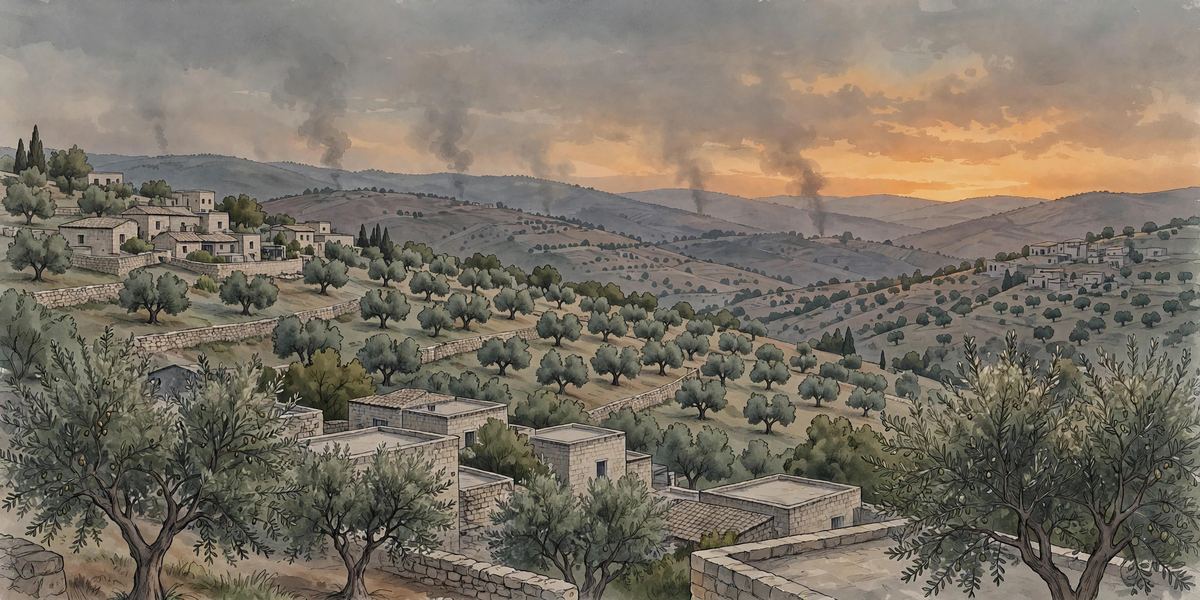
Israel carried out airstrikes, artillery shelling and demolitions across southern Lebanon on Saturday, 17 October 2026, while Iran publicly pledged it "cannot forget Lebanon" — the latest sharp escalation in a conflict that has been widening for weeks despite direct negotiations aimed at ending it. The day's attacks, trending per news coverage across multiple international outlets, were concentrated in Nabatieh Province and came just days before a Lebanese military delegation is due to press for a halt to Israeli attacks at US-brokered talks in Tampa, Florida.
The basic picture is consistent across reporting: Israel struck a series of targets across the south on Saturday morning and into the day, Beirut and Tehran traded diplomatic signals, and civilians absorbed the worst of it. But casualty figures are still being compiled, Israel and its critics describe the targets very differently, and the numbers from either side should be read as provisional until the dust settles. This article lays out what each source has reported, the diplomatic context, and what happens next.
What happened on Saturday
Most of Saturday's attacks were concentrated in Nabatieh Province, according to RT's Lebanon correspondent Steve Sweeney, who is on the ground in the south. Two explosions were reported near Aita al-Jabal, Israeli drones carried out two strikes on Nabatieh al-Fawqa on Saturday morning, and Israeli forces separately set fire to homes in Beit Yahoun.
The strikes followed a deadly week. On Thursday, 15 October, an Israeli attack on Arab Salim killed Saja Sharara, 28 — just 48 hours after her wedding, according to Sweeney, who had recently visited the southern village. Six others were wounded, including a child, a woman and two elderly people. Israel said Thursday's strikes followed the launch of two Hezbollah drones toward Israeli troops.
Al Jazeera reported that strikes on Saturday killed at least 10 people, raising the death toll from Israeli strikes on Lebanon over the previous 24 hours to 41, citing Lebanon's Health Ministry and the country's National News Agency. Lebanon's National News Agency reported three people killed in an attack on Shoukine in Nabatieh district, two killed in a car strike in Kfar Dajjal, and three more killed when a home was hit in Lwaizeh. Israeli forces also struck near the al-Quds roundabout in the city of Nabatieh and attacked the town of Siddiqine in Tyre district.
The ministry figures put the overall death toll since the fighting erupted on March 2 at 2,659, with 8,183 injured, according to Al Jazeera's reporting of health ministry data. More than one million people in Lebanon have been registered as displaced since the outbreak of the war. As with all figures in a fast-moving conflict, these should be treated as the latest official counts rather than final numbers.
Israel's version: Hezbollah targets, violated ceasefire
Israel says its attacks target the pro-Iran armed group Hezbollah, but Lebanese officials and journalists on the ground report that many of the dead were civilians. The two claims cannot be fully reconciled from available reporting, and honest coverage has to carry both.
Israel's stated justification for the latest wave is that Hezbollah continues to launch attacks toward Israeli troops — the military cited two Hezbollah drones fired toward Israeli forces ahead of Thursday's strikes. Earlier, the Israeli military announced strikes on Hezbollah targets in Beirut's southern suburbs itself, which Prime Minister Benjamin Netanyahu said targeted the commander of Hezbollah's Radwan force; Lebanon's health ministry said three people were killed and 16 wounded in those strikes. US President Donald Trump has publicly pressed Netanyahu to stop hitting Lebanon hard while a deal is near — and the Israeli prime minister has pressed ahead anyway, according to bankb.it's reporting.
Iran's answer: 'cannot forget Lebanon'
Tehran moved quickly to signal it is not stepping back. On Friday, Iranian Foreign Minister Abbas Araghchi met Sheikh Ali al-Khatib, vice president of Lebanon's Higher Shiite Islamic Council, in Tehran. According to Lebanon's L'Orient Today, Khatib described a deteriorating situation in the south, saying many displaced residents had exhausted their savings and been left without homes or work, and he appealed in particular for financial assistance for affected communities.
Araghchi said Tehran was working to revive the US-Iran memorandum of understanding signed in June, the first clause of which called for an end to Israeli attacks on Lebanon. He argued that implementing the agreement remained the way to resolve the crisis, while acknowledging that "the circumstances are difficult," as cited by L'Orient Today. "We cannot forget Lebanon," the minister said — a phrase that captures Tehran's public posture: continued political and financial backing for Beirut even as it negotiates with Washington.
It is worth noting the wider frame Iran operates in. After the US-Iran war that began on February 28, Washington has been enforcing a blockade on Iranian shipping — US forces recently disabled an Iran-flagged tanker in the Gulf of Oman, as covered in Worldlession's earlier report on the tanker interception. The US has also destroyed an Iranian surveillance vessel in the Gulf of Oman, covered in Worldlession's report on that operation. Trump's negotiating posture is paired with military pressure — and Lebanon is one of the places that pressure plays out.
Why the fighting restarted
The direct talks between Beirut and Israel were supposed to stop all this. Lebanon and Israel have held a number of direct negotiations in recent months aimed at securing an Israeli withdrawal and ending hostilities. Under the deal reached through US-brokered talks, Beirut vowed to disarm Hezbollah, which would in turn lead to Israeli troops gradually withdrawing from Lebanese land. But Hezbollah has refused to disarm as long as Israeli forces remain on Lebanese soil, and Israel has continued striking southern Lebanon — the talks, in short, have produced commitments neither side's facts on the ground will honour.
The current war erupted on March 2, after Hezbollah resumed attacks two days after the US-Iran war began on February 28. Hezbollah said its operation was retaliation for the killing of former Iranian Supreme Leader Ali Khamenei. Hezbollah says it has observed the ceasefire reached under the subsequent US-Iran agreement; Israel, however, has continued strikes and demolitions in southern Lebanon and currently occupies more than 600 square kilometres of Lebanese territory.
Meanwhile, the regional picture keeps expanding. The Houthis' missile campaign against Saudi Arabia has drawn in Riyadh and the Saudi-led coalition, covered in Worldlession's earlier report on the Iran-Houthi-Saudi front. Saturday's strikes on Lebanon are one theatre of a conflict whose map now stretches from the Red Sea to the Gulf of Oman.
What happens next: Tampa talks on October 20
The immediate next step is diplomatic. Lebanon's presidency said on Saturday, in a post on X, that a Lebanese military delegation will present Beirut's demands for an end to Israeli attacks at a trilateral meeting in Tampa, Florida, on October 20, according to Reuters. That makes Tuesday the next hard date to watch: either the talks produce a restraint mechanism both sides accept, or the Saturday pattern — strikes, denials, pledges — keeps repeating.
Three things will decide which way it goes. First, whether the Tampa meeting yields anything concrete on Israeli withdrawal and Hezbollah disarmament — the twin commitments that have so far cancelled each other out. Second, whether Washington's pressure on Netanyahu works: Trump has said a deal to end the US-Iran war is "very possible" and has repeatedly asked Israel to stop hitting Lebanon, but Israel's government has been sidelined in negotiations and has shown it will strike regardless. Third, whether Iran's backing for Lebanon translates into escalation — Tehran has promised support, Hezbollah has warned that "with Israel, agreements are useless," and the missile exchange pattern of recent weeks shows how quickly a pledge can become a salvo. Watch Tampa, watch the health ministry's casualty counts, and watch whether Sunday brings another strike wave. Sources: L'Orient Today, Reuters, Al Jazeera, AFP, RT, and reporting on the Israel-Lebanon conflict (per news coverage, 17-18 October 2026).