
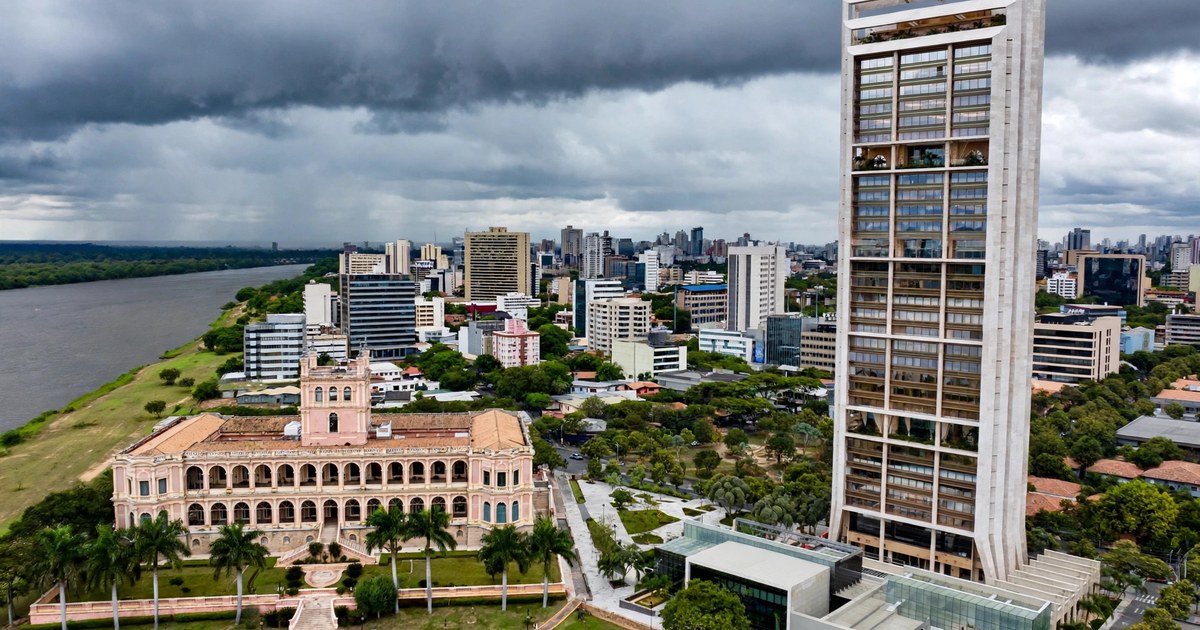
Paraguay president Peña resigns: President Santiago Peña announced on Thursday 5 November 2026 that he was stepping down as president of Paraguay, bringing a sudden end to a presidency that had lasted just over three years. In a video message posted on X, Peña said he was resigning with the stability of the country, social peace and the need to preserve public institutions in mind. His decision came as Congress moved to impeach him and prosecutors opened criminal cases over the collapse of Ueno Bank, a digital lender whose failure has left about 3 million customers unable to access their money. The Senate then voted on Friday 6 November to remove him from office instead: 44 of the 45 senators voted for removal, Vice President Pedro Alliana was sworn in as president within the hour, and prosecutors placed Peña under house arrest. Paraguay now faces its deepest political crisis in years.
What Happened on 5 November 2026
Peña announced his resignation in a video posted on X on Thursday 5 November 2026, while lawmakers in Congress were debating charges against him. The lower house of Congress had already voted 78-0 to approve impeachment charges, and the Senate trial had started on Thursday night. On Friday 6 November the Senate voted 44-1 to remove Peña, declaring him guilty of poor performance in his duties, and Vice President Pedro Alliana was sworn in as Paraguay's 53rd president within the hour. Peña, an economist, was elected in April 2023 and took office later that year, with his term due to run until 2028. He is a Trump ally, and his sudden departure has drawn attention well beyond Paraguay. Vice President Pedro Alliana succeeded him on Friday 6 November, when he was sworn in as Paraguay's 53rd president within an hour of the Senate vote, to serve the remainder of the term ending 15 August 2028. The speed of events has been striking: within days, a banking failure turned into a criminal investigation, an impeachment process and a presidential resignation.
The announcement came as lawmakers were debating charges brought by 35 opposition lawmakers and ruling-party dissidents, and after Peña lost the backing of members of his own conservative Colorado Party.
The resignation did not come out of nowhere. In the days before it, protests had taken place in Asunción, the capital, as depositors found they could not reach their money. Opposition lawmakers had accused Peña of conflicts of interest linked to the bank, and members of his own party had begun to withdraw their support. By Thursday, the political pressure had become overwhelming, and Peña chose to resign rather than face the Senate trial to its conclusion — but the Senate pressed on regardless, trying him in a one-day trial on Friday and voting 44-1 to remove him for poor performance in his duties. Prosecutors then placed him under house arrest while they investigate breach of trust and other suspected crimes linked to the Ueno Bank collapse.
Why Paraguay President Peña Resigns: The Ueno Bank Collapse
At the centre of the crisis is Ueno Bank, a digital lender that grew quickly from a niche fintech player into one of Paraguay's most prominent banks. The bank had around 3 million customers in a country of about 6.1 to 6.5 million people, which means roughly 60 percent of the adult population held an account with it. It also administered around 850 million dollars in public funds, including money from state institutions and pension-related bodies. When a bank of that size fails, the consequences reach almost every household in the country.
Paraguay's central bank intervened in Ueno Bank on 2 to 3 November 2026 after finding that the bank had breached minimum solvency requirements. The bank's solvency ratio had fallen to 5.56 percent, against a regulatory minimum of 12 percent, which is less than half of what the rules require. The intervention meant that customers were suddenly unable to access their accounts, withdraw cash or make payments. For millions of people, the bank was not a distant financial institution but the place where their wages, savings and pension payments were held.
On 3 November, eight Ueno executives were detained, including Grupo Vázquez president Miguel Vázquez and bank president Juan Manuel Gustale. The detentions signalled that the authorities were treating the collapse as a matter for criminal investigation, not only as a regulatory failure. The central bank chief also resigned on Tuesday, after the central bank had put Ueno into resolution, its strongest measure short of immediate liquidation. The resignations at the top of both the bank and the regulator showed how far the crisis had spread through Paraguay's financial and political institutions.
Peña's Links to Grupo Vázquez
A central question in the crisis is Peña's own connection to the bank. Peña was a shareholder and business partner of Grupo Vázquez, the conglomerate that controls Ueno Bank, until March 2025. That connection has drawn intense scrutiny because the bank administered large amounts of public money while its controlling shareholder had close ties to the president. Opposition lawmakers have raised questions about conflicts of interest, the misuse of pension funds and an institutional cover-up, and those questions are now part of the criminal cases opened by the Attorney General.
Peña has said he cut his ties with the group in March 2025, before the bank's collapse. But the timing of the relationship, and the scale of the public funds involved, has kept the issue at the centre of the political debate. The bank's rapid growth, from a small digital lender to a bank serving about 3 million customers and managing around 850 million dollars of public funds, took place while Peña was in office. For his critics, that growth and the public money involved are inseparable from the questions now being asked by prosecutors and by Congress.
Impeachment, Criminal Cases and the Political Fallout
The legal and political processes around Peña moved fast. The Attorney General opened three criminal cases related to the bank crisis, covering the supervision and resolution of Ueno Bank, the placement of public funds in the bank and the actions of authorities from state institutions. The cases name Peña and other former officials, and they will continue even though Peña has resigned.
In Congress, the lower house voted 78-0 to approve impeachment charges against Peña, a unanimous vote that showed how completely his political support had collapsed. The Senate trial started on Thursday night and concluded on Friday 6 November, when the Senate voted 44-1 to remove Peña from office, declaring him guilty of poor performance in his duties. The combination of a unanimous lower-house vote, a Senate trial, three criminal cases and the resignation of the central bank chief makes this one of the most serious institutional crises Paraguay has faced in recent years. For a country that has worked to build stable democratic institutions, the sight of a president resigning under criminal investigation is a major shock.
His political fate was sealed on Thursday when Horacio Cartes, a former president who leads the Colorado Party, publicly joined calls for his removal, according to The Wall Street Journal.
What Happens Next After Paraguay President Peña Resigns
The immediate question is who leads Paraguay now. Vice President Pedro Alliana succeeded Peña on Friday 6 November, when he was sworn in as Paraguay's 53rd president within an hour of the Senate vote, and he serves for the remainder of the term, which runs to 2028. The Senate removed Peña by 44 votes to 1, so the formal process is complete. The coming days will show whether the handover is smooth or whether the criminal processes produce further political upheaval.
Beyond the succession, the criminal cases opened by the Attorney General will continue, and the investigation into the bank's failure, the handling of public funds and the role of state institutions is likely to run for months. The eight Ueno executives detained on 3 November, including Miguel Vázquez and Juan Manuel Gustale, remain at the centre of that investigation. The central bank's work to protect depositors and to transfer customer accounts to other financial institutions will also continue, and the strain on the wider banking system will be watched closely.
What the Crisis Means for Depositors
For ordinary Paraguayans, the most urgent question is when they will be able to access their money again. Around 3 million customers, roughly 60 percent of the adult population, have been unable to use their Ueno accounts since the central bank intervened on 2 to 3 November. The bank administered around 850 million dollars in public funds, and its collapse has frozen savings, wages and pension-related payments for a large share of the population. Peña had earlier approved legislation to help speed up payments to depositors affected by the collapse, but the process of returning money to customers is likely to take time. The crisis has shown how much of Paraguay's daily financial life had come to depend on a single digital bank, and how quickly that dependence can turn into hardship when the bank fails.
Why This Resignation Matters Beyond Paraguay
Peña's resignation matters beyond Paraguay's borders because of the scale of the failure and the profile of the president involved. He was elected in April 2023 as an economist promising competent management, and he became a Trump ally and one of Washington's closest partners in South America. His resignation over a bank collapse, with criminal cases open and an impeachment trial that ended in his removal, is a reminder that financial regulation and political accountability are closely linked. When a bank that serves about 60 percent of a country's adults collapses, and when that bank is tied to the president's former business partners, the political consequences can be swift and severe. Paraguay now faces the task of restoring confidence in its banks, completing the legal processes under way and ensuring that depositors are protected, all while a new president takes office in the middle of a crisis. How the country handles the next few weeks will shape its politics and its financial system for years to come. For more on leaders leaving office under pressure, see Spain's transport minister resigns, and for the wider political picture in the Americas, see US midterm election results 2026. The crisis also underlines how quickly a financial scandal can become a political one, as seen in Indonesia's wiretapping scandal.
Sources: Reuters, BBC, CNN, AP, Hindu BusinessLine, November 2026